This guide explains how to evaluate a Rose Rocket product for reliable quality, consistent performance, and sensible value. Objectively, Rose Rocket is a brand-style name used in specialty retail, where “rose” signals design aesthetics and “rocket” implies motion, function, or novelty features. We outline sourcing considerations, inspection checkpoints, and decision criteria.

If you’re considering a Rose Rocket, the very important step is to evaluate it as a “system” rather than a single purchase: assess build materials, functional design (how it works in real use), safety/compatibility, and the credibility of the supplier. Because specialty items can vary widely in manufacturing standards, your top value comes from matching the product’s specification to your expectations—then confirming it with documentation, clear testing practices, and transparent sourcing.
Think of the product as four linked layers that affect your satisfaction long after the first day: (1) what it’s made of and how it’s assembled, (2) how it behaves when used the way it’s intended, (3) whether it’s safe and compatible with your environment or other gear, and (4) how reliably you can depend on the seller when something doesn’t go as planned. Many “good deals” fail because buyers evaluate only the surface layer (the look or headline function), while the hidden layers (materials, tolerances, warranty coverage, compatibility requirements) determine whether the experience is smooth or frustrating.
So the most practical “right now” approach is: verify materials and build quality, insist on clear functional specs, confirm safety/usage constraints, and check supplier credibility (warranty, response quality, and claim process). Then perform a brief inspection and baseline trial as soon as it arrives. This combination dramatically reduces risk, helps you detect mismatches early, and ensures your expectations align with the actual product.
The term Rose Rocket is commonly used as a product or brand-style name in consumer markets where customers seek a distinctive combination of visual theme and functional behavior. “Rose” typically communicates a color story, decorative finish, or aesthetic inspiration, while “Rocket” usually signals performance cues such as propulsion-like motion, faster cycling, a more dynamic experience, or simply a playful “launch” concept. In practice, the exact meaning depends on the seller’s product description, packaging, and included components.
Because product naming is not regulated the way technical standards are, objective evaluation relies on the product’s declared specifications and verifiable construction details, not only on the name. For similar specialty items, industry top practice is to treat vendor descriptions as marketing until supported by measurable attributes (dimensions, materials, tolerances, power ratings where applicable, and documented testing).
In many niche categories, “Rose” and “Rocket” can be purely branding motifs, or they can correspond to specific design features. For example, a “Rose”-themed item might use a particular paint system, decorative coating, or design language, while the “Rocket” part might imply a motion mechanism, a timed action, or a high-energy feel during operation. Sometimes both pieces are literal: the aesthetic is a rose-inspired finish, and the “rocket” part is engineered to deliver consistent fast response. Other times, the wording is metaphorical and the product differs significantly from what buyers assume.
That’s why the most reliable method is to focus on what can be verified: what materials are used, how the item is built, what safety guidance is included, what warranty exists, and how it performs under repeat trials. If you treat “Rose Rocket” as a category label rather than a universal standard, you avoid the common mistake of expecting one meaning across all sellers.
From an industry-quality perspective, buyers tend to focus on appearance first, then discover issues later—fit, finish, wear, or inconsistent performance. To reduce that risk, use a structured inspection and due-diligence approach.
A useful mindset is to separate quality into two types: visible quality (finish, symmetry, clean edges, consistent color) and functional quality (repeatable behavior, smooth operation, stable response timing, absence of early mechanical failures). Decorative or theme-driven products often excel at visible quality while hiding weaker functional quality. Conversely, performance-oriented products sometimes hide mediocre finishes behind “good enough” appearance. With a “Rose Rocket,” you want both.
Quality evaluation becomes easier when you use a repeatable workflow. The sections below walk through the major evaluation pillars, why they matter, and what evidence you can collect to make decisions confidently.
For a Rose Rocket, start by checking what it is actually made from—outer shell, internal frame, joints, fasteners, coatings/finishes, and any consumable or wearing parts. High-quality items usually show:
Why this matters: In specialty retail, performance failures commonly come from low-grade substrates, weak adhesion, or poorly controlled tolerances. Those issues are harder to fix after purchase, and they directly affect longevity and satisfaction.
To make this practical, look for evidence that materials are chosen for their job rather than chosen purely for cost. For example, if the item is meant to move or handle friction repeatedly, the internal parts should use materials that can tolerate wear without rapid deformation. If it’s mostly decorative but still includes functional components, the “rose” coating may be applied over a base material that must be stable under temperature changes and repeated handling. Poor adhesion can reveal itself as early micro-flaking, sticky residue, or color dulling, even if the product looks impressive at first glance.
Construction should also address structural fatigue. If the item is repeatedly cycled—opened/closed, launched/retrieved, or engaged in movement—then joints and fasteners should resist loosening. A high-quality build often includes tight fitment, consistent spacing, and fasteners that are secured so the device doesn’t develop wobble over time. A product that feels tight initially but becomes loose quickly is a sign that the assembly tolerances were not controlled or the fastening design isn’t robust.
Finally, consider the “hidden layer”: coatings and adhesives. Many theme-based products rely on glues, paint bonding systems, or layered finishes. Even without knowing the exact chemistry, you can evaluate the result: do you see uniform finish edges? Do you see uneven coating thickness near joints? Do you notice a rough texture that suggests dust contamination during painting? Do you see solvent-like odor or tackiness that persists? Those clues often correlate with coating quality and bonding reliability.
Where “Rocket” indicates motion, acceleration, or rapid action, quality assessment should include repeatable behavior. Objective checks include:
If the product involves power or moving parts, credible sellers usually describe operational parameters and maintenance expectations. If details are vague, treat that as a warning sign.
In practice, “predictably” means more than “it works once.” It means the device meets its claimed behavior across a reasonable range of conditions. Even if you don’t have technical instruments, you can do observational testing:
A useful technique is to establish a baseline on day one: perform the first few uses exactly as described, and compare the “feel” at cycle 1 vs. cycle 3 vs. cycle 5. If the experience worsens quickly, the product may have a break-in problem that’s too severe, inadequate lubrication, or tolerance issues that will not resolve with time. On theme-driven products, early wear can also happen because coatings may be thin in high-friction areas. If “rose” coating is applied over a surface that actually experiences repeated friction, it may look fine at first and then degrade sooner than expected.
For products with electronics, stability is even more important. Look for documentation that mentions stable power requirements, voltage range, or battery type. If the seller describes “it runs great” but doesn’t mention power specs, you can’t easily predict how the device will behave with different chargers, battery conditions, or power sources. In those cases, functional quality can become inconsistent because the underlying power interface is mismatched to your environment.
Even when a product appears “toy-like” or purely decorative, safety evaluation is still essential—especially if it involves motion, heat, chemicals (finishes/adhesives), or small components. Use a conservative approach:
When documentation is missing, reduce risk by limiting exposure to the very sensitive use cases (e.g., rough handling, extreme temperatures, or unapproved cleaning methods).
Safety is not only about hazards like sharp edges or electrical risk; it also includes “long-term” safety such as exposure to chemical residues from finishes or degradation products from coatings. If a “rose” finish smells strongly even after unboxing and airing, or if it feels tacky, that can indicate incomplete curing or adhesive issues. While many new items temporarily smell, persistent strong odor and stickiness can imply the finish is not properly cured or the materials are lower quality.
Compatibility refers to whether the device fits with your context: power supply type, recommended accessories, cleaning products, and environmental conditions (humidity, temperature, and storage). If the seller’s instructions say to use a particular battery type or charger model, you should treat that as a requirement rather than an optional detail. Using a “compatible-sounding” charger can create voltage instability, reduced battery lifespan, or overheating risk.
Responsible use also includes user behavior. Motion-related products can fail if used beyond recommended load limits, impact limits, or duration limits. Some items are designed for short cycles with rest periods, especially if friction or electronics create heat. If a “Rocket” theme implies high energy, the safe approach is to follow rest and cool-down instructions carefully.
When documentation is missing, you can still reduce risk by using conservative handling and avoiding extremes. However, conservative use is not a replacement for safety documentation. If the seller can’t provide clear guidance, you should consider it a red flag and either request more information or choose a different supplier.
Pricing for a Rose Rocket can vary significantly depending on materials, included accessories, and warranty terms. Without specific pricing inputs here, the top practice is to assess realism relative to what comparable sellers offer in the same category.
In supply-chain evaluations, unusually low pricing often correlates with one or more of the following:
To make an objective decision, compare not only the listed price but also what you receive: documentation, packaging condition, included parts, and the clarity of the product specification.
Value traps often look like this: the headline price seems attractive, but the product arrives with missing components, weak documentation, vague instructions, or a warranty that excludes the exact failure modes you’re most likely to experience. Another trap is a “spec gap,” where the listing implies a feature but the physical item doesn’t include it (for example, the seller implies premium materials, but the delivered item uses a lower-grade substrate).
Credible suppliers tend to provide details that reduce buyer uncertainty: clear build and material descriptions, specific operational parameters, and a straightforward warranty claim process. If you ask “What materials are used?” and the seller responds with broad marketing language rather than technical specifics, that should factor into your risk evaluation. The same applies to maintenance and cleaning guidance: reputable sellers often provide careful, finish-safe instructions because they understand that wrong cleaning methods can cause damage.
In short, pricing realism is not only about the cost itself—it’s about the alignment between cost, scope, and documentation. A slightly higher price can be better value if it comes with stronger warranty, clearer instructions, and higher consistency in materials and construction.
Professional procurement habits apply even to consumer purchases: ask questions that force clarity. If the seller can answer precisely, you usually reduce uncertainty.
When you contact the supplier, focus on questions that reveal design intent, manufacturing control, and after-sales accountability. The best questions often connect multiple evaluation pillars: materials + function + safety + warranty. That way, you can detect inconsistencies. For example, a seller might claim durability but provide no care instructions; or they might claim advanced performance but offer no testing or usage limits.
In many specialty categories, the very reliable suppliers respond with specific detail rather than general assurances.
If you want to go a step further, ask for documentation artifacts. For example: “Can you provide the manual PDF or warranty text before I buy?” or “Can you confirm the exact included components in the box?” Buyers often focus on performance questions, but included components matter too. A product might be correctly built but delivered without essential parts (mounting hardware, charging cables, adapters, replacement pieces). If that happens, you’re forced to purchase extras and your total cost rises.
Another smart question: “What are the expected service life and failure modes?” A credible supplier might not predict every failure, but they can discuss common wear points and how users should mitigate them through maintenance or usage limits. If the supplier avoids discussing service life entirely, or dismisses concerns without evidence, it’s harder to judge quality.
Once your Rose Rocket arrives, you can perform a short inspection that correlates strongly with good satisfaction.
The best inspections are not complicated. They are consistent. The goal is to identify issues early: finish defects, misalignment, missing components, loose assemblies, weak operational behavior, and documentation mismatches. If you document findings with photos and keep receipts, you make future claims more straightforward.
Below is a step-by-step checklist. If something looks suspicious, stop and gather evidence before using the product extensively. For example, if you notice finish flaking or a loose joint, repeated use could worsen damage and complicate a warranty claim.
To expand this in a practical way: inspect under bright light at multiple angles. Many defects hide under indirect lighting. Use your phone flashlight to check for uneven gloss: coatings applied unevenly often show different sheen patterns. If “rose” involves multiple layers, you can look for layer separation at edges and corners.
Also check for residue. A common quality issue is dust trapped under clear coats or sticky residue left from adhesives. Wipe a small, inconspicuous area with a soft cloth following any seller instructions; if the cloth comes away with color transfer or tackiness, treat that as a finish quality concern.
If the item includes sliding parts, moving joints, or motion-trigger components, cycle them gently according to instructions. The goal is to detect shipping damage and assembly issues. Some products may be shipped with protective packaging that must be removed; ensure you have done so. Also check for protective films on lenses or decorative surfaces that may need removal (and do so carefully to avoid scratching).
When you test motion, note whether the travel feels uniform: does it start smoothly and end smoothly, or does it “catch” at a particular point? A catch can signal misalignment, tolerance issues, or a need for lubrication (if lubrication is intended by the design). If a design is not meant to be lubricated by the user, don’t attempt repairs—use the warranty pathway instead.
Even if the product looks finished and well-made externally, loose fasteners can lead to early failure. Look closely at seams: are they evenly spaced? Do the joints sit flush? If there are decorative caps or covers, confirm they are seated properly and not misaligned. A small alignment mismatch can amplify wear because friction points occur at the same spot repeatedly.
If the item is symmetrical, compare left vs. right spacing. Many low-grade assemblies show subtle asymmetry due to inconsistent manufacturing. A symmetry-sensitive design might still “work,” but it will likely look uneven and degrade faster under repeated motion.
This step is critical. “Works” is not enough; you want repeatability. Do at least a few cycles. For each cycle, observe:
Then inspect for early wear. In particular, look for friction hotspots and coating degradation. If “rose” coating is on surfaces that experience rubbing, you may see early scuffing. That scuffing may be normal if the design intentionally includes contact surfaces; however, abnormal scraping patterns, gouges, or fast finish breakdown are not normal.
Documentation validation means more than “do I have a manual.” Check that model numbers, part lists, and warranty terms match. Sometimes sellers include generic instructions for a broader product line. Generic instructions can hide missing compatibility details. Save packaging labels too, because those can include product identifiers.
Also keep a small record of your baseline trial. Even a simple note (“cycle 1 smooth, cycle 2 squeak started, finish scuff visible at X location”) can help if you later need support. Photos before and after your baseline trial can be especially useful.
Below is a supplemental comparison intended to help you decide what matters very when evaluating a Rose Rocket. This table does not include links; it focuses on criteria, sources of evidence, and decision conditions.
| Evaluation area | What to look for | Source (evidence type) | Conditions/requirements for “Yes” |
|---|---|---|---|
| Materials & build | Body/frame material types; finish quality; seam/joint durability | Product specification, packaging description, documented materials list | Materials stated clearly; visible build consistency; no obvious defects on arrival |
| Functional performance | Repeatability; smooth operation; stable behavior per instructions | Seller testing notes, user manuals, repeatable trial results | Performance is consistent across multiple baseline cycles; no early mechanical issues |
| Safety & usage constraints | Age/handling guidance, power/cleaning instructions, restrictions | Owner’s manual, safety notices, packaging inserts | Clear and specific guidance provided; matches how you intend to use it |
| Supplier credibility | Responsiveness; warranty terms; clarity of claims | Supplier documentation, warranty policy text, customer support process | Warranty coverage and claim process are explicit; support responds with specific details |
| Value vs price | What’s included; material level; accessory completeness | Price breakdown, included components list, comparison with comparable offerings | Price aligns with stated materials and included accessories; no critical details are missing |
In real buying decisions, not everything is a clean “yes/no.” Many products fall into a gray zone. The key is to interpret borderline evidence consistently across evaluation areas.
For example, suppose a Rose Rocket arrives with a beautiful finish (visible quality passes), but functional behavior is slightly inconsistent (functional quality borderline). In that case, you shouldn’t treat it as “fine.” Instead, you treat the functional issue as a potential system-level risk that can lead to higher long-term cost (replacement parts, warranty claims, or early failure). If possible, you should check whether that functional inconsistency is within the manufacturer’s tolerance described in documentation. If documentation is missing or vague, your risk tolerance should be lower.
Conversely, suppose functional behavior is excellent, but documentation is incomplete or warranty is unclear. That is still a risk because it affects your ability to address problems later. Even a great unit can fail due to shipping damage or manufacturing variability. If you can’t rely on support, your total ownership risk increases.
Borderline pricing outcomes are also common. A slightly lower price might be justified by fewer accessories, not by weaker build quality. A much lower price might indicate cost-cutting in materials, coatings, or warranty coverage. The correct response is to compare what is included and whether material and safety claims are still well documented.
No specific city or country was provided in the keywords, so the location-sensitive phrase is handled as “nearby.” In many nearby communities, buyers often prefer suppliers who can explain product differences in plain language and provide quick after-sales support. If you’re shopping in a local market setting, it can help to compare what sellers emphasize: some focus on aesthetics and gifting value (the “rose” side), while others emphasize operational feel and performance consistency (the “rocket” side). Your choice should reflect which emphasis matches your intended use.
As a practical cultural note, customers in retail environments often value clarity at the point of sale—particularly around care instructions. If the supplier can communicate how to maintain the finish without ambiguity, that tends to correlate with better good customer experience.
Localization can also involve differences in what’s considered acceptable in warranty language, what safety notices are included, and how returns are handled. Some regions have stronger consumer protection norms, while others depend on store-specific return policies. In all cases, you should read the warranty and return terms carefully. When the seller is local or “nearby,” you can also ask how quickly they can process replacements or parts and whether you need to bring the item in or can ship it.
Additionally, if you’re purchasing from a supplier “nearby,” you might encounter differences in included documentation formats (language variations) and availability of replacement parts. A credible supplier often ensures that essential instructions are available in the buyer’s language and that support channels exist. If instructions are missing or not understandable, you should consider that a compatibility and safety risk.
Because no numeric price information was supplied here, any attempt to state a “typical” cost would be speculative. Instead, use a disciplined approach:
If you share the exact price you’re seeing and the supplier details, I can help you evaluate whether it appears consistent with the provided specifications and what you should double-check.
To expand this into a buyer-ready decision method, consider calculating your “effective cost” instead of focusing purely on sticker price. Effective cost includes:
In many cases, the “best deal” is not the lowest price—it’s the one that reduces uncertainty. A higher price with clearer specs and a reliable warranty can lead to a lower total cost of ownership because you’re less likely to pay for replacements or struggle with support.
Also avoid assuming that all “Rose Rocket” products are the same. Because naming isn’t standardized, two items under the same brand-style name might differ in materials or mechanisms. Price differences can sometimes reflect those real design changes. Your job is to interpret price differences through evidence: materials list, warranty text, included parts list, and the credibility of performance claims.
Industry procurement teams usually separate “marketing promise” from “operational capability.” For a Rose Rocket, treat the supplier as a quality-control partner. The following practices are common in professional sourcing:
These steps do not guarantee perfection, but they substantially reduce the odds of receiving a mismatched or substandard unit.
Supplier evaluation can be expanded further by looking at communication behavior. Professionals often assess responsiveness, not just the final answer. For example:
Professional risk reduction also includes verifying packaging integrity. If the unit arrives with compromised packaging, dents, or loose interior components, then shipping damage is more likely. Even if the item “powers on” or “works,” internal alignment might be slightly off. That can cause performance drift and early wear.
Another professional habit is to check for return conditions that specify timelines and evidence requirements. Some warranties require proof of serial number, photos, or the original packaging. Save what’s needed the first day.
Because “rose” is typically aesthetic-driven, care is often where the product’s good value is won or lost. Even without a specific manufacturer manual, you can use generally conservative, finish-friendly practices:
If the seller provides a recommended cleaning approach for the finish, follow it as the governing instruction.
To expand on maintenance realistically, consider that finishes degrade in predictable ways: they fade from UV exposure, scratch from abrasive contact, and weaken from repeated friction or aggressive chemicals. Even if your “Rose Rocket” is not exposed outdoors, it can degrade from indoor factors like sunlight through windows, humidity from kitchens or bathrooms, and dust accumulation in crevices.
When cleaning, start with the least aggressive method. For example, use a soft microfiber cloth for dust removal. If you need to remove smudges, use a slightly damp cloth with water only if the seller allows. Then dry immediately. Avoid soaking unless instructions explicitly permit it. If the device includes seams and edges, water can penetrate and cause subtle issues like staining, swelling of materials, or residue that later attracts dust.
Also think about how you handle it. Oils from hands can affect certain coatings, leaving a dull patch or attracting dirt. If the finish is delicate, consider using clean gloves or handling by structural parts rather than by decorative surfaces.
For motion-related products, maintenance should also include checking friction points. If the seller indicates that lubrication is not required, don’t lubricate. Incorrect lubrication can dissolve coatings or contaminate sensitive surfaces. If lubrication is permitted, follow the specified lubricant type and application points. In other words: maintenance should follow the design intent, not guesswork.
Storage matters. Store in a dust-protected environment. Avoid stacking heavy items on top of decorative surfaces. If there is a protective case, use it. If you store the device for long periods, inspect it periodically for dust buildup at seams and for any early coating changes.
Rose Rocket is a product/brand-style name used in specialty retail contexts. The name typically combines a rose-themed aesthetic with rocket-like functionality or dynamic novelty. The precise meaning depends on the seller’s description and included components, so confirm the specification details for your specific listing.
Look for clear materials and build information, consistent finish and alignment, and predictable functional behavior across repeat trials. Also verify warranty terms and whether the supplier can answer questions with specific details—not just general assurances.
Compare the total package: included accessories, documented specs, warranty coverage, and the clarity of operational instructions. Avoid decisions based solely on the lowest headline price, since missing documentation often correlates with higher uncertainty.
Use gentle cleaning methods and soft materials, avoid unapproved solvents, dry thoroughly, and store away from extreme heat, high humidity, or prolonged sunlight. Follow any finish-care instructions from the supplier.
Perform a quick finish inspection, verify that moving/functional elements operate smoothly (if applicable), confirm component alignment, and save documentation for warranty claims.
That depends on the specific product. If it requires power sources, chargers, or specific components, the seller should state compatibility requirements clearly. If details are vague, treat it as a risk and ask for clarification before purchase.
A reliable supplier provides explicit warranty terms, clear product specifications, responsive support, and unambiguous care/usage instructions. Ideally, their information aligns with what arrives in the box.
Minor imperfections can range from normal handling marks to finish defects that will worsen. Start by documenting the issue with photos and checking whether the defect impacts function or structural integrity. If the imperfection is purely aesthetic and the seller’s warranty covers appearance issues, you can request a replacement or repair. If the seller’s warranty excludes cosmetics, you may still be able to request a solution depending on severity. The key is to act early—finish issues can sometimes be corrected only within a certain timeline after purchase.
Follow the seller’s instructions. If a manufacturer suggests a break-in process, follow it. If no guidance is provided, do a conservative baseline trial using the normal operating mode but avoid sustained high-load usage for the first session. Then inspect for abnormal wear. If you notice issues like grinding, heat buildup, unusual smell, or rapid coating degradation, stop and contact the seller before continuing.
Wear can be normal if the design includes friction contact surfaces. However, “normal” usually implies predictable wear at expected points and a gradual pattern rather than sudden damage. If you see gouges, sharp scraping marks, rapid loss of coating in only a few cycles, or performance drift quickly, that suggests a build or tolerance problem. In those cases, treat wear as a quality signal rather than waiting for “it might improve.”
Save photos and videos showing the issue, the serial/model number (if present), the packaging condition, and any proof of purchase. Also keep a record of what tests you performed, including when you first noticed the problem. If a seller provides specific claim instructions, follow them exactly. Evidence reduces back-and-forth and helps the supplier verify that the failure is consistent with a manufacturing defect rather than misuse.
Use caution. Many finishes can be damaged by alcohol-based products or disinfectant chemicals, especially over time. Unless the seller explicitly approves a disinfectant type, prefer gentle cleaning methods approved for delicate finishes. When in doubt, test on a small inconspicuous area first (and document the result). If you suspect contamination or need disinfection, ask the seller what is safe for the specific finish system.
A Rose Rocket purchase can be straightforward when you follow an evidence-first mindset. Prioritize materials and construction, verify repeatable function, confirm safety and usage constraints, and evaluate value based on what you truly receive—warranty, documentation, and component clarity included. If you share the product’s specification details (materials, included components, and any stated operational behavior), you can apply the checklist more precisely to your situation.
Ultimately, the most reliable buyers treat “Rose Rocket” as a starting label and then move quickly into verification: inspect the finish, test behavior with repeat cycles, confirm compatibility and safety guidance, and validate documentation and warranty terms. The result is a calmer purchase, fewer surprises, and a better chance that the “rose” aesthetic and “rocket” performance you want both show up in the real product you take home.
Striking the Perfect Balance: Navigating Premiums and Out-of-Pocket Expenses in Senior Insurance Plans

Explore the Tranquil Bliss of Idyllic Rural Retreats

How to Make Lasting Memories at Disneyland Attractions

Affordable Phones and Plans for Seniors

Affordable Full Mouth Dental Implants Near You

Unlock the Top Kept Secrets to Finding Your Ideal Dentist for Flawless Dental Implant Results!

Discovering Springdale Estates

Unveiling RS Sul Telecom Services

The Guide to Car Trading


Discovering the Jade Boot's Mystique
Delve into the fascinating world of the jade boot, an exquisite cultural artifact celebrated for its beauty and historical significance. The jade boot, crafted from beautiful jade stone, is more than just a piece of art; it serves as a bridge to rich traditions and history. This article explores its origin, cultural importance, and the intricate craftsmanship involved in its creation.

The Fascinating World of Jade Boots
Jade boots are uniquely crafted sculptures that showcase artistic mastery and cultural heritage through detailed craftsmanship. These intricate pieces are often prized for their aesthetic appeal and symbolic significance in various cultures. Understanding their history and production offers insight into an art form that has thrived across generations.

Discovering the Elegance of Jade Boot
The jade boot is a renowned piece of artistry in cultural heritage, symbolizing elegance and history. Originating from ancient traditions, these exquisite artifacts represent a blend of artisan craftsmanship and historical value, making them highly sought after by collectors and historians alike. This article delves into the significance, craftsmanship, and modern relevance of jade boots, offering insights from experts in the field.
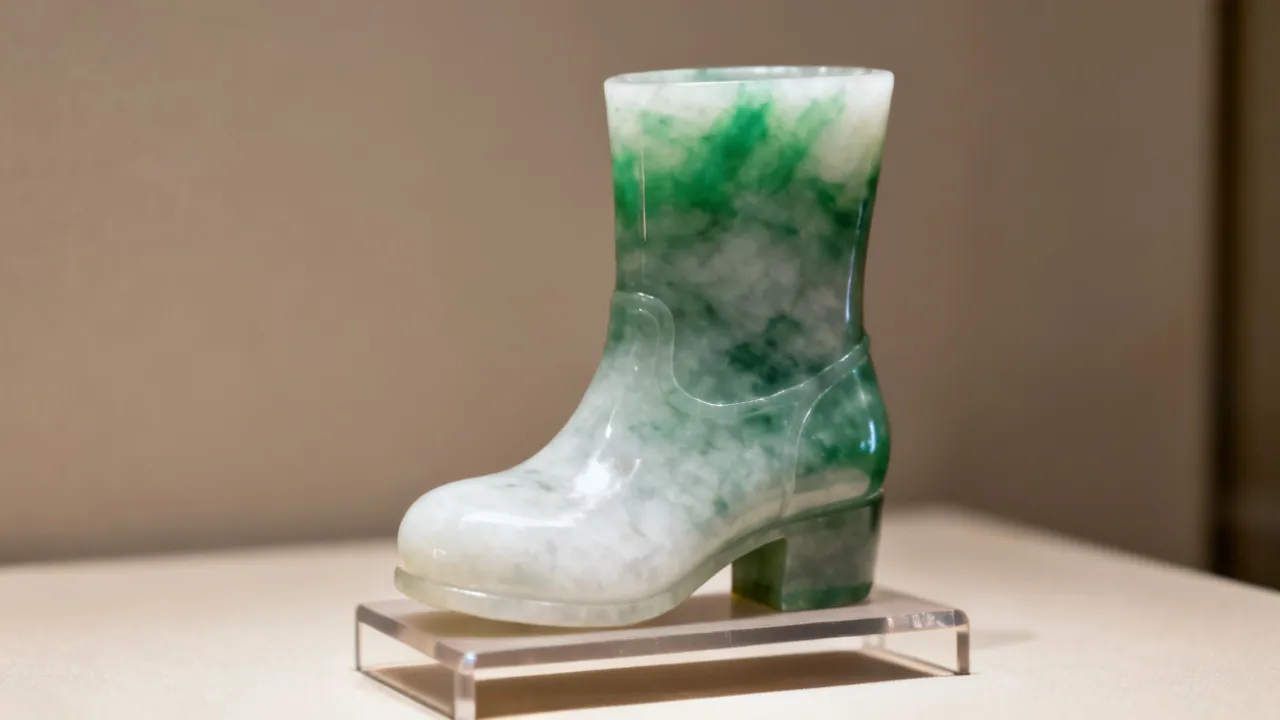
Unveiling the Enigma of Jade Boots
Jade Boots, intricately carved artifacts from ancient civilizations, captivate with their intricate beauty and cultural significance. Traditionally crafted from jade, a mineral highly valued in many cultures for its durability and beauty, these boots serve both ceremonial and status-symbol purposes. Current interest in these artifacts highlights a blend of art, history, and cultural identity.
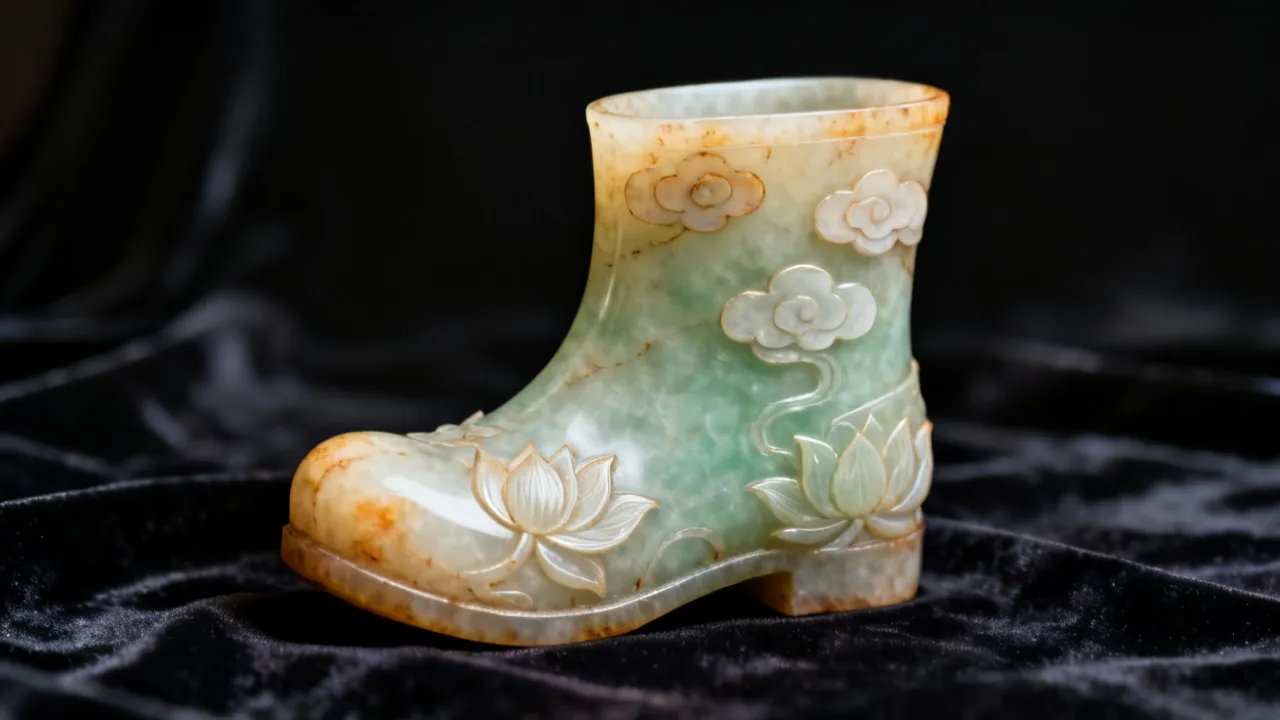
The Enigmatic Jade Boot Unveiled
The Jade Boot is an intriguing artifact that holds significant cultural and historical value in many Asian traditions. Believed to symbolize protection and power, jade has been a prized material throughout history, especially in China, where it is revered as a "stone of heaven." The Jade Boot, a specific form often found in archaeological sites, is an embodiment of ancient craftsmanship and artistry.

Discover the Allure of Jade Boots
Jade Boots, exquisite artifacts of cultural and historical significance, capture the fascination of collectors and enthusiasts worldwide. These objects, carved masterfully from jade, symbolize prosperity and status in many Asian cultures. Our exploration delves into the history, craftsmanship, and significance of jade boots, offering insightful perspectives from industry experts on their enduring appeal and market trends.
