This guide explains how Credicard Smiles works, what to check before enrolling, and how to evaluate its reward value responsibly. Credicard Smiles is presented as a credit-card rewards program where spending can translate into points or benefits. The exact mechanics depend on the issuer’s terms, promotional periods, and the merchant categories included.
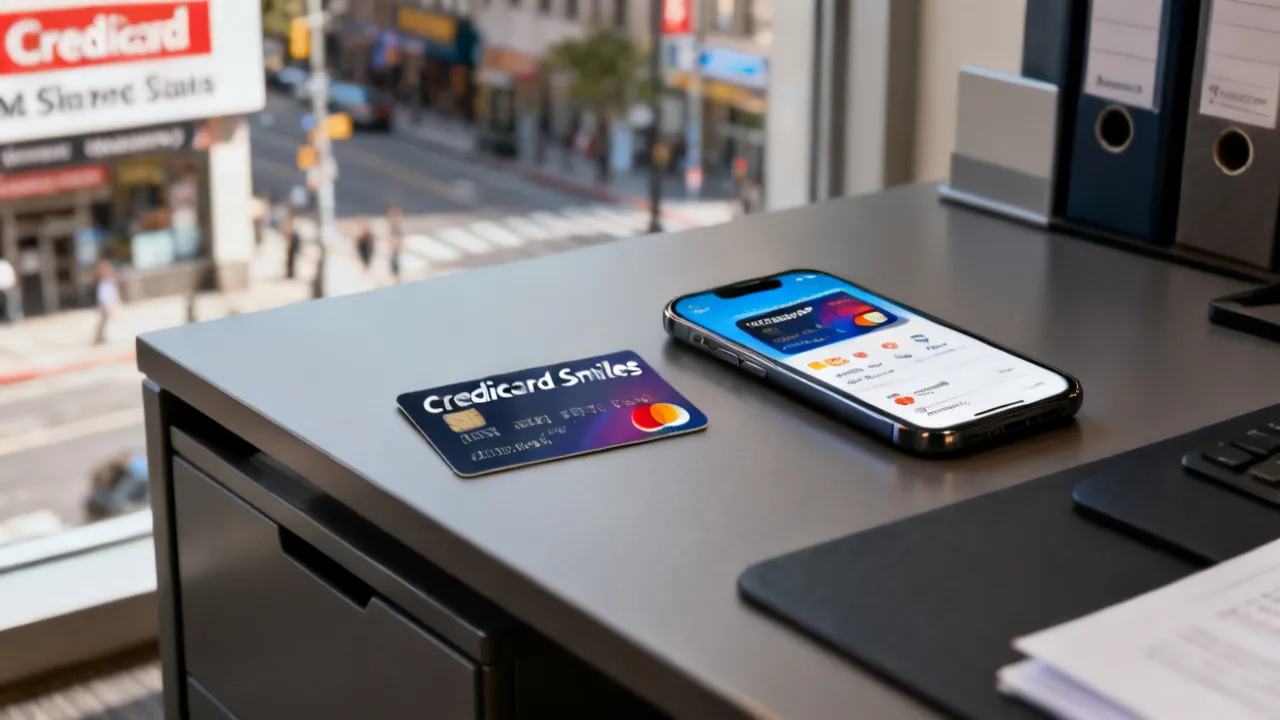
Credicard Smiles is a rewards-focused credit-card concept designed to connect everyday card usage with consumer benefits. Before you apply or start using it, the most important step is to compare eligibility, reward earning rates, redemption options, and annual/recurring costs as stated in the issuer’s official documentation. Treat the program like a system: the “value” you receive depends on how consistently you spend in eligible categories and how reliably you manage monthly repayments.
From an industry perspective, credit-card rewards should be evaluated the same way you would evaluate any financial product: match the reward structure to your real spending patterns, understand your likely redemption behavior, and minimize friction costs such as fees, conversion rates, or blackout periods. When these variables are ignored, rewards can look far more valuable than they actually are.
Although program names can vary by issuer and market, Credicard Smiles generally falls under the broader category of credit-card loyalty programs. The core idea is simple: eligible transactions made through the card may earn “smiles” in the form of points, miles, or credit-like benefits that can later be redeemed for perks.
In practice, customers usually evaluate three layers:
It’s also worth noting that rewards programs are not always “set and forget.” Many issuers adjust partner catalogs, redemption values, or category definitions over time. That’s why the safest approach is to verify the latest terms and conditions in your account dashboard or via official program disclosures.
Reward programs often sound attractive because of headline perks—such as bonus points, elevated category multipliers, or a seemingly generous points-to-reward exchange rate. However, the reliable way to judge Credicard Smiles (or any similar card) is to calculate expected value under realistic assumptions.
Consider this practical method:
In many cases, disappointment doesn’t come from the program being worthless—it comes from mismatch. Rewards can underperform when redemption is delayed, redeemed at low value, or used in ways that differ from the assumptions used in marketing claims. When a rewards system is optimized, it can deliver benefits; when it isn’t, it can become an expensive habit.
From an industry standpoint, rewards programs are structured to manage costs and risk while driving card usage. As a result, the terms typically include conditions that influence outcomes. For Credicard Smiles, the conditions you should prioritize usually include the following areas:
Because program definitions can change, your most reliable “single source of truth” is the issuer’s latest product disclosure and the in-app reward terms connected to your account.
Most people benefit from a rewards card more than once a year—because many expenses occur monthly and can compound into meaningful rewards. A rewards card can function like a “structured return” on spending when it fits the rhythm of your life: recurring bills, regular supermarket shopping, recurring dining, or frequent travel.
If Credicard Smiles offers bonus categories that match your highest-spend categories, it can be a good fit—especially if your monthly spending is predictable and you pay on time.
On the other hand, if your spending is irregular, you spend heavily in categories that are excluded, or you often carry balances, you may find that a simpler card—such as a low-fee cash-back option—delivers better net outcomes. The key is not to chase the most advertised rewards; the key is to choose the card that matches your spending behavior and repayment capability.
You referenced price information, supplier details, and potential location-specific content. However, no concrete figures, supplier names, or specific locations were provided in your input. To keep the guide objective and avoid unverified or exaggerated data, this content does not invent pricing, fees, or supplier claims.
Practical next step: consult the current product page or the issuer’s official fee and rewards schedule for:
This disciplined approach aligns with how consumers should evaluate financial products and reflects how transparent disclosures are expected to be used.
The table below provides a structured comparison framework you can use to assess Credicard Smiles against typical rewards-card requirements. Because you did not supply specific issuer terms in your input, the table is intentionally generic and focuses on decision-critical conditions.
| Aspect | Credicard Smiles (What to Verify) | Why It Matters |
|---|---|---|
| Eligibility | Age, creditworthiness criteria, documentation requirements | Determines whether you qualify and how predictable approval is |
| Enrollment Steps | Application process, identity verification, account activation steps | Ensures you meet conditions to earn from day one |
| Reward Earning Rules | Eligible merchant categories, minimum transaction amounts, multipliers, caps | Prevents overestimating points you may not earn |
| Redeeming Rewards | Redemption channels, conversion values, limitations/blackout periods | Redemption value can differ materially from marketing claims |
| Costs and Fees | Annual fee, membership fees, service charges, replacement/over-limit fees | Rewards only create value if costs remain lower than reward benefit |
| Repayment Discipline | Minimum payment rules, due dates, impact of revolving balances | Interest charges can exceed reward gains |
| Point Validity | Expiry, dormancy rules, refund treatment, reward reversals | Reduces risk of losing earned benefits |
| Support & Statements | Dispute handling, statement cycle, digital access to reward tracking | Improves control and reduces administrative surprises |
Below is a cautious, practical process designed to maximize clarity and reduce common pitfalls. Because you didn’t provide a city or country in the keywords (and none appears in your provided text), this guide is written without location-specific claims.
Rewards economics depends on the issuer’s official documentation. For general consumer-credit and revolving-balance risk guidance, reputable references include:
If you share your issuer country/market and any official product link text you want to reflect (without sharing personal data), the guide can be refined to mirror the actual structure you would see.
Typically, rewards are earned through eligible card transactions. The exact earning rate, eligible categories, and any exclusions depend on the issuer’s current Credicard Smiles terms. Verify whether your very frequent merchants count, whether refunds reverse previously earned rewards, and whether any transactions are excluded (such as certain bill-pay categories or cash-like transactions).
Focus on four items: fees (annual and recurring), reward earning definitions (categories and multipliers, including caps), redemption rules (conversion values and limitations), and eligibility criteria. This reduces the risk of overestimating net benefits. Also consider how rewards behave if your account is closed, suspended, or in arrears.
Many rewards programs offer several redemption paths—for example, travel-style perks, vouchers, merchandise catalogs, or statement credits. The availability and conversion value vary by issuer and partner schedule. Review the redemption catalog under your account terms and compare at least two or three redemption methods to avoid automatically choosing a low-value option.
Usually, refunds can reduce your earned rewards or reverse points previously posted. The specific treatment for Credicard Smiles depends on the issuer’s rules, including timelines, how refunds are reported, and whether points are clawed back partially or fully. Always check the exact refund-to-rewards policy rather than relying on general assumptions.
If you carry balances, credit card interest charges can exceed the value of rewards earned. A reliable repayment plan is the most important behavior for credit cards, regardless of how attractive the rewards appear. If interest rates are high in your market or your repayment habits are inconsistent, a rewards card can become financially counterproductive even if your spending matches high-earning categories.
Yes. Many card programs run time-bound multipliers or partner campaigns. Promotions may require registration, minimum spend thresholds, or use of specific merchants. The biggest mistake is to assume that the baseline earning rate always applies—some cards offer temporary boosts, but only for customers who meet the promotion’s administrative requirements.
Some programs impose expiry after a set period or apply dormancy rules after inactivity. Confirm the exact validity rules for Credicard Smiles in the official rewards policy. Also check whether refunds, account closure, or moving to a different product tier affects the lifespan of your points.
It depends on your spending mix and redemption habits. If you redeem frequently at strong conversion value, and your spending aligns with bonus categories, a points-based rewards structure can be competitive. If you want simplicity or often redeem at lower efficiency, cash-back can be easier to optimize because it tends to have more direct value and fewer redemption pathways.
Use the card where it earns the most, pay on time (ideally clearing the statement balance), avoid overspending purely to earn rewards, and redeem efficiently. Reassess every quarter because category definitions, partner redemption values, and promo offers can evolve.
Many issuers provide reward tracking in the online banking dashboard or mobile app. If you cannot locate your Credicard Smiles balance, review statement inserts for reward postings or check your account’s rewards tab. If it still doesn’t appear, contact customer support—reward posting delays can occur, but you shouldn’t have to guess for extended periods.
Consider choosing Credicard Smiles if most of the following statements are true:
Consider a different card if you cannot maintain repayment discipline, if costs are high relative to your expected rewards value, or if redemption rules are complex enough that you are likely to underutilize the program.
You requested localization if a location appears in keywords. In your provided text, no city or country appears, and there is no instruction triggered by a location term. Therefore, this guide remains broadly applicable while still using a professional, consumer-focused tone.
If you intended a specific market (for example, a country with a distinct regulatory disclosure framework), share the intended location terms and any official program page text. Then the article can be tailored using local merchant category examples and culturally familiar spending patterns—without inventing claims or quoting numbers that are not sourced from the issuer.
Credicard Smiles can be a sensible credit-card rewards option when it aligns with your spending patterns and when you manage costs and repayments with discipline. The most objective path is to verify the current earning and redemption terms, calculate expected net value using your real spending, and avoid assumptions based purely on marketing language.
If you share the issuer country/market and the specific fee and rewards details you want included (annual fee, earning rates, redemption options), this guide can be updated to reflect those exact numbers while keeping the analysis grounded in official documentation.
Rewards programs often fail because consumers evaluate them like a scoreboard instead of like a pricing model. A credit card rewards system is essentially an exchange: the issuer gives benefits (points or “smiles”), and you give fees and sometimes interest, plus you accept the operational rules (category definitions, redemption constraints, expiration policies, and reward reversals). To use Credicard Smiles effectively, you need to transform the program terms into practical math that reflects your behavior.
Below are several ways to do that, including a framework you can reuse whenever the card’s terms change or when your spending patterns shift.
Start by listing your typical monthly spend and assigning each expense to an approximate category. You don’t need perfect precision; you need realistic estimates. For example:
Many rewards programs define categories using merchant codes rather than your personal label. So the “category” that matters is the one the issuer uses for reward eligibility. Even without the exact merchant code mapping, you can approximate by looking at what merchants you typically use and whether they are likely to fall under the issuer’s categories.
Once you know your categories, you translate the reward rules into an effective earning rate.
For instance, a program might have:
If there are caps, the math changes. You can compute expected points like this:
The purpose of this step is not to predict your rewards with absolute accuracy—it is to estimate whether the card’s earning structure is likely to produce meaningful value or whether the benefits are mostly theoretical.
Points aren’t money until you redeem them. The crucial step is to determine the “monetary value” of a smile (or point). Issuers often provide a redemption schedule such as:
Each redemption method might yield a different effective value per point. For example, a statement credit might be straightforward (one point equals a fraction of a currency unit), while a points-for-merchandise option might have a lower effective value due to retail pricing differences.
Therefore, it’s wise to compare the effective cents-per-point across redemption paths you are likely to use. If you only redeem occasionally, the value of points can also differ because you might need to accumulate to a minimum redemption threshold.
Rewards marketing often highlights “earning” but not all the costs. At minimum, include:
Even if a program appears generous, interest charges can erase years of rewards value in a single cycle. That’s why responsible use isn’t a “moral” suggestion—it’s a financial requirement for rewards strategies.
Some cards look great on paper because the redemption schedule is strong. But many consumers fail to extract value because of behavior mismatches:
When you decide whether Credicard Smiles is “worth it,” decide now how you will redeem, and how often. If the redemption mechanism is inconvenient, the expected value decreases—because your actual redemption behavior diverges from the theoretical model.
Rewards systems can disappoint even careful consumers when they encounter operational friction. Below are common pitfalls that show up across many reward programs and that you should actively watch for with Credicard Smiles.
Some cards exclude certain categories or treat them differently. Examples of commonly excluded transaction types across the industry include:
To avoid this pitfall, verify eligible categories in the official terms. Then do a quick audit of your last month’s transactions: which merchants did you pay and which might be excluded by merchant code?
Bonus categories often have caps. If you spend beyond the cap, your effective earning rate drops. Consumers sometimes overspend into a bonus category expecting the multiplier to continue indefinitely.
So, look for caps, look for whether multipliers apply to each transaction or to aggregate monthly spend, and look for rules about whether returns are handled as negative spend that can affect caps.
Promotions may require enrollment or registration. The program might still market an elevated rate to the public, but if you didn’t register, you might earn only at the baseline rate.
Create a “promotion checklist” for yourself: if the program offers time-limited boosts, check whether registration is needed. If it is, treat registration as a mandatory step, not an optional action.
Some redemption methods (for example, vouchers that have minimum purchase requirements, or merchandise catalogs where points-to-value is not competitive) can produce low effective value per point.
If Credicard Smiles offers multiple redemption routes, compare them. The goal is not to redeem at “the first available option,” but to redeem at an option that matches the best effective cents-per-point while still being convenient for you.
Points can expire if you do nothing for a certain time. Some programs have dormancy rules where points only continue to exist if the card account remains active, or if you earn a minimum number of points over a period.
Check these rules and then plan your behavior. If you rarely use the card, you might have to make occasional eligible purchases or reconsider whether this rewards system fits your lifestyle.
If you refund a purchase, points might be reversed after the refund posts. Sometimes the reversal happens in a later statement cycle, causing confusion. You might see a negative adjustment to points or fewer smiles than expected.
To manage this, track your points and reconcile them after major refunds or disputes. Also review how refunds are handled in the official terms for Credicard Smiles.
Rewards programs reward good operational habits as much as they reward your spending. Below are practical behaviors that typically improve the outcome of a rewards card strategy.
If you want the rewards to be net-positive, you need to prevent interest from compounding. Consider setting up auto-pay for at least the minimum due, and ideally the full statement balance if your cash flow allows it.
This is the baseline discipline that keeps rewards from turning into a cost center.
If you know which merchants and categories earn bonuses, concentrate eligible spending there. But don’t treat rewards as permission to spend—treat it as a way to earn benefits on spending you would do anyway.
If you buy products with a high refund probability (for example, impulse purchases or non-frequently checked subscriptions), expect that rewards might be reversed when refunds post. Plan accordingly so you’re not surprised by points adjustments.
Your reward strategy should evolve with you. If you change jobs, move cities, start traveling more, or change grocery habits, your reward optimization changes. Even if the program terms stay constant, your best category alignment might shift.
Don’t just look at the card statement total. Look at the rewards activity: postings, pending points, reversals, and redemption history. Many consumers lose value because they never confirm whether points are being earned as expected.
For rewards cards, redemption is the moment of truth. Even if earning rates are strong, redemption mechanics can dramatically affect the effective value you get.
Some programs require a minimum points balance before you can redeem. If your redemption rhythm is slow, you may end up waiting longer than you expected, which can cause points to expire or remain unused during high-value periods.
Travel-related rewards can include blackout dates, limited availability windows, or booking rules. If Credicard Smiles includes travel-style redemptions, verify these constraints and map them against your actual travel plans.
Some programs offer fixed conversions, while others provide varying conversion rates depending on partner offers. If the best redemption option is partner-specific, your effective value depends on partner availability where you live and when you need it.
If you redeem and then later refund the original purchase, the issuer may adjust redeemed benefits. Understand whether redemption value can be reversed, and how that impacts your net benefit.
Rewards cards are not universally beneficial, even when the headline rewards look good. Here are common scenarios where Credicard Smiles might be a poor fit.
If you carry revolving debt, interest charges typically overwhelm reward value. The reward structure becomes irrelevant because the cost of financing dominates the economics.
If most of your spending is outside the program’s highest-earning categories—or if you can’t reliably shift spending into those categories—the effective earning rate will be lower than expected.
If redemption requires complex steps, requires partner availability you don’t have, or you aren’t comfortable tracking points, you may underutilize the program. Underutilization reduces expected value.
If the annual fee is significant relative to the rewards you can realistically earn, the card may not break even. You should calculate a break-even point: the amount you would need to spend to cover the fee and generate profit.
Even without exact fee and points conversion numbers, you can use a symbolic framework to evaluate break-even.
Let:
Then expected net benefit is:
Net Benefit = (P × V) − (F + C)
If your net benefit is negative or near zero, the card might be optional rather than essential. If it’s positive and you can sustain the spending and redemption behavior, the card is more likely to be worthwhile.
Finally, it’s useful to position rewards cards within a broader financial hygiene routine. Rewards are a feature; they do not replace core financial behaviors.
When those basics are in place, Credicard Smiles (or any rewards structure) has a stronger chance to deliver real value.
Credicard Smiles can be a sensible credit-card rewards option when it aligns with your spending patterns and when you manage costs and repayments with discipline. The most objective approach is to verify the current earning and redemption terms, calculate expected net value using your realistic spending and redemption behavior, and avoid assumptions based solely on promotional messaging.
If you share the issuer country/market and the specific fee and rewards details you want included (annual fee, earning rates, redemption options), the guide can be updated to reflect those exact numbers while keeping the analysis grounded in official documentation.
Striking the Perfect Balance: Navigating Premiums and Out-of-Pocket Expenses in Senior Insurance Plans

Explore the Tranquil Bliss of Idyllic Rural Retreats

How to Make Lasting Memories at Disneyland Attractions

Affordable Phones and Plans for Seniors

Affordable Full Mouth Dental Implants Near You

Unlock the Top Kept Secrets to Finding Your Ideal Dentist for Flawless Dental Implant Results!

Discovering Springdale Estates

Unveiling RS Sul Telecom Services

The Guide to Car Trading


Maximizing Benefits with Cash Rewards Cards
This comprehensive guide explores the nuances of using Cash Rewards Cards to maximize financial benefits. With a focus on how consumers can harness these cards for cost-efficiency, the article provides an in-depth examination of their functionality, various reward structures, and strategies to optimize their use. Featuring professional insights, the piece serves as a detailed resource for anyone looking to enhance their purchasing power through strategic card usage.

The Comprehensive Guide to Cash Rewards Card
Discover how a Cash Rewards Card can transform your spending habits and financial health. These cards offer users points for money spent, which can be redeemed for cash. Utilizing a rewards card effectively can bring significant benefits, but understanding the terms, fees, and management practices is essential for maximizing rewards and avoiding debt.

Understanding Calcard Sinop for Industrial Supply Decisions
This guide explains how Calcard Sinop fits into industrial procurement decisions, focusing on how buyers compare supplier options, specification compatibility, and delivery reliability. The background sections objectively define what the term typically refers to in supply contexts and why sourcing discipline matters. Readers also get practical criteria for evaluating offers and a detailed FAQ for smoother, risk-aware purchasing.

Calcard Sinop: Industry Overview and Sourcing Guide
Calcard Sinop products are evaluated here as a practical sourcing and compliance guide. The article objectively explains what “Calcard Sinop” commonly refers to in commerce and supply contexts, outlines selection criteria, discusses supplier considerations and procurement conditions, and provides a comparison table, step-by-step checklist, and FAQs to help buyers make defensible decisions.

Calcard Sinop: Buying Guidance and Industry Context
Calcard Sinop products are evaluated here for informed selection, focusing on usage suitability, documentation, and supplier credibility. Then the guide offers an objective background on what “Calcard Sinop” typically refers to in medical supply and product ecosystems, clarifying how professionals compare specifications, compatibility, and traceability across sourcing options.

Calcard Sinop: Expert Guide to Choosing Carefully
This guide helps you evaluate Calcard Sinop options with an objective, expert lens—covering what Calcard Sinop typically implies, how to compare offerings, and what questions to ask before committing. It then explains the practical decision criteria used in the dental/medical supply ecosystem, focusing on quality, documentation, traceability, and supplier accountability.
