Digio Livelo options deserve careful comparison before you commit—this guide explains how to evaluate offers, suppliers, and pricing factors objectively. Digio Livelo refers to a retail/points-style commerce concept that can be implemented through partnerships and service providers. This article frames key decision points—availability, terms, and eligibility—so you can choose confidently.
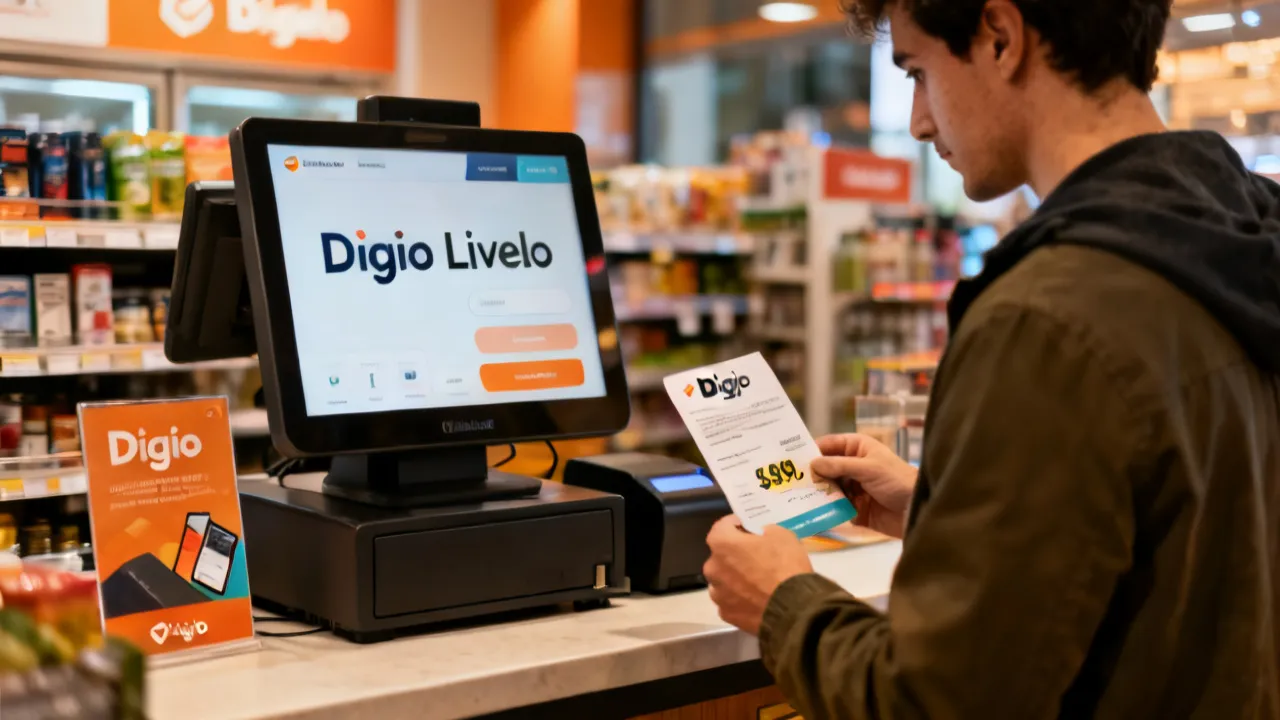
If you’re considering Digio Livelo as part of your everyday purchases or rewards routine, the smartest next step is to compare offers side by side—focusing on price, supplier terms, and eligibility requirements rather than relying on marketing tone. Because programs like this are often shaped by partner rules, the “top” choice can differ from one shopper to another depending on how you pay, what you buy, and where you’re located nearby.
This guide is written to support an objective evaluation: what to check, what questions to ask suppliers, and how to reduce the risk of misunderstandings around conditions, expiration, or fulfillment timelines.
Key takeaway: treat Digio Livelo as a system whose outcome depends on the supplier’s implementation and the terms attached to each offer.
Digio Livelo is commonly discussed as a branded commerce-and-rewards arrangement, where purchasing activity is linked to benefits (often points, perks, or redeemable value) managed through an ecosystem of partners. In practice, programs of this kind may involve:
Because partner implementations can vary, it’s possible for two customers to see different real-world outcomes even when they choose the same brand name—especially when offers are region-specific or constrained by local partner availability.
To illustrate why “nearby” matters, consider how local availability often interacts with operational timing: if a supplier can only fulfill a product after a delay, the reward credit may be tied to shipment or delivery. That means a deal that looks identical on the day you sign up could produce a different benefit timeline (or even a different eligibility outcome) if fulfillment happens after a promotion ends.
Another common factor is category filtering. Many rewards programs don’t treat all SKUs equally: some products might be eligible, others explicitly excluded. And even if the reward is advertised at the program level, the supplier might apply it only to selected categories like essentials, accessories, or specific tiers of services.
When shoppers compare options connected to Digio Livelo nearby, they often look first at price. Yet “price” alone rarely predicts value, because total cost can be affected by:
To keep your decision objective, compare effective cost rather than sticker price. If your benefits can be quantified in the same unit you use to judge savings (for example, points-to-value conversion rules specified by the program), you can estimate the net outcome more fairly.
Effective cost is the difference between what you pay and what you reasonably expect to receive—after you account for eligibility and the chance of reversal. For many shoppers, that may mean making a conservative estimate: treat rewards as “pending” until credited, and assume reversals may occur if refunds happen.
Also consider that the “value” side of the equation may include non-monetary elements. For example, some benefit structures effectively reimburse delivery costs, reduce future purchase friction, or provide perks that matter more to you (like priority support or additional discounts). If your goal is to optimize convenience (not just savings), you should still compare on documented eligibility and time windows rather than on what sounds good.
Finally, be wary of offers that require bundling. Bundling can raise effective cost if you would not otherwise buy the additional items. When a promotion requires a minimum spend, the question becomes: are you spending because you need those items, or because you need to “reach the threshold” to unlock rewards?
From an industry-expert perspective, one of the very overlooked issues in rewards-adjacent programs is supplier variability. Even if the brand umbrella stays the same, supplier-level operations can affect outcomes. Before choosing an offer, confirm:
These checks reduce the chance that your expected benefits don’t apply due to operational differences between partners.
Supplier variability shows up in a few predictable ways:
Therefore, comparing offers is not just comparing “what rewards you get,” but also comparing the operational reliability of the supplier’s participation in the program.
When you’re making decisions nearby, local convenience often influences your plan: store pickup vs. delivery, typical service hours, and the time it takes for returns to be processed. In urban areas, it’s common to compare digital offers while still relying on nearby physical availability. For example, if you’re used to visiting well-known retail streets, checking supplier stock availability can matter as much as the advertised reward mechanism.
For a practical approach:
“Nearby” can also affect how your transaction is logged. For instance, pickup orders might be processed differently than delivery orders. Some programs treat pickup as eligible only when the store confirms collection. If you’re comparing suppliers, check whether the reward credit timeline aligns with how quickly you can actually receive the product.
Another local factor is seasonal and scheduling. Some partners experience demand spikes around holidays or local events, which can delay processing. If the reward credit depends on shipment, a delay might push your reward into a later accounting period or even a later promotional cycle with different rules.
Finally, don’t ignore practicalities like return shipping logistics for nearby delivery. If return shipping costs are handled differently per supplier, and if those costs affect the effective cost calculation, the “better” reward deal might not be better in total.
The table below summarizes comparison criteria and “conditions/requirements” you should verify with the supplier or program terms. It is designed to help you decide fast, but still objectively.
| Decision element | What to verify for Digio Livelo | Why it matters |
|---|---|---|
| Eligibility | Whether your account, payment method, and product category qualify | Non-eligible purchases may not credit benefits |
| Pricing structure | Whether any fees apply (shipping/service) and how promos change the final amount | Effective cost may differ from the listed price |
| Supplier participation | Which supplier fulfills the order and whether they participate in the offer | Partner-specific rules often control reward outcomes |
| Benefit timing | When benefits are credited (after shipment, after delivery, or after payment clearing) | Timing affects budgeting and dispute windows |
| Credit accuracy process | How missing or delayed credits are handled; required evidence | Prevents loss of expected value and reduces friction |
| Return and reversal rules | Whether returns revoke credited benefits and how reversals are calculated | Protects you from unintended net losses |
| Promotion window | Start/end dates and any minimum spend or bundle requirements | Offers can change; timing controls eligibility |
| Support channel | Who you contact for issues and expected response timelines | Determines how quickly problems get resolved |
Many shoppers compare offers as if the program behaves like a simple coupon: buy now, get reward now (or later). In reality, rewards often depend on multiple “state transitions” in the order lifecycle. When you’re shopping nearby—especially with pickup, local delivery routes, or appointment-based services—those state transitions can vary.
To avoid surprises, identify which trigger matters in your situation:
Then compare each offer in relation to your likely timeline. For example, if a promotion ends at midnight on a certain date but your item is shipped two days later, an offer with shipment-based eligibility might fail while an order-date-based offer might still succeed.
If the offers you’re comparing are both “valid,” the difference might be which trigger each supplier uses. Two offers advertised under the same name may still use different internal processing rules, causing different credit outcomes in edge cases.
When companies manage rewards programs, they typically aim to minimize abuse while keeping redemption fair and administratively manageable. That design reality often means:
So instead of asking only “Is the deal good?”, ask “Is the deal operationally compatible with how I buy, return, and pay?” This mindset leads to fewer surprises and more consistent outcomes.
From a compliance standpoint, rewards programs often have to handle questions like: “How do we prove eligibility?” and “What prevents arbitrage?” The operational answer is usually a set of strict matching steps: a program must match your transaction to an eligible category, verify you used an eligible payment method, and confirm the transaction met timing requirements. If any of these matching steps fails, you might not receive credit even if the offer sounded broad.
That’s why procurement-style thinking focuses on evidence. If you can capture evidence (order confirmation, invoice, receipt, delivery proof), you reduce the risk of an outcome dispute. While most transactions credit automatically, the ability to document helps when credit fails due to a system mismatch.
Use the steps below as a repeatable evaluation workflow. The goal is to reduce uncertainty and ensure you can defend your choice if the outcome differs from expectation.
Before comparing, confirm the name of the supplier fulfilling the order tied to Digio Livelo. Marketing pages may present the brand, but suppliers execute the transaction.
Practical tip: when possible, capture a screenshot or save the order page that shows (a) the supplier, (b) the reward mechanism, and (c) the promotion window. If the program is delivered through multiple partner stores, the “supplier identity” may change even if the overall brand remains the same.
Record the total payable amount including taxes, delivery, and service fees. If a promotional discount is involved, note any minimum spend and what items it applies to.
Also check whether delivery fees change based on location or time slots. If you’re comparing offers “nearby,” ensure you’re comparing similar delivery conditions. A low advertised price can be offset by higher delivery or service fees that apply only to certain regions.
Check whether your purchases qualify based on:
If eligibility is unclear, contact support and request confirmation in writing (or via an official message trail).
When asking eligibility questions, be specific. Instead of asking “Does this qualify?”, ask “Does [product] qualify under [offer name] if purchased with [payment method] from [supplier] on [estimated date]?” Specific questions are more likely to receive unambiguous answers.
Find out when benefits are credited and how you can verify them (order status, account ledger, or notifications). This is crucial if you plan purchases close to a promotion end date.
Tracking matters because you’re trying to know not only when the reward “should” happen but also how you’ll know it did happen. Some programs provide a dashboard ledger; others rely on email notifications; others require checking a reward history page. If you can’t easily track credit, you’ll struggle to detect missing rewards in time.
A fair deal must remain fair after returns. Determine whether:
Additionally, look for how long after a refund a reversal may occur. Some systems reverse immediately; others reverse after reconciliation. If you return an item after the reward has already been credited and later reversed, you might briefly see net value and then lose it. Budget accordingly.
If you’re not sure about return behavior, consider your real-world likelihood of returning the item. If returns are common for the category (e.g., sizes, electronics condition-sensitive categories), prioritize offers with clearer reversal policies and more straightforward dispute processes.
If the program specifies how benefits convert to value, estimate net outcome using the conversion rules. If conversion rules are not transparent, treat the offer as having uncertain value and do not rely on optimistic assumptions.
You can also compare value consistency. An offer that provides a fixed cashback-like amount may be easier to value than an offer that provides points with complex redemption tiers. If redemption requires additional conditions (like a minimum reward balance or restricted redemption partners), the real value may be less predictable.
Also think about future use. If the reward can only be redeemed at the same supplier, consider whether you actually plan to buy there again soon. If not, the effective value declines—even if the reward amount is numerically high.
Keep a short record: offer name, supplier, order total, eligibility notes, and expected credit timing. This reduces friction if you must resolve a missing credit issue.
Documentation doesn’t need to be complex. A simple note with order ID, date/time, and the reward terms you saw at checkout can save significant time later.
Even when offers look similar, the “fine print” can change the result. For Digio Livelo decisions, common conditions include:
If any requirement is ambiguous, ask the supplier or program support to confirm. A program can be legitimate and still have strict administrative requirements.
Beyond these common categories, there are other “watch-outs” that often appear in real-world reward implementations:
None of these items mean “don’t use the program.” They mean “evaluate the offer as a process with constraints,” not as a promise that always triggers automatically.
To make your comparison more accurate, run a few “what if” scenarios. Rewards programs can behave differently depending on order outcome. Consider the most likely operational paths:
If your order is eligible, processed quickly, and credited as expected, the net benefit could approximate your advertised estimate. However, you still want to confirm that:
Even in best-case scenarios, rewards may expire sooner than you anticipate or require redemption by a specific date.
Delays happen. In that case, the program trigger matters. If rewards are credited only after delivery, but the promotion window changes or eligibility rules are tied to shipment date, a delay could cause the transaction to fall outside the conditions.
When comparing offers, check the credit trigger and the supplier’s typical processing time for nearby fulfillment. If one supplier is consistently slower in your experience, and the reward trigger is shipment-based, you might prefer a different supplier or a different promotion window.
Partial returns often lead to partial reversals or complicated recalculations. If the offer credits based on order value or based on eligible line items, returning one item might affect the eligibility math for the remaining items. Some programs reverse rewards proportional to the refunded amount; others reverse everything if eligibility conditions are not met after the return adjustment.
Before buying, check whether partial returns reduce rewards proportionally and whether reversals are transparent. The ability to predict this reduces frustration if you need to return one item.
Sometimes the reward credits first, then your refund is processed later. This can create a temporary net gain that later becomes a net loss if reversal occurs. If you are comparing offers, decide which structure is less risky for your personal risk tolerance.
For example, if you’re more likely to return items (fit issues, quality checks), you might prefer offers with clearer reversal behavior and faster resolution cycles—or you might avoid promotions that require rewards to be credited before the return period ends.
In a dispute scenario, the quality of the evidence and the speed of the workflow matter more than the exact reward amount. Compare:
Two offers with identical reward amounts can feel drastically different in practice if one supplier’s support process is smoother.
Digio Livelo is generally used to describe a commerce-and-rewards arrangement where qualifying purchases are linked to benefits managed through an ecosystem of partners. Your purchase outcome depends on the supplier’s participation and the offer’s eligibility rules.
In other words, the brand may act like a label, but the supplier and program rules act like the “engine” that determines whether benefits credit successfully.
Check the offer terms for eligible product categories, required account linkage, and qualifying payment methods. If the terms don’t clearly state eligibility, contact the supplier’s customer support and request confirmation tied to your specific order details.
When contacting support, aim for a response that includes the offer name and the exact condition. If they reply with generic statements, ask them to confirm eligibility for your product category and payment type.
Very issues come from eligibility mismatches (wrong product category, payment method, missing account linkage) or from processing status (credit occurs after shipment/delivery). Less commonly, crediting can be delayed due to administrative reconciliation.
Another less obvious cause is mismatch between expected order amounts and the final invoice. If discounts, taxes, or surcharges change the final eligible amount, the system may fail to match the transaction to the promotion conditions.
Returns are typically allowed under standard supplier policies, but reward benefits may be reversed when a refund is processed. Always review the return and reversal terms before assuming your net benefit remains unchanged.
If you’re returning a product purchased under a rewards offer, treat the rewards as “conditional value” until the return window and reversal process are complete.
Compare total cost (including fees), eligibility conditions, benefit timing, and the credit accuracy process. Two similar prices can produce different outcomes if one supplier has stricter eligibility or later credit windows.
You can also compare operational reliability. If one supplier consistently credits quickly in your experience and another supplier often delays, that difference can affect how confident you can be in the effective value.
Timelines vary by program design and supplier processing steps. Look for the stated credit timing in official terms, and use order status as the source of truth. If the timing is significantly beyond the stated window, open a case with evidence.
When opening a case, provide order ID, date/time, payment method, and screenshots of eligibility terms. If available, include a copy of the invoice and proof of delivery.
For top results, no. Even legitimate offers can require specific conditions such as minimum spend, eligible categories, and account linkage. An objective approach is to verify eligibility before purchase.
A useful rule of thumb is: if the offer includes any conditions, treat it as conditional until you verify. That doesn’t make the deal bad—it just makes your planning more accurate.
Yes. Purchases near an end date can be risky when eligibility is tied to shipment or delivery rather than order date. Even if you place the order before the deadline, a delay could push the transaction into a period where eligibility no longer applies. When comparing offers, prefer ones whose eligibility trigger matches your expected delivery timeline.
Sometimes, but not always. Stacking rules vary by offer and supplier. Some promotions may explicitly prohibit combining rewards with other discounts or require that only one promotion applies per order. Review the “stacking” language in the offer terms before assuming you can stack.
First, confirm that your purchase qualifies and that your account was linked correctly at purchase time. Then check the program’s crediting timeline. If it exceeds the stated window, contact support with evidence. Keep the communications trail official and record case numbers.
In some cases, missing credits can be resolved by confirming invoice details or eligible line items, especially if the supplier can provide confirmation of eligible categories.
To keep this guide grounded in verifiable consumer-decision principles, it aligns with well-established standards in consumer protection and dispute-handling practices. For general frameworks on consumer rights, transparency, and unfair commercial practices, readers can refer to:
Because the specifics of Digio Livelo offers depend on supplier participation and local rules nearby, your very authoritative source remains the official offer terms presented at purchase and the documented support response you receive.
It’s also helpful to consider that many jurisdictions require businesses to provide clear information about promotional terms. When you ask support to confirm eligibility, you are effectively exercising your right to transparency. Keeping a written trail is a practical way to support that transparency in case of a dispute.
Even when you follow a structured comparison workflow, there are recurring watch-outs that can still cause disappointment. Here are common issues to keep on your radar.
Sometimes a deal includes a discount at checkout and a separate rewards credit later. If you compare only the discount portion, you might underestimate the total value (or overestimate it) when the reward has strict eligibility conditions.
Make sure you compare offers by both components: immediate price changes and delayed rewards.
In many programs, eligibility is per category or per item. If you add an ineligible item to your cart, you might reduce the portion of spend that triggers rewards. Depending on the program logic, you could receive partial credits or none.
Compare offers by verifying which items are eligible, not just by looking at the overall promotion name.
Some rewards require the program account to be connected before payment. If you forget to link or if your account session resets, the system might not attribute the transaction to your account. The result can be “correct receipt, missing rewards.”
Before checkout, verify account linkage on the same device and same session you’ll use to pay.
Even if rewards credit successfully, rewards might expire quickly or be redeemable only within certain windows. When comparing, treat reward credit expiration as part of effective value—especially if the redemption requires using the supplier soon.
For shoppers who return frequently, reversal rules are critical. Some reversals can remove previously redeemed benefits or reduce reward balances. If you redeem rewards quickly and then return an item, you could face a more complex net reconciliation.
Marketing usually highlights the “wins.” The real comparison should account for support processes if something goes wrong. A supplier with weaker tracking or slower dispute resolution can turn a good numeric reward into a frustrating experience.
For shoppers evaluating Digio Livelo nearby, the decisive factors are rarely the brand name alone. Instead, focus on the supplier’s participation, the eligibility requirements tied to your specific items and payment method, and the operational realities of credit timing, returns, and reversals. With a structured comparison workflow, you can make a choice that is both economically sensible and administratively defensible.
If you want, share (1) the type of product/service you plan to buy, (2) the supplier you’re considering, and (3) the offer terms you see. I can help you turn them into a clear checklist and identify any “watch-outs” before purchase.
Striking the Perfect Balance: Navigating Premiums and Out-of-Pocket Expenses in Senior Insurance Plans

Explore the Tranquil Bliss of Idyllic Rural Retreats

How to Make Lasting Memories at Disneyland Attractions

Affordable Phones and Plans for Seniors

Affordable Full Mouth Dental Implants Near You

Unlock the Top Kept Secrets to Finding Your Ideal Dentist for Flawless Dental Implant Results!

Discovering Springdale Estates

Unveiling RS Sul Telecom Services

The Guide to Car Trading


Maximizing Benefits with Cash Rewards Cards
This comprehensive guide explores the nuances of using Cash Rewards Cards to maximize financial benefits. With a focus on how consumers can harness these cards for cost-efficiency, the article provides an in-depth examination of their functionality, various reward structures, and strategies to optimize their use. Featuring professional insights, the piece serves as a detailed resource for anyone looking to enhance their purchasing power through strategic card usage.

The Comprehensive Guide to Cash Rewards Card
Discover how a Cash Rewards Card can transform your spending habits and financial health. These cards offer users points for money spent, which can be redeemed for cash. Utilizing a rewards card effectively can bring significant benefits, but understanding the terms, fees, and management practices is essential for maximizing rewards and avoiding debt.

Understanding Calcard Sinop for Industrial Supply Decisions
This guide explains how Calcard Sinop fits into industrial procurement decisions, focusing on how buyers compare supplier options, specification compatibility, and delivery reliability. The background sections objectively define what the term typically refers to in supply contexts and why sourcing discipline matters. Readers also get practical criteria for evaluating offers and a detailed FAQ for smoother, risk-aware purchasing.

Calcard Sinop: Industry Overview and Sourcing Guide
Calcard Sinop products are evaluated here as a practical sourcing and compliance guide. The article objectively explains what “Calcard Sinop” commonly refers to in commerce and supply contexts, outlines selection criteria, discusses supplier considerations and procurement conditions, and provides a comparison table, step-by-step checklist, and FAQs to help buyers make defensible decisions.

Calcard Sinop: Buying Guidance and Industry Context
Calcard Sinop products are evaluated here for informed selection, focusing on usage suitability, documentation, and supplier credibility. Then the guide offers an objective background on what “Calcard Sinop” typically refers to in medical supply and product ecosystems, clarifying how professionals compare specifications, compatibility, and traceability across sourcing options.

Calcard Sinop: Expert Guide to Choosing Carefully
This guide helps you evaluate Calcard Sinop options with an objective, expert lens—covering what Calcard Sinop typically implies, how to compare offerings, and what questions to ask before committing. It then explains the practical decision criteria used in the dental/medical supply ecosystem, focusing on quality, documentation, traceability, and supplier accountability.
