This guide explains how Digio Livelo works as a rewards-focused plan, what to consider before subscribing, and which factors typically affect value. Digio Livelo is commonly positioned within loyalty ecosystems where consumers earn benefits through eligible purchases and account activity. The guide provides an objective framework for comparing plan structures, requirements, and service experience.
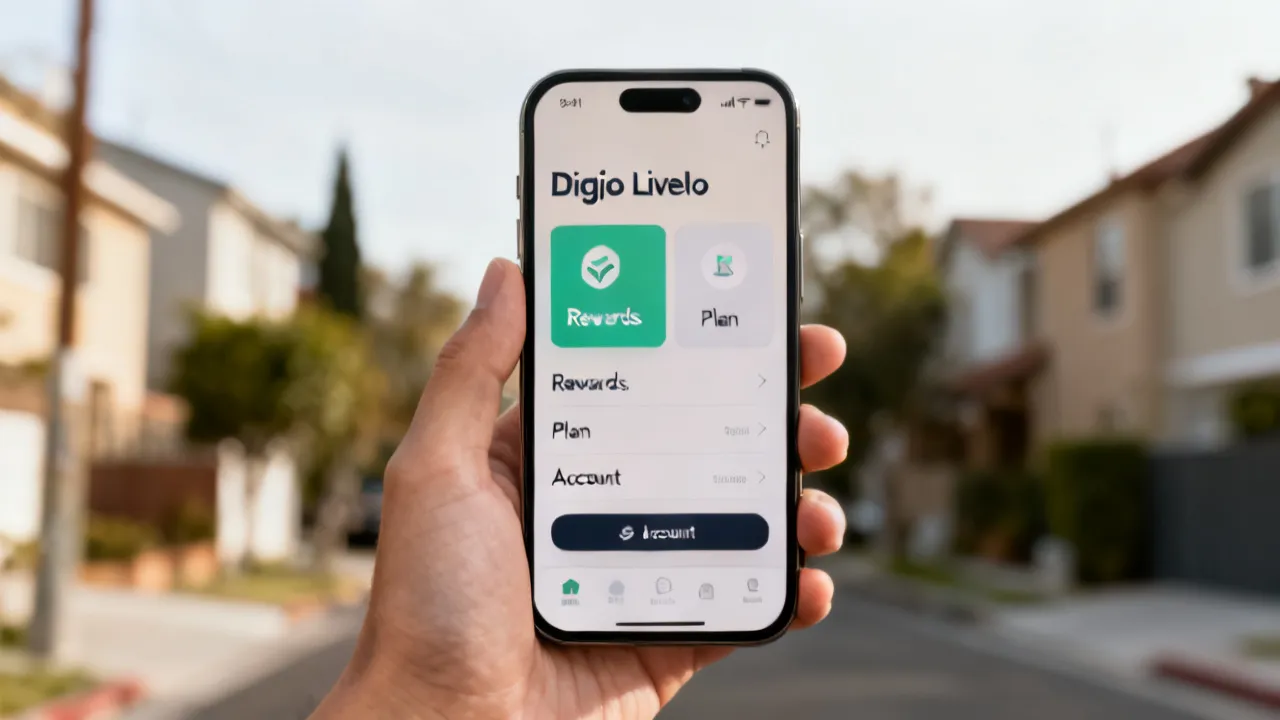
Choosing a rewards plan is rarely just about the “headline” benefit—how the program works day to day matters more. This guide breaks down Digio Livelo in an objective, expert-led way: the value drivers you should verify, the typical conditions that govern eligibility, and the practical expectations for reliability and user experience. If you’re evaluating Digio Livelo as part of your broader loyalty strategy, use the criteria below to compare plan structures confidently.
In practice, most disappointment in loyalty programs comes from a predictable set of causes: misunderstood eligibility, delayed posting, redemption friction, caps or limited inventory, and complex account/terms requirements. The intent of this article is to help you avoid those pitfalls systematically. Rather than relying on marketing language or peer anecdotes, you’ll learn what to check, why it matters, and how to translate the program’s structure into expected real-world outcomes.
Rewards programs often share similar goals—encouraging repeat purchases and increasing engagement—but they differ in mechanics. Some programs prioritize points accrual; others emphasize tiers, redemption rules, partner offers, or time-based promotions. With Digio Livelo, the central question is not only what you can earn, but how consistently you can earn it, what qualifies, and how straightforward it is to track and redeem benefits.
Two people can look at the same rewards plan and have opposite experiences because their purchasing behavior and transaction types differ. One user may buy only eligible items at participating merchants and redeems benefits quickly. Another user may have the “right” intent but the wrong transaction pattern—such as buying through excluded channels, using payment methods that aren’t eligible, or making purchases that later reverse due to returns, exchanges, or shipping changes. The plan may be perfectly functional for the first person while performing poorly for the second.
To evaluate Digio Livelo properly, you should treat it as a system. Every loyalty system has constraints. Even “generous” headline offers are typically balanced by: eligibility limitations, caps, redemption windows, service conditions, and operational rules around reversals and settlement. The best programs reduce friction and uncertainty so that your expectations match outcomes with minimal effort.
In many loyalty ecosystems, the strongest user outcomes come from aligning the plan’s rules with your actual shopping and spending patterns. In other words, a plan can appear attractive on a screen yet underperform if your eligible transactions are infrequent, if exclusions are common, or if redemption timing is restrictive.
Very rewards programs, including those positioned similarly to Digio Livelo, revolve around four functional layers:
Your top approach is to examine these layers in the program’s official terms and user interface disclosures rather than relying on word-of-mouth interpretations.
It can help to think of the loyalty journey in a sequence. First, do your actions qualify? Next, does the program record and confirm your qualifying actions? Then, can you use the earned rewards in a way that matches your goal—discounts, free services, cashback, upgrades, or partner-specific perks? Finally, what happens when things go wrong? Governance covers how the program corrects errors and applies adjustments.
When you evaluate a program like Digio Livelo, you’re effectively assessing reliability across the entire sequence, not just the potential upside. A plan with excellent accrual but difficult redemption can feel worse than a plan with moderate accrual but easy redemption. Likewise, a plan with decent rewards but poor transparency can create anxiety and lead users to abandon it because they can’t confirm what they have.
Below are the practical levers that typically determine whether Digio Livelo delivers day-to-day value. Note that exact rules can vary by plan version, promotion cycle, and account status—so you should confirm details directly in the program materials available to your account.
For clarity, “value” in rewards programs is not only the nominal reward rate. Value is the expected outcome after accounting for eligibility likelihood, posting delays, reversals, and redemption effort. Even small frictions—like confusion about which transactions qualify—can reduce the real-world utility of the plan. The goal is to identify what you can expect when you use the program in your actual routine.
A professional evaluation begins with eligibility. Rewards are often tied to specific merchant categories, product lines, payment methods, or channel types (online vs. in-store). For Digio Livelo-style programs, the critical points to verify are:
This is where many users experience the biggest mismatch between expectation and reality. A plan can be “good” on paper but provide limited accrual if your purchase profile doesn’t match eligibility.
To evaluate eligibility rigorously, you should not just ask, “Do I earn on my usual spending?” You should ask a sharper set of questions:
Another subtle eligibility issue is how the program interprets “qualifying” versus “completed.” Some plans only count when an order is fully completed and shipped; others count at authorization. If your typical shopping includes frequent modifications—like partial fulfillment, backorders, or substitutions—confirm what counts as “earned.”
Returns are also decisive. It’s common for rewards to be reversed when a purchase is returned. But the timing can vary: rewards may reverse immediately, on the return confirmation date, or after the refund posts. If you rely on rewards promptly, reversal timing can make earnings appear inconsistent.
Even when rewards accrue reliably, value can drop if redemption is inconvenient. Consider these objective checks:
From an industry perspective, redemption friction is one of the very common reasons users feel “the program doesn’t work,” even when accrual is correct. A smooth path from earning to using benefits tends to create better good satisfaction.
Redemption is not a single decision. It’s a series of decisions that must align: when you can redeem, what you can redeem for, and where you can redeem. Many programs allow you to “cash out” only into certain products or channels. Others require redeeming in-app, claiming codes, or booking through partner systems.
When evaluating Digio Livelo, you should map your redemption needs to the program’s available paths:
Minimum redemption thresholds also affect perceived value. Suppose your reward balance earns steadily, but you can only redeem after reaching a specific amount. If you frequently shop below that threshold or if eligibility is low, you might accumulate points slowly and lose momentum. Conversely, a low threshold can make the program feel “alive” even if the reward rate is modest.
Time limits (expiration) are another decisive variable. Some programs let rewards expire quickly. Even if earnings are possible, expiration can reduce expected value—especially for occasional users. If Digio Livelo offers expiration rules, confirm how they are communicated and whether there are grace periods or extension mechanisms due to account status or system issues.
Finally, confirm any exchange caps. Caps can be global, per user per day/week, or per merchant. If you frequently redeem during periods of high demand (holidays, promotional sales), caps can cause redemption disappointment. The more the program relies on limited resources, the more you should check cap behavior.
Another value driver is transparency. Users should be able to answer, quickly and accurately:
In well-designed loyalty ecosystems, the user interface reduces confusion and lowers customer support burden. When Digio Livelo is assessed, focus on how easy it is to audit your own rewards history.
Transparency is more than “showing a number.” It includes:
Auditing is crucial. When you can audit, you can detect mismatches early—before your balance becomes large enough to matter. You can also correct errors within the dispute window. If Digio Livelo provides an export or a history log, that helps users manage reconciliation for personal budgets.
Also pay attention to how the interface handles pending rewards. Many programs show pending rewards that later adjust. If Digio Livelo shows pending amounts, confirm whether pending amounts are included in redemption eligibility. Some systems require rewards to be fully confirmed before they can be redeemed; others allow redemption from pending balances, but then revoke if the underlying transaction reverses. From a user perspective, the latter behavior increases risk.
For a program like Digio Livelo, outcomes depend on operational reliability: how disputes are handled, how long corrections take, and how accessible customer support is. While user experience can vary by issue type, the objective goal is to confirm that:
If you expect occasional discrepancies—common in any large program—your strategy should include knowing how you’ll verify and escalate issues.
When you examine the service experience, don’t focus only on whether customer support exists. Focus on whether the support system is practical. A good dispute process is one where you can:
Resolution timelines matter because delayed corrections can cause your rewards to expire before they are reinstated. If expiration exists, ask whether corrections extend expiration or handle missed deadlines. Not every program does, so you need to confirm.
Account changes are also important. Many users update contact details, upgrade devices, replace cards, or switch payment methods. A well-run loyalty program ensures that eligibility is tied to stable identifiers or provides clear processes for linking cards/accounts. If Digio Livelo depends on payment instrument linking, confirm whether un-linking or re-linking affects future eligibility and what happens to already-queued rewards.
Finally, consider operational reliability in a broader sense: system availability, time to load rewards history, and stability of the account interface. When systems are unstable, users may perceive the program as failing even if eligibility rules are correct.
You mentioned price information and supplier details, but none were provided in your prompt. Because you requested an objective approach and avoidance of unverified claims, this article won’t invent pricing figures. Instead, here is a professional method you can use to evaluate the cost side:
To do this well, you should translate your spending behavior into expected reward outcomes. The simplest version is a “conservative” scenario, “likely” scenario, and “optimistic” scenario. The conservative scenario assumes you earn on only a portion of your typical spending due to eligibility constraints or occasional delays. The optimistic scenario assumes eligibility is high and redemption is straightforward. The likely scenario is your best guess based on actual categories you buy.
Here is a practical way to estimate expected accrual:
Now estimate redemption certainty:
Finally, compare net value against cost. If Digio Livelo is free, your cost is time and effort; if it has subscription pricing, net value must cover both monetary cost and any opportunity cost if redemption isn’t used.
If you share your specific plan type or the exact price terms you’re comparing, the evaluation framework can be tailored to your situation without introducing speculation.
You also referenced “supplier details,” but no supplier identity was included. In a professional context, you should treat the “supplier” as the entity responsible for administering the program mechanics. When evaluating Digio Livelo, confirm which organization:
From an industry standpoint, accountability clarity reduces risk. Users benefit when it’s obvious who owns the problem if rewards are missing or redemption fails.
Many rewards programs involve multiple parties—retailers, payment processors, platform apps, and partner issuers. While you don’t need to understand the full supply chain, you should confirm which party you can contact when something goes wrong. If a rewards entry is missing, you want a dispute path that doesn’t bounce responsibility between entities.
When reviewing Digio Livelo documentation, look for:
If the documentation is vague about who administers the program, it can become harder to escalate. A clear operator identity often correlates with clearer dispute procedures and more reliable governance.
Even when the mechanics are standardized, daily experience differs across markets. In many urban areas where people commute and handle payments frequently, rewards plans tend to be used as a “background benefit”—accumulating while consumers focus on convenience. The very satisfying programs make status visible at a glance, with minimal effort to understand how rewards are generated and used.
As you assess Digio Livelo, pay attention to how quickly the program reflects activity after transactions. Delays aren’t unusual in payment processing environments, but the program should clearly label “pending” and “confirmed” states to prevent confusion.
Localization can influence both eligibility and user experience. In some regions, partner networks are larger, and rewards are easier to redeem. In others, partners may be limited or redemption channels may be fewer. Market-specific regulations can also affect how financial benefits are issued or displayed. These differences matter because your expected value depends on what you can realistically do within your local context.
Everyday use also depends on human factors: how frequently you check the app, how quickly you shop, and how likely you are to return items. For example:
Another day-to-day factor is mobile experience. If Digio Livelo relies on an app, consider whether the interface loads quickly, whether rewards history is easily accessible, and whether it remains stable during peak shopping times. A slow interface can create practical friction even if the rules are fair.
Finally, consider how Digio Livelo communicates changes. Good programs proactively tell users about rule changes, partner updates, or upcoming redemption limitations. Poor communication can cause users to discover eligibility or redemption restrictions only after frustration builds.
The table below reframes supplementary information you should verify when comparing Digio Livelo. It is written as a condition checklist rather than a claim about specific versions, since exact terms can differ by account and promotion cycle.
| Area to Compare | What to Look For | Typical Requirement / Condition |
|---|---|---|
| Eligible Transactions | Which purchase types earn rewards | Rewards may exclude certain categories, partners, or payment channels |
| Accrual Timing | When rewards appear in your account | Rewards often post after settlement; “pending” status may apply temporarily |
| Adjustments | How cancellations affect rewards | Returns or reversals can reduce previously issued rewards |
| Redemption Rules | How you convert rewards to benefits | Minimum thresholds, availability limits, or time windows may apply |
| Account Status | Whether plan benefits depend on active status | Some rewards require an active plan enrollment or ongoing qualifying behavior |
| Customer Support Path | Dispute workflow and evidence needed | Programs typically require transaction identifiers and timestamps |
| Limits and Caps | Whether there are earning or redemption caps | Some tiers or promotions have caps per period |
| Reward Expiration | Whether earned rewards expire and when | Expiration may be tied to posting dates or promotion cycles |
| Reward Reconciliation | How the system corrects errors | Adjustments may occur after confirmation; timelines vary |
| Data Accuracy | Whether transaction attribution is clear | Better programs provide item-level or receipt-level attribution |
| Program Changes | How policy changes are communicated | Terms may change; notice periods and effective dates vary |
When you’re evaluating a rewards plan like Digio Livelo, a structured approach prevents common decision errors. Use the steps below as an expert workflow.
That “small transaction test” deserves emphasis. Many people skip it, but it can prevent months of uncertainty. A test transaction helps you validate three things quickly: eligibility recognition, posting delay expectations, and whether the rewards entry is attributable enough for dispute if something goes wrong.
When you do a test purchase, capture basics such as the order ID, purchase date/time, and receipt confirmation. Then compare the timeline of account updates: when the reward appears as pending, when it becomes confirmed, and whether it changes due to settlement or corrections. This small effort can tell you more than reading general descriptions.
Rewards and loyalty ecosystems are widely studied in consumer finance and retail analytics. Industry reporting and research from recognized organizations consistently emphasize that user satisfaction depends on perceived fairness, transparency, and reliability of accrual and redemption.
For readers seeking foundational concepts about loyalty programs and consumer financial behavior, reputable sources include:
In broader consumer behavior terms, “friction” is a key driver. If users have to repeatedly do extra steps to redeem rewards, they may decide it’s not worth the effort. If they can’t verify earned rewards easily, they may stop trusting the system. If redemption depends on timing outside their control (limited availability), satisfaction drops even when the rewards are nominally valuable.
In addition, disclosure quality matters. Two programs with identical rules can feel different depending on how clearly the rules are presented. Good programs provide plain-language guidance in the UI and offer access to official terms without forcing users to search. Poor programs hide key constraints in footnotes or obscure menus.
Note: This article intentionally avoids quoting specific performance statistics about Digio Livelo because you did not provide verified metrics or a source dataset in the prompt.
Even strong programs can disappoint under certain conditions. Consider these common limitations for rewards plans like Digio Livelo:
The objective takeaway: the “top” plan is the one where your behavior fits the program’s structure and where the interface and policies make it easy to verify your rewards.
To reduce risk, you should treat loyalty plans like any structured financial benefit: you need to understand the rules, then verify your outcomes. The risk isn’t necessarily that the program is “bad”; risk is that the program’s expected value may be lower than what you intuitively assume.
Here are additional risks worth checking, especially if you use rewards frequently:
None of these risks automatically indicate that Digio Livelo will underperform. They are simply categories of failure that appear across many loyalty systems. By checking the specific rules for your account, you can decide whether the risks are manageable.
Digio Livelo is generally presented as a rewards-oriented program within a loyalty ecosystem, where benefits accrue based on eligible activities and can be managed through an account interface. The exact features depend on the plan version and the participating partners described in the official terms.
Because rewards programs often evolve, the best source of truth is the documentation tied to your account. Features may change during promotion cycles, and eligibility could vary between regions or between plan tiers (if applicable). If you’re comparing it to other plans, ensure you’re comparing equivalent plan versions.
Rewards typically accumulate through eligible transactions and/or partner offers. The very important factor is eligibility—what categories, merchants, or channels qualify—and when rewards are posted (pending vs. confirmed).
In many systems, the accrual mechanics can include base earning plus promotional multipliers. Promotional multipliers can be time-bound, require offer activation, or apply only to certain merchants. If Digio Livelo includes multipliers, confirm: (1) whether activation is required, (2) how multipliers are calculated, and (3) whether multipliers apply to all purchases in a category or only selected items.
Delays can occur due to payment settlement cycles, verification steps, or adjustments after returns/cancellations. A well-designed program shows pending status and provides guidance on expected posting windows.
It can be helpful to distinguish between three timelines:
If Digio Livelo communicates only “rewards will be added,” users may be surprised by the difference between those timelines. If you see pending rewards, also verify whether pending rewards can be redeemed immediately or only after confirmation.
Confirm redemption options, minimum thresholds, expiration rules (if any), and any caps. Also check whether your rewards are eligible for the specific redemption path you want.
Before you redeem, you should also check whether the redemption will affect your future eligibility. Some programs restrict redemption depending on plan status. Others may require that the account remains active until redemption is completed. If Digio Livelo has such conditions, it’s best to know before you spend.
Many rewards systems adjust balances based on reversals. If the program’s policy states that rewards are reduced when transactions are reversed, your account may reflect that change after the adjustment is processed.
A return can be handled in different stages: canceled before shipment, returned after shipment, or partially returned. The reconciliation rule might differ. For accurate expectations, check whether partial returns reduce rewards proportionally or whether the system reverses based on original order value.
Use the program’s dispute process. Prepare transaction identifiers, dates, and supporting evidence. A professional evaluation includes understanding the support workflow before you need it.
To improve success rates, you should organize evidence logically. For example: transaction receipt + order ID + purchase date/time + account identifier + a screenshot of what you expected to earn (if the UI shows an expected reward). Even if Digio Livelo’s support requires a specific form, organizing evidence ahead of time reduces delays.
It depends on eligibility frequency and redemption preferences. If your eligible transaction volume is low, some plans may not provide enough value to offset costs or effort. Compare expected benefit using your real activity rather than assumptions.
Occasional users are most sensitive to redemption thresholds and expiration. If rewards expire quickly or if you must reach a high minimum to redeem, the program’s effective value can approach zero. On the other hand, if Digio Livelo has low thresholds and a clear redemption calendar, it can still be worthwhile.
Some programs require active enrollment or ongoing qualifying behavior. Others tie benefits to a defined period. Verify the conditions in the official plan terms linked to your account.
If Digio Livelo is subscription-like, check what happens to earned but unredeemed rewards if you cancel. Some programs allow rewards to remain available until expiration; others reduce or remove balances when membership ends. If you’re thinking about joining and leaving based on spending seasons, you need this detail.
As a sector analyst would advise, your goal is not to “hope” the plan works—it is to validate it. With Digio Livelo, validate three things early: eligibility alignment, redemption feasibility, and transparency in your account. If those three are strong, the program is more likely to improve your overall rewards experience rather than create friction.
Here is what “validate” should look like in practice:
If any one of these fails, adjust your decision. For example, if redemption is possible but thresholds are too high for your spending frequency, the program may be less suitable. If eligibility is broad but transparency is poor, you may face ongoing uncertainty and frustration. If transparency is excellent but eligibility is narrow, you might still choose it—but only if your behavior truly matches the eligible categories.
If you are comparing Digio Livelo with other rewards offers, create a simple scorecard: how well each plan matches your purchases, how clear the rewards tracking is, and how easily you can redeem the benefits you actually want. This decision method is time-efficient and reduces the chance of disappointment—especially when terms vary across promotions and plan tiers.
To make the scorecard effective, score each plan across the same checklist and use your real spending data. Suggested score categories:
Finally, remember that loyalty plans can be “situationally optimal.” A program might be perfect for your quarterly shopping spree but not for everyday small purchases. If you can align Digio Livelo’s mechanics to your spending patterns, you’ll get more value than a user whose behavior doesn’t match the plan’s structure.
If you share any additional details you have (such as the specific Digio Livelo plan type, any listed price terms, and the participating supplier or partners you’re considering), I can help you apply the same expert framework more precisely—without using speculative or unverified claims.
Striking the Perfect Balance: Navigating Premiums and Out-of-Pocket Expenses in Senior Insurance Plans

Explore the Tranquil Bliss of Idyllic Rural Retreats

How to Make Lasting Memories at Disneyland Attractions

Affordable Phones and Plans for Seniors

Affordable Full Mouth Dental Implants Near You

Unlock the Top Kept Secrets to Finding Your Ideal Dentist for Flawless Dental Implant Results!

Discovering Springdale Estates

Unveiling RS Sul Telecom Services

The Guide to Car Trading


Understanding the Concept of Ibiaeon
Dive into the groundbreaking concept of Ibiaeon, a theoretical model that combines technological advancements with philosophical perspectives. Ibiaeon represents a unique intersection where innovation meets ethical considerations, aiming to offer sustainable solutions for future societal challenges. This guide presents a deep analysis of the possibilities and implications associated with Ibiaeon.
Understanding the Sage Cte Platform
Sage Cte is a powerful software offering comprehensive solutions for businesses across various industries. This article delves into its capabilities, exploring its integration with different systems, cost implications, and the significance of choosing the right supplier. By understanding Sage Cte, businesses can make informed decisions for optimal operational efficiency and competitive advantage.
An In-Depth Look at Salesforce
Salesforce is a transformative cloud-based customer relationship management (CRM) platform that empowers businesses to streamline their sales, service, and marketing efforts. Known for its robust suite of tools and global reach, Salesforce has become an industry standard in CRM solutions, providing businesses with unparalleled insights and automation capabilities essential for growth and customer retention.
Seamless Integration of Sagepay and Salesforce
This guide highlights the integration of Sagepay with Salesforce, emphasizing the importance of harmonizing payment processing with customer relationship management. Sagepay offers secure online payment solutions, while Salesforce provides comprehensive CRM services, both popular among businesses seeking efficiency. Explore how they complement each other for enhanced business functionality.

Plansource BambooHR: Expert HR Platform Comparison Guide
Plansource BambooHR helps organizations standardize HR workflows with modern recruiting, onboarding, and people analytics. This guide explains what the keywords typically refer to in HR technology contexts, outlines how businesses evaluate these platforms, and provides an expert comparison framework so HR leaders can make informed sourcing decisions based on requirements, implementation scope, and total cost considerations.

Integrating Sagepay with Salesforce
Integrating Sagepay with Salesforce streamlines business operations by combining sophisticated CRM capabilities with a secure payment gateway. This fusion allows businesses to efficiently manage customer relations and transactions within one seamless framework. Sagepay ensures secure and swift payments, while Salesforce aids in comprehensive customer relationship management, enhancing overall operational productivity and customer satisfaction.