This guide explains how to evaluate an OpenEMR Demo effectively for clinical and administrative readiness. It provides objective background on OpenEMR’s role in electronic health records, typical demo goals, and the decision factors healthcare teams should consider—such as workflows, configuration needs, interoperability, security, and user training—before selecting an implementation path.
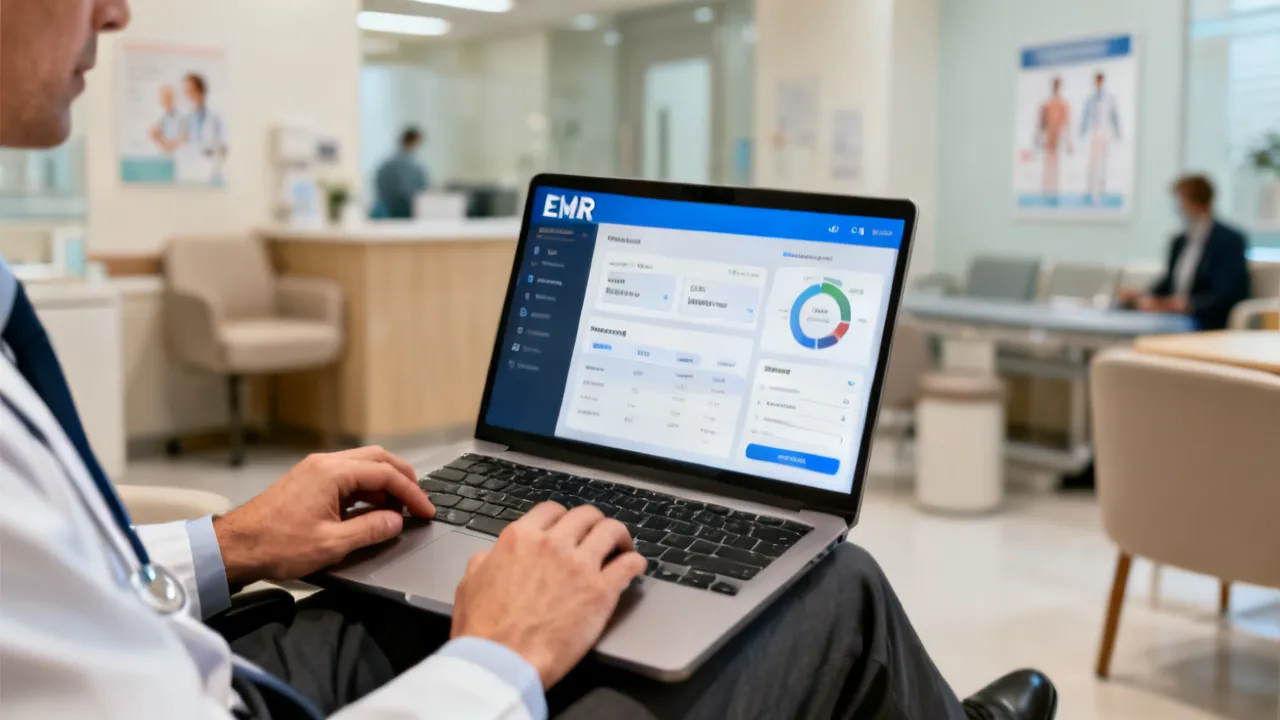
If your organization is assessing OpenEMR Demo options, the fastest path to a reliable decision is to treat the demo as a structured test of real workflows—not a marketing walkthrough. A good evaluation clarifies how the software supports clinical documentation, patient registration, scheduling, billing-adjacent administration, reporting, and day-to-day usability. It also helps you estimate configuration effort, governance requirements, and training scope early, reducing the risk of delays during implementation.
From an industry perspective, the very successful EMR selections are anchored in requirements: Who will use the system, what tasks must be completed, how data moves between systems, and how access controls will be enforced. A demo should therefore be mapped to your organization’s care model and operational constraints, not only to feature checklists.
In practice, many organizations discover the hard way that “it works in a demo” does not necessarily mean “it will work for us on our busiest clinic day.” Differences in clinical templates, encounter styles, role definitions, or reporting expectations can create hidden friction that only emerges when users attempt real work—under realistic time pressure and with the correct permissions. An OpenEMR Demo gives you the opportunity to surface those friction points early, while it’s still easy to influence scope and configuration decisions.
Moreover, an EMR rollout is not simply an IT project; it is a change to clinical behavior and operational routines. Providers learn a new way to document, staff learn how to schedule and manage patient workflows, and management relies on reporting for quality and compliance. If you evaluate only the “happy path” shown by a supplier, you may miss the realities that shape adoption: how quickly documentation can be completed, how confidently staff can find patient data, how access boundaries behave, and how safely the system handles audit trails and sensitive information.
For these reasons, an OpenEMR Demo matters most when it is treated as a measurable readiness exercise—one that creates actionable evidence for procurement, implementation planning, and governance approvals.
Start with the items that very strongly influence adoption and clinical safety. Early detection is the key: problems found in a demo stage are usually cheaper to fix than problems discovered after go-live.
In short, the demo should help you answer one question: “Can this system realistically support our care delivery process with manageable change effort?”
To make that question answerable, the evaluation team should also document what it felt like to use the system. Time measurements matter, but perceived confidence and cognitive load matter just as much. A system that is technically correct but mentally taxing can still fail adoption and produce workarounds that break consistency.
Also consider the “day-two” reality: the system you select must support ongoing template updates, new providers and staff onboarding, deactivation of accounts, evolving reporting needs, and periodic upgrades. If your demo doesn’t address those realities, ask more questions or request a follow-up technical session.
OpenEMR is widely discussed in the context of electronic medical records and related clinic information systems. In practical evaluations, an OpenEMR Demo is used to confirm how the platform manages patient information, clinical encounter documentation, provider workflows, appointment operations, and administrative data handling. Because clinics and healthcare networks vary significantly in practice style and compliance obligations, demo outcomes should be judged by fit and evidence from your own test scenarios.
While feature names can differ between vendors and distributions, the underlying evaluation approach is consistent across many EMR implementations: validate workflows, confirm security posture, test integration expectations, and verify that training materials and operational support can be delivered in your context.
It’s also helpful to think of an EMR not as a single product, but as a set of operational capabilities working together. Those capabilities include:
An effective OpenEMR Demo addresses all of these elements in a coordinated way, not as isolated screens.
To avoid “demo theater,” insist that your evaluation team runs scenario-based tests. Consider including representatives from clinical operations, IT/security, and practice management. When possible, use anonymized or synthetic patient cases that match your common visit types (e.g., new patient intake, follow-up chronic care, medication review, referral documentation, and encounter note completion).
Scenario-based evaluation is most effective when you use tasks that reflect the way work actually happens. Real clinicians don’t just create “a note.” They interpret patient history, reconcile med lists, address allergies and adverse reactions, review prior results, handle missing information, and document decisions in a way that fits clinical and coding expectations. Therefore, your test scripts should include decision points and common interruptions.
From a governance standpoint, also document what you observe: time to complete tasks, error frequency, missing steps, and friction points. This creates an evidence trail you can use to compare alternatives and to scope implementation work.
To make the evidence trail useful, define what “success” means before you start. For example:
In addition, request that the supplier demonstrate edge behaviors—for instance, what happens if a user tries to delete an entry, how the system handles contradictory data, how it supports correction workflows, or how it logs changes. Those behaviors matter for compliance and clinical accountability.
Finally, make sure evaluation is not limited to a single role. Many EMR projects fail because clinical teams and administrative teams experience different “truths.” The system must support continuity across roles: front desk staff schedule correctly, clinicians document consistently, and management can generate the reporting that leadership relies on.
Pricing for an OpenEMR Demo engagement can vary depending on licensing model, hosting choice, implementation services, and support commitments. Some suppliers offer demo instances as part of onboarding, while others provide them after a discovery call. Rather than focusing on a single price number, request clarity on cost drivers:
If a supplier quotes a specific figure, ask for a breakdown so you can compare like-for-like. In healthcare technology procurement, itemized scopes reduce the chance of unexpected costs later.
Important procurement note: If you are reviewing an “OpenEMR Demo” offered by a supplier in a local market, ask whether the quote includes localization, role configuration, reporting definitions, and training materials relevant to your operational environment. This often matters more than headline software pricing.
It is also wise to ask about what happens after the demo. For instance, if the supplier configures templates and roles for your demo, will those configurations be retained and leveraged for implementation? Some demo builds are disposable; others can be promoted into an implementation baseline. Clarifying this upfront can materially affect your timeline and cost.
When comparing proposals, ensure you normalize scope differences. A “cheaper” demo may simply mean less real testing, fewer scenarios, or fewer user roles involved. A more expensive demo that supports scenario testing with your roles and workflows might reduce risk enough to be the better value.
Even a strong OpenEMR Demo can fail to translate into smooth rollout if requirements aren’t confirmed. Validate the following:
For procurement and risk management, your goal is not only “does it work,” but also “can we operate it safely and predictably.”
When verifying requirements, pay attention to how the demo environment is configured. Often, demo environments are deliberately simplified for speed. That can be useful for first alignment, but later in evaluation, you need evidence that real-world configurations and permissions can be recreated in a production-like environment.
Below is a supplement comparison to help you decide which OpenEMR Demo format aligns with your evaluation timeline and operational needs.
| Demo format | What it tests top | Typical strengths | Key limitations to watch |
|---|---|---|---|
| Guided feature walkthrough | Core navigation, menu structure, and headline capabilities | Fast overview; useful for first alignment | Often lacks real workflow depth; may not reflect your templates and roles |
| Scenario-based clinician test | Documentation speed, encounter flows, and usability under realistic cases | Shows adoption potential and reduces “unknowns” | Requires your team time to prepare cases and evaluate outcomes |
| Admin and reporting simulation | Permissions, reporting outputs, and operational administration tasks | Clarifies governance and data access patterns | May not represent daily clinical throughput if run lightly |
| Integration-focused sandbox | Data exchange expectations between systems | Surfaces interoperability needs early | Can require technical involvement to interpret results correctly |
In most real-world procurement efforts, the best approach is not “one demo style,” but a sequence. For example, you can start with a feature walkthrough for baseline orientation, follow with scenario-based clinician tests to validate workflow fit, then finish with admin/reporting and integration simulations to confirm safety and operational readiness.
Also consider the procurement reality: decision makers often need executive-level clarity, while clinicians and IT teams need operational detail. Structure the evaluation so each group gets the evidence they need, at the right time, without turning the process into chaos.
Use the following structured approach to keep your evaluation objective and comparable across suppliers.
To further strengthen the evaluation, you can add a “shadow day” technique during the scenario-based portion. For example, have one clinician use the system as they would during a real appointment, while another clinician observes and records points where they feel forced to deviate from their usual documentation habits. That observer can capture subtle issues that time measurements might not reveal.
Another technique is to require that the supplier answer “how would you handle this in production” for each discovered gap. This prevents the evaluation from turning into a theoretical discussion and helps validate that the supplier has a clear implementation method.
Workflow fit is broader than whether the demo shows the right screens. Real workflow fit includes how the user transitions between tasks, how the system manages clinical context, and how it supports standard documentation patterns. In a strong OpenEMR Demo, you should be able to observe the user completing a coherent clinical story—from patient context to decision documentation to resulting orders or plan—without excessive back-and-forth.
To assess workflow fit, look for:
Workflow fit also includes operational realities. For example, when a clinic uses a mid-level provider or multiple roles (nurse triage, clinician consult, administrative staff), the EMR must support handoffs cleanly. In the demo, ask for demonstration of typical handoff moments, such as when vital signs are captured by a nurse and then used by a clinician during note creation.
Finally, workflow fit includes “what the system does when something goes wrong.” If a clinician makes a mistake, can the error be corrected safely and transparently? Does the system preserve auditability? Can the user recover from missing data or partially completed documentation?
Many demos focus on the user experience and underplay security details. In reality, security and governance are foundational for adoption, especially in regulated environments and for organizations with strict internal controls. A robust OpenEMR Demo should enable you to test security behaviors in ways that reflect real operational risks.
Consider testing the following categories during your demo:
It’s also worth discussing governance beyond technical security. Governance includes how clinical templates and documentation structures are approved and maintained. If multiple clinics in your organization require different templates, you need a controlled mechanism for changes, versioning, and distribution. Ask how changes propagate and whether there is a strategy to avoid breaking existing documentation or reporting.
For EMR projects, governance maturity correlates strongly with long-term success. When template changes happen without clear approval, reporting and clinical documentation consistency can degrade. During an OpenEMR Demo, ask for a concrete example of how template updates are performed and how the system handles version transitions.
Even if your implementation timeline doesn’t include an immediate full migration, you need a migration strategy. The demo should help you understand how data mapping will be handled and how you can validate migrated data so that clinical users can trust it.
During an OpenEMR Demo, you should seek answers to questions like:
Additionally, ask about data cleansing responsibilities. Some suppliers can help identify data quality issues, but your organization will typically need to own some cleansing decisions. A strong demo will set expectations early about who owns what.
Data quality also affects reporting. If migrated data does not preserve the semantics of your current workflows, the reporting you rely on for quality metrics will be incomplete or inaccurate. Therefore, migration readiness should not be treated as a purely technical exercise; it should be tied to clinical and operational outcomes.
Integration is one of the most common areas where EMR projects experience delays. The demo should help you distinguish between what is “supported” and what is “actually operational in your environment.” Interoperability can mean many things: standard message exchange, data import/export, or integration via API.
During your OpenEMR Demo, test integration assumptions by asking for concrete examples relevant to your current systems. For example:
Ask about standards and mapping. If the environment expects specific standards, such as HL7, ask whether mapping is configuration-driven or custom. Also clarify who owns integration maintenance during upgrades: is it a one-time setup, or an ongoing collaboration?
An effective demo will show you not only the UI but also the “data contract” between systems—what the EMR sends, receives, or stores. Even if the demo environment cannot integrate with every external system, the supplier should explain their integration approach and demonstrate at least one representative exchange.
Reporting is often viewed as an afterthought, but in reality it is used for operational monitoring, quality assurance, compliance checks, and leadership visibility. In a good OpenEMR Demo, reporting should be tested with realistic expectations.
Operational reporting in an EMR context typically includes:
In the demo, validate not only whether reports exist, but whether they are usable. Ask questions like:
Also evaluate whether the system supports governance around reporting. Reporting definitions should be controlled and versioned so that quality metrics remain stable over time. A demo should at least provide a path to manage report changes, even if advanced reporting governance is handled in implementation.
Operational reporting success often determines whether management teams trust the EMR enough to rely on it for decisions. If reports are slow, inconsistent, or require heavy manual work, adoption can degrade as users revert to spreadsheets or alternative tracking systems.
After the OpenEMR Demo evaluation, the organization typically shifts from “can it do X” to “can we implement X safely, on time, and with adoption.” Implementation often includes:
From an expert viewpoint, the biggest avoidable risk is underestimating configuration and training. A strong demo should therefore include clear answers on how these activities are handled.
To turn demo observations into implementation tasks, translate each gap into a deliverable. For example:
This approach makes implementation planning more reliable because it connects “what we saw” to “what we must build.”
Even with a structured demo, some pitfalls can slip through. Knowing what to look for helps you detect them early.
Common pitfalls include:
When you detect these pitfalls, capture them as risks with severity and mitigation actions. The mitigation action might be configuration changes, process redesign, additional training, or in some cases reconsidering the vendor selection if the risk is too high.
When building your evaluation criteria, you can align internal governance with established guidance on electronic health record safety and interoperability. For example, policy and technical frameworks discussed by recognized bodies such as:
These sources don’t replace vendor-specific evaluation, but they can help you define objective requirements for security, usability, and data handling.
As you interpret demo outcomes, consider mapping each observation to these conceptual categories: security risk management, interoperability readiness, and patient safety controls. This framing can help your procurement team communicate decisions clearly and defensibly.
Your final decision should be based on evidence from the demo plus realistic implementation planning. Consider requiring:
When these elements are clearly documented, the decision becomes less about preference and more about operational readiness.
Also plan for post-go-live evaluation. Even the best implementation needs stabilization. Consider requiring a defined support period and acceptance criteria that measure whether the EMR is meeting usage expectations, including response times for issues and resolution commitments.
An OpenEMR Demo is typically a test environment or guided presentation that demonstrates how the system handles key workflows. Treat it as evidence collection: run your own scenarios, measure usability, and validate permissions and reporting rather than relying only on feature claims.
To make it more actionable, ensure that clinicians and operational staff actively perform tasks. If they only watch the demo, you may miss the friction that users experience when they try to complete documentation without guidance.
Use the same test scripts for each supplier, score performance against predefined criteria (workflow fit, usability, security behavior, reporting usefulness, and integration readiness), and require a comparable implementation breakdown after the demo.
Make scoring criteria explicit. For example, if workflow fit is weighted at 40%, you need to define sub-criteria within workflow fit (documentation speed, ease of chart review, medication reconciliation clarity). This reduces the risk of subjective bias.
Clinicians should evaluate documentation flow, ease of retrieving patient history, clarity of clinical forms, medication and allergy handling, and how quickly tasks can be completed without disrupting patient care.
Ask clinicians to report not only satisfaction but also specific friction points. For instance: “I can’t find allergies quickly,” “the note layout makes it hard to stay consistent,” or “I needed to switch pages too often.” Those statements translate directly into configuration and template work for implementation.
They should verify authentication and access controls, audit logging, backup and restore concepts, session protection, and how user provisioning and deprovisioning will be handled for governance.
IT/security teams should also understand what access the demo environment provides to administrators and whether they can test role changes safely. If security testing is limited or blocked, request a technical session after the primary demo.
No. A demo reflects a specific configuration and assumptions. Implementation success depends on configuration quality, data preparation, training, change management, and ongoing support commitments.
However, a strong demo can significantly reduce uncertainty by showing how the supplier handles your realistic scenarios, including edge cases. It doesn’t eliminate risk, but it makes risk more visible and manageable.
Use anonymized or synthetic data whenever possible. If real data is necessary, confirm approvals, access controls, and risk management steps that align with your organization’s governance policies.
Request that the supplier clarify how the demo data is stored, whether it is purged after evaluation, and who can access it. Even anonymized data should be handled according to your internal security policies.
Common issues include missing configuration for local workflows, templates that don’t align with clinical documentation expectations, reporting that requires extra manual effort, and unclear integration plans with existing systems.
Sometimes the gap is not missing functionality but the inability to configure the system to match your local process. Make sure your demo evaluation includes requests for template/role changes so you learn how flexible the platform is and how quickly it can be adapted.
Length depends on scope, but a short walkthrough alone is rarely enough. Many teams need time for scenario testing across roles and for follow-up questions that turn observations into an implementation plan.
If your team is stretched, consider a phased evaluation: run a clinician scenario session first, then schedule a technical admin/reporting session, then a short integration workshop. This reduces fatigue while preserving depth.
You can and should request configuration adjustments where feasible—such as role permissions, template structure, or report fields—so you can test whether the platform can match your operational model.
Be clear about what modifications are “must-have.” The demo is a safe place to test feasibility, but you also need to ensure you can complete the core evaluation tasks without endless iteration.
Ask for an itemized implementation outline, training approach, support model details, and a list of assumptions. If integrations are in scope, request technical clarifications on how data will be exchanged and maintained.
In addition to written deliverables, consider requesting a follow-up call with the implementation lead and a separate call with the reporting/integration technical contact. This ensures that the right people own the answers, not only sales or account managers.
For a secure and defensible selection process, ensure your internal documentation captures conditions and requirements tied directly to what you observed in the OpenEMR Demo.
Also consider adding governance around configuration changes. For example, who approves a new note template? Who can modify report definitions? What approvals are required before a configuration change becomes effective?
After the OpenEMR Demo evaluation, the organization typically shifts from “can it do X” to “can we implement X safely, on time, and with adoption.” Implementation often includes:
From an expert viewpoint, the biggest avoidable risk is underestimating configuration and training. A strong demo should therefore include clear answers on how these activities are handled.
Implementation planning should also address communications and operational readiness. For example, who will be responsible for addressing issues during the first weeks after go-live? How will feedback be captured and triaged? What is the escalation route when clinical workflows are blocked?
Consider requiring a go-live readiness checklist that includes:
When those items are defined early, your rollout becomes a managed project rather than a hope-driven transition.
An effective OpenEMR Demo should help your organization move from curiosity to confidence. By testing real workflows, validating access controls and reporting practicality, and insisting on transparent implementation scope, you transform the demo into actionable evidence. That approach is consistent with how healthcare technology leaders reduce risk and increase adoption—turning a software evaluation into a measurable readiness process.
When done well, a demo becomes the first chapter of your rollout plan: it clarifies what must be configured, what must be trained, what must be governed, and what must be integrated. In doing so, it helps your organization commit to a future state that clinicians can trust and operations can sustain.
Striking the Perfect Balance: Navigating Premiums and Out-of-Pocket Expenses in Senior Insurance Plans

Explore the Tranquil Bliss of Idyllic Rural Retreats

How to Make Lasting Memories at Disneyland Attractions

Affordable Phones and Plans for Seniors

Affordable Full Mouth Dental Implants Near You

Unlock the Top Kept Secrets to Finding Your Ideal Dentist for Flawless Dental Implant Results!

Discovering Springdale Estates

Unveiling RS Sul Telecom Services

The Guide to Car Trading


Understanding the Concept of Ibiaeon
Dive into the groundbreaking concept of Ibiaeon, a theoretical model that combines technological advancements with philosophical perspectives. Ibiaeon represents a unique intersection where innovation meets ethical considerations, aiming to offer sustainable solutions for future societal challenges. This guide presents a deep analysis of the possibilities and implications associated with Ibiaeon.
Understanding the Sage Cte Platform
Sage Cte is a powerful software offering comprehensive solutions for businesses across various industries. This article delves into its capabilities, exploring its integration with different systems, cost implications, and the significance of choosing the right supplier. By understanding Sage Cte, businesses can make informed decisions for optimal operational efficiency and competitive advantage.
An In-Depth Look at Salesforce
Salesforce is a transformative cloud-based customer relationship management (CRM) platform that empowers businesses to streamline their sales, service, and marketing efforts. Known for its robust suite of tools and global reach, Salesforce has become an industry standard in CRM solutions, providing businesses with unparalleled insights and automation capabilities essential for growth and customer retention.
Seamless Integration of Sagepay and Salesforce
This guide highlights the integration of Sagepay with Salesforce, emphasizing the importance of harmonizing payment processing with customer relationship management. Sagepay offers secure online payment solutions, while Salesforce provides comprehensive CRM services, both popular among businesses seeking efficiency. Explore how they complement each other for enhanced business functionality.
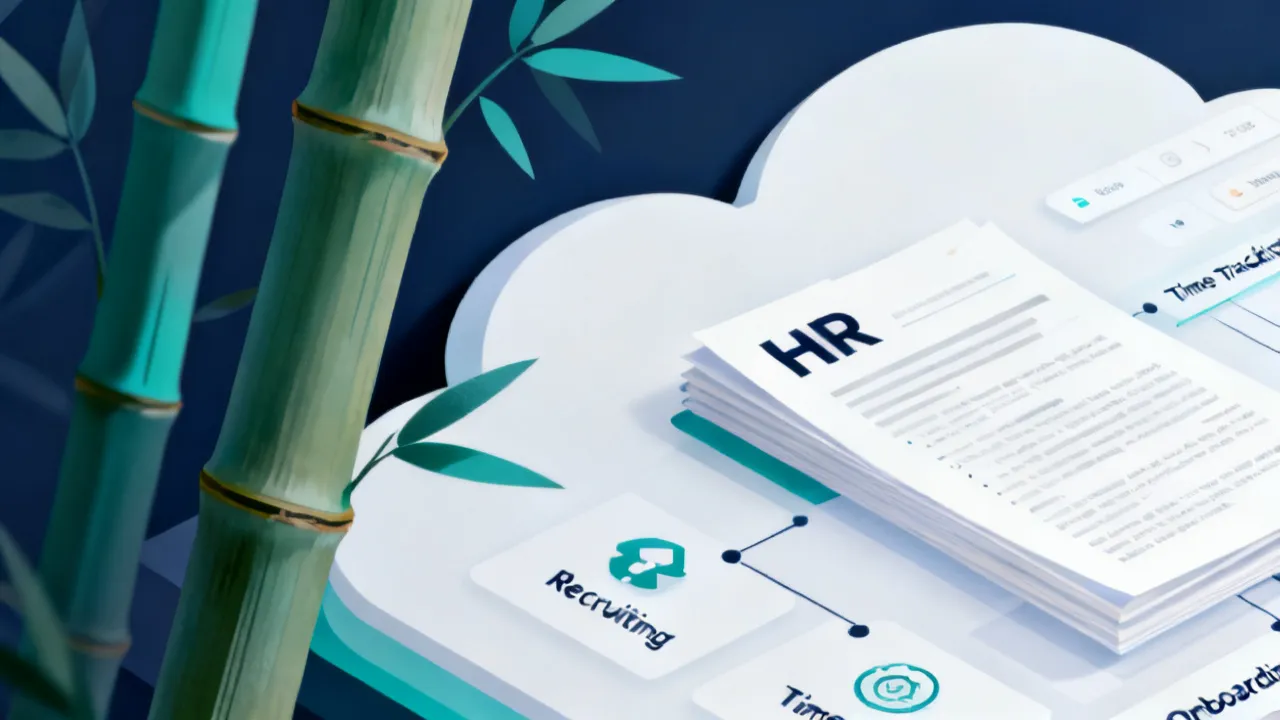
Plansource BambooHR: Expert HR Platform Comparison Guide
Plansource BambooHR helps organizations standardize HR workflows with modern recruiting, onboarding, and people analytics. This guide explains what the keywords typically refer to in HR technology contexts, outlines how businesses evaluate these platforms, and provides an expert comparison framework so HR leaders can make informed sourcing decisions based on requirements, implementation scope, and total cost considerations.
Integrating Sagepay with Salesforce
Integrating Sagepay with Salesforce streamlines business operations by combining sophisticated CRM capabilities with a secure payment gateway. This fusion allows businesses to efficiently manage customer relations and transactions within one seamless framework. Sagepay ensures secure and swift payments, while Salesforce aids in comprehensive customer relationship management, enhancing overall operational productivity and customer satisfaction.