This guide explains how Spin Automatica systems are configured, tuned, and operated for stable automated spinning performance. Objectively, it covers what “Spin Automatica” refers to in industrial automation contexts, why sensor calibration and safety interlocks matter, and how suppliers influence total cost through hardware quality, lead times, and support readiness.
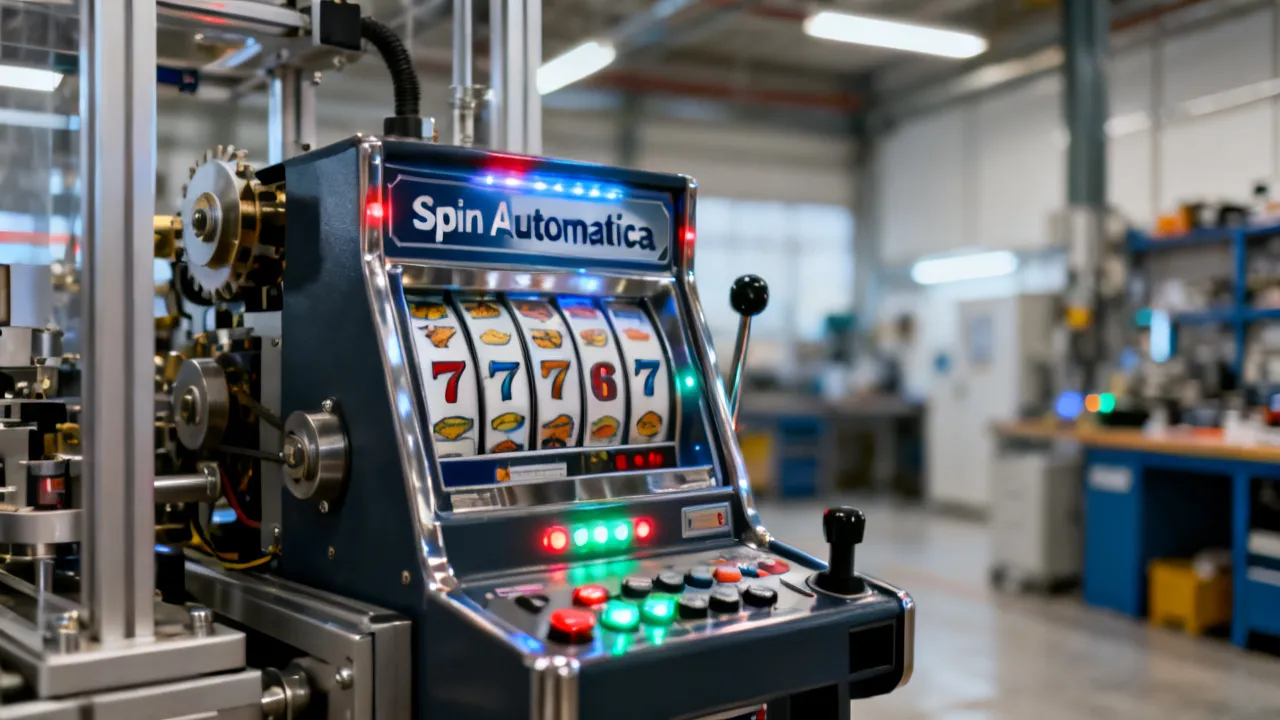
Spin Automatica is commonly used to describe automated spinning workflows—where a controller coordinates motors, actuators, sensors, and safety logic to produce repeatable spin cycles. In practice, the quality of the outcome depends less on the “spin” word itself and more on integration design: the controller’s timing, the calibration of motion parameters, and the supplier’s documentation and commissioning support. A system that “spins” is only the beginning; what matters for operational reliability is whether it spins the same way every cycle, under changing load and environmental conditions, while remaining safe and diagnosable when something inevitably drifts.
For buyers and operators, the highest-impact factors are (1) operational stability (repeatability and fault handling), (2) safety compliance (interlocks, emergency stop logic, guarding), and (3) maintainability (spare parts availability, logging, and service procedures). If you’re evaluating a Spin Automatica solution, treat price as only one component of total cost—because commissioning effort and downtime risk can outweigh purchase differences. A slightly higher up-front cost for better diagnostics and a more robust commissioning plan can reduce the cost of ownership substantially by preventing long stabilization periods, repeated service visits, and production interruptions.
Price considerations, in objective terms: “Price” for a Spin Automatica setup typically varies based on motor/drive selection, sensor suite, enclosure and wiring harness complexity, the expected throughput, and the level of supplier support (factory acceptance testing, on-site commissioning, and documentation). Without quoting unverified numbers, it’s top to request an itemized quotation that separates hardware, engineering, installation scope, and training. Buyers often underestimate the engineering “shadow costs” hidden in what’s not included. For example, if a quote bundles “installation” without specifying who provides cable terminations, labeling, and I/O verification, a later gap can become a high-friction negotiation during commissioning.
Supplier perspective: Suppliers differ in how they validate the motion profile, how they version-control software configurations, and how they handle post-install updates. A strong supplier will provide commissioning checklists, wiring diagrams, and traceability for components used in the build. Equally important, they should be able to explain what acceptance criteria were used during their FAT and what measurements demonstrate cycle repeatability. If they can’t clearly describe which parameters were verified and how they correlate to performance, you may be buying risk, not capability.
From a practical reliability standpoint, it helps to interpret “Spin Automatica” not as a marketing label but as a system responsibility boundary. Your expectation should be that the supplier can deliver not only hardware that runs, but a process that stays within tolerance—plus the evidence to show they built it that way. The more your production is sensitive to variation (surface finish, uniformity, timing alignment with downstream operations), the more you should treat commissioning evidence as a key deliverable rather than an optional bonus.
Another nuance: automated spinning systems often evolve after first commissioning. Over time, wear, routine maintenance, and minor mechanical changes can shift system behavior. A supplier that supports configuration management, provides software update policies, and offers a clear “recommissioning path” can help you maintain repeatability long after the initial ramp-up. Conversely, a supplier that delivers a one-time build and leaves you with opaque software settings can make long-term maintenance much harder.
Automated spinning is used where controlled rotational motion is required—often to create uniform mechanical processing, test cycles, material conditioning, or repeatable staging in production lines. In some industries it’s a finishing operation where consistency matters; in others it’s a diagnostic or stress-testing step where repeatable dynamics influence measurement validity. In all cases, the purpose of automation is to reduce variability: to ensure that a product or sample experiences the same mechanical motion every time, with minimal human intervention.
In such systems, reliability is measured through cycle-to-cycle consistency, rate stability under load, and the speed at which faults can be diagnosed and corrected. A “successful spin cycle” is not just one that completes without crashing; it is one that meets tolerance bands for speed, acceleration profile, and positioning at defined times. If a cycle completes but ends slightly off-spec, the process can silently degrade quality. That’s why good evaluation emphasizes both completion and compliance—process conformance, not just operational uptime.
Very organizations evaluate a Spin Automatica solution through a layered approach:
From an expert’s standpoint, “spin automation” is not one technology; it’s an integration discipline. Even if the rotating hardware is strong, weak integration can introduce vibration, sensor misreads, or timing errors—leading to inconsistent outcomes and increased maintenance. For instance, if cable routing causes noise into sensor inputs, speed feedback can “jitter,” which can cause the drive to chase perceived errors, creating additional mechanical oscillations. That kind of problem can masquerade as a mechanical issue unless commissioning includes systematic diagnostic checks.
Additionally, automated spinning often interacts with broader equipment. A spinning module may be part of a cell where upstream conveyors deliver parts and downstream stations expect the spin cycle to complete at a predictable time. In these contexts, the automation evaluation must consider not only the motion system but also the handshake protocols and timing alignment with adjacent systems. If your “Spin Automatica” cycle time varies because of fault retries or safety delays, downstream processes can suffer, even if the spin itself is “correct.”
Finally, the evaluation should consider compliance evidence. Many organizations increasingly need documented proof of how safety functions achieve required performance. For buyers, that means asking what safety-related calculations or test records exist for safety interlocks, safe stop behavior, and emergency stop verification—especially when systems are expected to meet regional or internal safety requirements.
A typical automated spinning workflow includes these functional layers:
When these layers are aligned, Spin Automatica setups tend to be easier to maintain because issues are localized. For example, sensor miscalibration often shows up as repeated “speed deviation” faults, while drive tuning issues may show as overshoot or abnormal vibration patterns. A mature integration approach includes structured troubleshooting: a guide that maps fault codes and symptoms to likely causes and next verification steps.
Beyond the basic layers, real systems also include “process synchronization logic.” That is the logic that coordinates when the spinning begins relative to other cell actions—such as loading/unloading, part sensing, or chemical application steps. In many industrial setups, spin cycles must start only after a part is present, the guard is closed, and the machine reaches a defined safe state. Conversely, shutdown might need to occur in a coordinated way so that mechanical extraction mechanisms do not collide with moving components.
Another typical element is parameter management. A Spin Automatica solution usually includes “recipes”—sets of parameters for different products or different processing modes. Reliability depends on ensuring that recipe switching does not create unintended transients. For example, switching from a slow cycle to a fast cycle should adjust ramp rates and tolerances appropriately, not just adjust the target RPM. In poorly designed systems, operators might change a setpoint but not update related parameters, resulting in instability.
Finally, many systems include remote diagnostics or data export. If remote diagnostics are offered, security practices become relevant as well. Even if this is out of scope for a pure motion discussion, buyers should confirm what information is logged, whether remote access requires secure authentication, and how firmware updates are deployed without breaking validated performance.
Repeatability is the first metric operators care about. In a Spin Automatica system, repeatability depends on both hardware condition and software parameters. The very common drivers of inconsistent spinning performance include:
An expert approach focuses on establishing a baseline: measure current behavior under controlled conditions, compare to the expected motion profile, and then adjust only one variable at a time with documented changes. The reason for “one variable at a time” is that multiple simultaneous changes can produce misleading results. If repeatability improves, you may not know which change created the improvement, complicating later troubleshooting or future updates.
Commissioning usually follows a structured plan: verifying electrical connections first (power, grounding, wiring integrity), verifying sensor outputs (scaling, direction, index), verifying drive response (limits, tuning stability), and finally verifying system-level motion behavior under the real process load. Skipping steps is a common way teams end up with systems that run but are not truly reliable.
It can be helpful to think of repeatability as consisting of multiple components: the speed accuracy at steady state, the timing accuracy of start and stop transitions, and the dynamic stability (how smooth the motion is under acceleration/deceleration). A system might meet speed accuracy but have poor dynamic stability, leading to quality defects that correlate with vibration.
Additionally, repeatability depends on the mechanical system returning to the same initial conditions before every cycle. If the system doesn’t consistently return to the same “home” state after a fault or after a normal cycle, the next cycle might start from a slightly different state, causing variation. That’s why proper homing or indexing procedures are often essential. A supplier should define how the system initializes and what conditions are required before enabling the motion profile.
Commissioning evidence should include not only “it works,” but specific tests that demonstrate repeatability and fault coverage. For example, the supplier might demonstrate that speed deviation remains within tolerances across a defined set of cycles, or that the controller detects and safely handles sensor faults or limit sensor faults without causing unsafe motion. Where possible, trend logs should be captured during tests so that you can see how the system behaves near thresholds.
Fault handling is part of repeatability too. If the system uses a simplistic fault retry strategy—such as repeatedly attempting to resume motion after certain faults without rechecking conditions—then you can see intermittent production issues that are difficult to reproduce. Robust solutions define what faults can be auto-recovered, what faults require manual intervention, and what intermediate checks are performed before restarting a cycle.
When evaluating Spin Automatica quotes, consider these objective cost drivers:
In many procurement cycles, the “cheaper” Spin Automatica option becomes expensive later due to additional engineering hours, delayed commissioning, or prolonged downtime. A strong supplier offsets this risk through transparent scope and measurable acceptance criteria. It’s often rational to pay more if the supplier can reduce uncertainty and provide evidence that their integration approach is stable.
Buyers can evaluate “value” by asking targeted questions. For example: What specific tuning method will you use? What tolerance bands are expected? Which sensor fault conditions are detected, and what safe actions are triggered? How do you ensure configuration consistency across cycles and shifts? How do you document changes made during commissioning?
Another dimension of evaluation is operational ownership. Who owns which parts during commissioning? A common failure mode in projects is ambiguity: the supplier assumes the buyer has configured safety inputs correctly; the buyer assumes the supplier has validated them. Clear responsibility boundaries reduce friction and accelerate commissioning. An excellent supplier provides a written plan detailing the tasks on both sides and how acceptance will be verified.
Also consider the total “integration friction.” If the supplier offers a solution that requires minimal custom mechanical work and provides a pre-engineered wiring harness, commissioning time decreases. Conversely, if you need extensive custom integration—custom cable runs, bespoke mounting, or non-standard interfaces—then the time risk grows. That doesn’t mean custom work is bad; it means it should be priced and managed transparently with contingency planning.
Finally, examine how each supplier handles updates after commissioning. If the vendor later releases a firmware update or provides a patch, what is the policy? Will they re-validate safety performance? Will they provide change logs? Will they provide a safe procedure for updating without breaking motion profiles? Buyers who plan for updates early are better positioned to keep the system stable over time.
Even a well-commissioned Spin Automatica system benefits from disciplined operations. The following practices are widely used in industrial automation environments:
Where organizations treat Spin Automatica systems as living equipment—maintained, monitored, and documented—the good stability tends to be better than environments relying solely on ad hoc fixes. Operational discipline helps protect the tuning and configuration from accidental drift.
Operational best practices also include controlling the environment around the machine. Temperature extremes, humidity, and dust can affect sensors and drive cooling. Cable routing practices, proper shielding, and strain relief help prevent intermittent faults. If your environment is subject to cleaning chemicals or lubricants, confirm that the system’s materials and seals are appropriate and that cleaning procedures do not compromise connectors or sensor housings.
Another important operational aspect is cycle scheduling. If a spinning module is run continuously, thermal conditions may stabilize, improving repeatability. If production is intermittent with long idle periods, the system may experience startup transients more often, which can reveal tuning or initialization weaknesses. Your operational plan should account for how the controller and mechanical system behave during frequent start/stop cycles.
Operators should also be trained in how to interpret diagnostics. Fault codes are not always self-explanatory. A strong system provides actionable descriptions, and your team should understand the difference between faults that indicate a temporary disturbance (e.g., a brief speed deviation) and faults that indicate a persistent configuration or hardware issue (e.g., encoder wiring mismatch).
Finally, operational practices should include periodic validation checks against the baseline performance. For example, you can periodically run a “golden cycle” under representative load conditions and compare performance metrics such as speed accuracy and stop behavior to stored baseline values. This converts maintenance into preventive risk management rather than reactive repair.
Because your request references location placeholders (replaced with “nearby”), it’s useful to clarify how regional practice can still matter even without a specific city or country. In many “nearby” markets, common operational expectations include:
Practically, you can ask for a “site readiness” checklist and confirm what the supplier expects from your facility (power quality conditions, grounding practices, network ports, and space clearances). Site readiness is a key determinant of commissioning speed. A supplier that provides detailed pre-install requirements—like cable types, recommended cable shielding, and grounding points—enables smoother installation.
Localization can also affect how training is delivered. Some organizations prefer on-site training with a step-by-step checklist, while others prefer remote workshops plus on-site validation. Clarify training goals: is it for operators only, for maintenance technicians, or for engineers who will manage recipe changes? If your local team includes multiple shifts, specify whether training materials will be distributed to all shifts and how changes will be communicated.
Another practical consideration is spare parts and lead times. Even if the supplier has a global warehouse, local distributors may influence lead times for sensors, couplings, or drive modules. Buyers should ask for spare part kit contents and forecast lead times under common failure scenarios. Localization affects logistics; logistics affects downtime risk.
Finally, you should consider local compliance documentation expectations. Some regions require additional paperwork for electrical installation, equipment labeling, or safety validation records. Ensure the supplier can provide the documentation needed for your internal compliance workflow so you don’t delay commissioning awaiting missing documents.
| Evaluation area | What to look for in a Spin Automatica supplier | Why it matters for performance |
|---|---|---|
| Commissioning scope | Itemized installation tasks, on-site acceptance plan, and tuning responsibilities | Reduces timeline risk and prevents unclear ownership during stabilization |
| Controller and software discipline | Version-controlled configuration, documented parameter sets, and repeatable recipes | Protects consistency across shifts and prevents “drift” in operation |
| Safety architecture | Documented interlock design, safe stop behavior, and emergency stop verification method | Improves compliance and lowers the probability of unsafe recovery routines |
| Diagnostics and logging | Fault codes with actionable descriptions, cycle counters, and maintenance trend data | Makes root-cause analysis faster and reduces downtime |
| Hardware quality and spares | Rated components, spares list, lead times, and replacement procedure guidance | Improves maintainability and good uptime planning |
| Documentation quality | Wiring diagrams, I/O mapping, commissioning checklists, and maintenance manuals | Shortens training time and supports reliable troubleshooting |
This is a practical guide for teams planning to integrate Spin Automatica into an existing production environment.
Before relying on Spin Automatica for production, ensure the following conditions are met. These are not optional “nice-to-haves”—they are practical requirements that support stable operation.
It also helps to specify “system boundaries.” For example, define what the automation system is responsible for and what the broader equipment is responsible for: part presence verification, loading mechanisms, and any mechanical extraction steps. When boundaries are unclear, the system may assume a condition that is not true, causing faults or unsafe states.
Environmental and maintenance conditions must also be considered. If the machine runs in a high-dust environment, confirm appropriate IP ratings for enclosures and ensure airflow around drives is not blocked. If the machine is in a high-humidity environment, check connector sealing and avoid condensate accumulation in sensor housings.
Another success requirement is measurement method clarity. If you claim repeatability, the organization must know what measurement is being used. For instance, speed accuracy can be measured via encoder feedback or via external tachometers. If you use internal feedback as the truth source for tuning, then sensor drift or mis-scaling can lead to a situation where internal metrics show “good repeatability” while external performance does not match the process requirement. Where quality is critical, cross-check internal measurements with external verification during commissioning.
Finally, ensure your maintenance and operations teams have a consistent understanding of “fault” versus “stop.” Some systems conflate these states; operators may attempt to recover from a fault by pressing restart repeatedly, causing repeated trips. A reliable design distinguishes the states and provides appropriate recovery pathways, ideally with guidance and safety interlocks.
While this article focuses on practical guidance, safety and automation are governed by widely recognized frameworks. For general background on functional safety concepts and industrial risk management, readers often consult:
If your organization is subject to specific regulatory requirements, align your Spin Automatica safety validation approach with the applicable standards and internal compliance processes. A mature project treats safety documentation as a living set of artifacts that should match the installed configuration and validated wiring.
Even when your project is not directly regulated by a specific standard, the principles behind these references—risk assessment, safety function definition, validation testing, and lifecycle management—still provide a strong framework for building reliable automated spinning. Buyers can use these concepts as a checklist to question suppliers: What is the hazard analysis? What safety functions are implemented? What test results validate those functions? How are changes controlled so the safety design remains accurate over time?
It can also be important to align with machine guarding and electrical installation practices used in your facility. Standards and best practices typically require that protective devices function correctly, that safe stop behavior is validated, and that electrical work is installed to code. If the supplier expects the buyer to handle some installation steps, ensure those steps are executed by qualified personnel and validated appropriately.
On the cybersecurity side, if remote diagnostics are used, security best practices can help ensure that remote access does not create vulnerability. NIST publications are commonly referenced for industrial security guidance. At minimum, you should confirm the authentication method for remote access, how logs are stored, and whether network segmentation is used to reduce exposure.
In very industrial contexts, it refers to an automated spinning process coordinated by a controller, drives, feedback sensors, and safety logic. The exact configuration depends on the application and the supplier’s integration design. The term often implies more than a motor and a controller—it usually implies a defined motion profile, repeatability targets, integrated safety functions, and diagnostic logging that supports operation and maintenance.
Request an itemized quote separating hardware, engineering, installation, testing (FAT/SAT), training, documentation, and spare parts. Also ask for acceptance criteria and evidence of repeatability under representative loads. If possible, request sample test reports or commissioning checklists. Ensure that supplier scope matches your site conditions and that the quote clarifies who performs each commissioning task.
Typical causes include mechanical imbalance or misalignment, incorrect sensor scaling or mounting, inadequate drive/controller tuning, and electrical noise due to grounding or cable routing issues. In addition, inconsistent initial conditions (improper homing or failure to return to a known reference state after faults) can also cause variation that looks like a “control problem” but is actually a state-management problem.
That depends on the contract scope. A professional supplier should clarify commissioning responsibilities and provide a tuning/verification plan. Many successful projects split tasks: mechanical checks and site setup by the buyer, integration and control tuning by the supplier—with joint acceptance testing. The key is to define responsibilities in writing so that there is no ambiguity about who verifies safety interlocks and who confirms final performance metrics.
Verify emergency stop behavior, guard interlocks, safe stop response, and fault recovery logic. Ensure the system transitions to a safe state under expected fault conditions and that documentation matches the installed wiring and configuration. Also confirm that safety states are maintained when power is cycled and that system startup requires appropriate safety conditions (e.g., guards closed) before motion is enabled.
Expect wiring diagrams, I/O mapping, safety documentation, commissioning checklists, maintenance instructions, and software/parameter documentation including versioning information. Documentation quality matters for troubleshooting: provide fault code lists with explanations, diagnostic register descriptions (if available), and a guide for interpreting trend logs.
Maintenance frequency depends on duty cycle, mechanical load, and operating environment. As a baseline, establish inspection intervals for wear components (e.g., bearings/couplings) and verify sensor mounting integrity. The supplier’s maintenance guidance should be treated as a starting point, but you should refine intervals based on measured trends such as vibration levels, fault frequency, and performance drift over time.
Yes, but integration quality matters. Confirm electrical interfaces, control handshaking (signals and timing), physical mounting constraints, and how the system logs faults for upstream/downstream coordination. Also confirm that the spin module’s cycle timing is deterministic within the required tolerance so that other equipment can synchronize reliably. If downstream equipment expects a fixed cycle duration, you may need to ensure that fault recovery or safety delays follow predictable patterns.
Spin Automatica solutions deliver value when they are implemented as a complete, measurable system—not as a collection of parts. The top outcomes come from careful requirement setting, transparent supplier scope, disciplined commissioning, and ongoing operational maintenance. If you evaluate suppliers on repeatability evidence, safety verification, documentation quality, and the realism of their lead-time and support plan, you’re far more likely to achieve stable spinning performance over the system’s lifecycle.
Ultimately, reliability is engineered. The motion profile, control tuning strategy, sensor accuracy, and safety logic must work together—and your organization must have the documentation and operational discipline to sustain that performance. When you treat diagnostics, change control, and maintenance planning as core parts of the project, Spin Automatica becomes a dependable manufacturing tool rather than an expensive troubleshooting burden.
Striking the Perfect Balance: Navigating Premiums and Out-of-Pocket Expenses in Senior Insurance Plans

Explore the Tranquil Bliss of Idyllic Rural Retreats

How to Make Lasting Memories at Disneyland Attractions

Affordable Phones and Plans for Seniors

Affordable Full Mouth Dental Implants Near You

Unlock the Top Kept Secrets to Finding Your Ideal Dentist for Flawless Dental Implant Results!

Discovering Springdale Estates

The Guide to Car Trading

Affordable Cell Phones Without Plans


Unveiling Grunig & Hunt's PR Models
This article explores the seminal work of Grunig & Hunt in developing models of public relations. The Grunig & Hunt models, fundamental to understanding PR theory, provide insight into the strategic approaches and methodologies utilized in the field. Each model offers a distinctive perspective on communication and engagement strategies, relevant to both academic discussions and practical applications.

Understanding Attimo Family Office
Attimo Family Office represents a new trend in wealth management services, designed to serve high-net-worth families with personalized attention and expertise. These offices provide tailored financial, investment, and lifestyle management to ensure good wealth preservation and growth. Emphasizing trust, discretion, and bespoke solutions, they cater to the distinct needs of affluent families.

Navigating Attimo Family Office Services
Attimo Family Office is a specialized financial service provider dedicated to managing the complex financial needs of affluent families. By offering personalized advice tailored to each family's unique circumstances, they help in safeguarding wealth across generations. The concept of a family office has been increasingly embraced by high-net-worth individuals seeking tailored investment strategies, tax planning, and legacy management.

Understanding Grunig & Hunt's PR Models
This article delves into the renowned Grunig & Hunt models of public relations, highlighting their significant contribution to the field of strategic communication. Developed by James E. Grunig and Todd Hunt, these models have guided PR practitioners in understanding and executing effective public relations strategies. This guide aims to elaborate on each model, explore their application in real-world scenarios, and underscore their relevance in contemporary PR practices.

Unveiling the Optimar Rae
An in-depth exploration of the Optimar Rae, a frontrunner in seafood processing. Known for its advanced technology and efficiency, the Optimar Rae plays a pivotal role in modernizing seafood operations. This article delves into its significance, examining how it enhances productivity while maintaining environmental standards, marking a new era in maritime industry advancements.

Mastering Employee Retention Strategies
This article delves into the essential role of an Employee Retention Consultant. Employee retention is crucial for maintaining a competitive edge and fostering a positive work environment. Professional consultants help organizations in developing tailored retention strategies to reduce turnover, increase job satisfaction, and enhance overall productivity. Explore expert insights, strategies, and FAQs in employee retention.
