This guide explains how to choose Latest Phones 2026 while understanding U.S. government phone program options, including SafeLink Wireless, Assurance Wireless, StandUp Wireless, Access Wireless, and True Wireless. It reviews what these Lifeline/ACP-supported plans typically include, how eligibility is assessed, and what steps applicants follow—grounded in official-provider processes and commonly used verification methods.
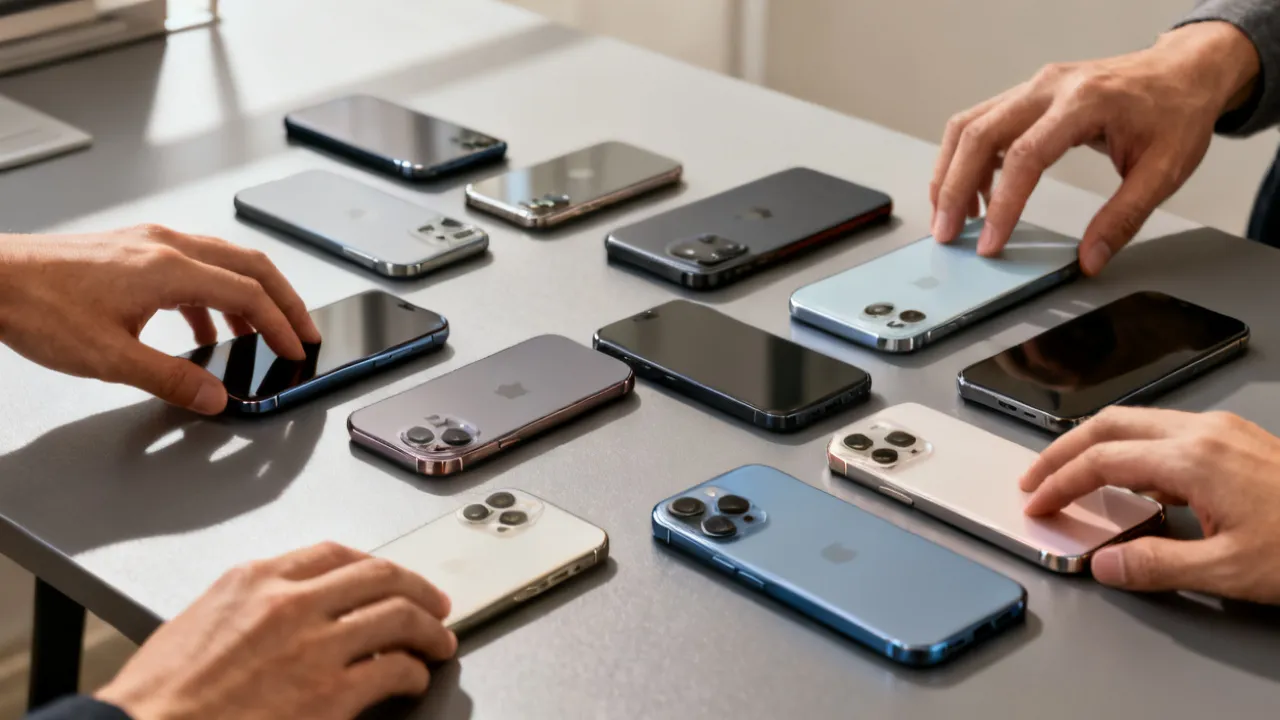
If you’re looking at Latest Phones 2026, a practical strategy is to treat subsidized wireless programs as your baseline connectivity option while you evaluate the device features, network compatibility, and good value of current models. In the U.S., providers such as Safelink Wireless, Assurance Wireless, StandUp Wireless, Access Wireless, and True Wireless commonly participate in government-supported programs (notably Lifeline and the Affordable Connectivity Program (ACP), where available). The core decision points tend to be: (1) whether you qualify through income or program participation, (2) which services and data thresholds are included under your plan, and (3) whether device upgrades or BYOD (bring your own device) align with your phone goals for 2026-class hardware.
From an industry perspective, the very “future-proof” approach is to compare the service offering and verification requirements first, then map that to your device roadmap. Newer phones may bring better displays, cameras, battery efficiency, and faster performance, but subsidized wireless programs often come with specific device models, data policies, and activation procedures designed for affordability and eligibility compliance. That’s why comparing coverage and plan details matters as much as the phone specs you see in marketing.
But “latest phones” isn’t only about specs—it’s about whether your phone fits the life you’re actually living. For many people using subsidized programs, the phone is also a tool for work scheduling, appointments, job applications, school communication, two-factor authentication (2FA), benefits portals, and connecting with family. So the best 2026 phone plan is the one that keeps working reliably over time, supports the apps you rely on, and avoids unexpected costs at upgrade or renewal time. This guide expands on what to look for and how to plan intelligently when government phone programs intersect with the desire for 2026-level devices.
When consumers say Latest Phones 2026, they’re often mixing three different needs:
Government-supported phone programs are primarily structured around the third need—cost stability—while still offering service allowances that can suit everyday communication. However, the “latest model” you receive or enable may differ from flagship retail devices. Some plans offer smartphone options or allow bringing your own device, which can help align the program with a 2026 device preference. In other words, the “latest phones” conversation becomes more realistic when you treat it as a compatibility-and-total-cost problem, not only a “what’s the newest handset?” question.
To make that concept practical, consider how a phone’s “value” changes when you use a subsidized service plan:
For 2026-class planning, you want to ask: “What kind of phone do I need for the next 2–3 years—and what is the lowest-risk way to keep the service connected?” That typically means balancing hardware ambition with the operational reality of program timelines, data thresholds, and device activation constraints.
In practice, subsidized wireless programs typically focus on voice, text, and a data allowance, with variations based on your plan and provider. Providers may also offer device upgrade paths or data boosts at an added cost, which is where consumers should be extra attentive—because “included” data and “purchased” add-ons can significantly affect monthly value.
Below is a comparison table of five prominent providers mentioned in common program directories. It summarizes the typical service categories included and any potential extra-package costs you may encounter during upgrades.
| Provider (Official Program Site) | Common Services Included (Program-Linked Plans) | Additional Package Costs (Common Upgrade Areas) |
|---|---|---|
| SafeLink Wireless | Unlimited talk and text; data allowance that varies by plan/state; smartphone option or BYOD | Potential costs for upgrading to premium devices or adding more data |
| Assurance Wireless | Affordable Android smartphone option; unlimited talk and text; data allowances | Optional upgrades for higher high-speed data or international calling features |
| StandUp Wireless | Smartphone option or BYOD; unlimited talk and text; data plans | Premium phone upgrades or extra data may be available for a fee |
| Access Wireless | Unlimited voice and text; limited high-speed data under program benefits | Data boosts and device upgrades may carry additional charges |
| True Wireless | Government-supported smartphone and service offerings (voice and data) under eligibility | Optional upgrades to better devices or additional data plans may cost extra |
Source of the table information: the provider program pages listed immediately below.
source: [www.safelinkwireless.com](https://www.safelinkwireless.com) • [www.assurancewireless.com](https://www.assurancewireless.com) • [standupwireless.com](https://standupwireless.com/) • [www.accesswireless.com](https://www.accesswireless.com) • [www.gotruewireless.com](https://www.gotruewireless.com)
What matters most for Latest Phones 2026 shoppers is not just what services are included, but how the plan’s allowances line up with how modern smartphones behave. A 2026 phone can be “more data hungry” in ways that aren’t always obvious:
So when you’re comparing government phone plans, you should treat the phone and service as a system. You may not need unlimited data, but you do want predictable speed behavior and clear policies about what happens when you exceed any included threshold.
Government phone programs are designed around affordability criteria and documentation standards. While exact steps may vary by provider, the following eligibility logic is widely used for Lifeline-style participation and ACP-linked enrollment.
Very providers follow a multi-step flow: start an online application, submit documentation, and then wait for verification. Some use a national verification pathway (commonly associated with program eligibility checks), while others use document upload and manual review.
Key readiness items before you begin:
For planning with Latest Phones 2026 devices, there’s one more practical readiness point: device identification. If you want to use your own phone, make sure you have details such as the phone’s model number, whether it is unlocked, and the type of SIM/eSIM support you can use. The application flow might ask you to confirm your device type, and later activation might request additional verification details.
Here is a consolidated, provider-agnostic guide to what the process typically looks like. Treat it as a checklist to reduce delays, not as a guarantee of a single exact workflow for every applicant.
To reduce “surprise delays” during the activation stage—especially if you’re aiming for a Latest Phones 2026 handset—keep these additional points in mind:
From an expert viewpoint, the top way to evaluate the “fit” between a subsidized program and a 2026 phone strategy is to use a decision framework rather than focusing only on headlines.
“Latest Phones 2026” content often emphasizes displays, chips, and camera systems. But for day-to-day usefulness, network reliability matters more. Before committing, check:
A subtle but important point: for many users, coverage is not a single number. It varies by building materials, local tower congestion, and even the time of day. When a plan says it’s “unlimited” for voice/text, it doesn’t necessarily tell you whether data experiences will feel smooth for maps, messaging apps, or video calls. So the smartest move is to test—not just research.
If possible, after activation, do a “real life” mini test:
Data is rarely just “how much,” but also “how fast” and “for what activities.” If you stream video, use navigation, or run mobile hotspots, you should confirm:
When comparing with Latest Phones 2026 goals, remember that newer phones may improve efficiency—but they can also encourage higher usage due to better screens, faster loading, and smoother app performance. This can lead to a “volume creep” problem: you may feel like you’re doing the same tasks, but the phone makes them faster, so you do them more often.
So instead of just asking “Do I have enough data?”, ask:
Providers in this category commonly offer either a device option (often specific models) or BYOD. For a consumer aiming for Latest Phones 2026, BYOD can be attractive because it reduces the mismatch between the plan and the device you prefer. However, device compatibility requirements can be strict, so you should verify activation support before relying on your preferred model.
Here’s a practical way to decide:
But “comfortable” isn’t enough. BYOD can still involve hidden friction points:
Even when a plan is structured around affordability, upgrades are frequently an add-on area. Several providers may charge for premium phone upgrades or additional data. The “top value” may come from selecting the right included allowances first, then adding upgrades only if your usage demands it.
“Hidden costs” often show up as:
So for a true Latest Phones 2026 strategy, calculate “total cost of ownership” for the next 24–36 months. If your goal is to keep your phone, you may pay more initially for a premium handset but save on recurring upgrade add-ons. If your goal is to get the cheapest service and you’ll replace the phone when deals happen, a provider device may be the best path.
While the high-level service categories may overlap across Lifeline/ACP-linked offerings, the practical differences usually show up in device options, data allowance details, and how upgrades are handled.
SafeLink Wireless commonly supports a smartphone option or BYOD pathway, generally pairing unlimited talk and text with a data allowance that can vary by plan/state. If you’re aligning with Latest Phones 2026, pay close attention to whether your desired device can be activated under the program and whether additional data packages are competitively priced compared with typical consumer MVNO add-ons.
Questions to ask before committing:
Assurance Wireless is often recognized for an Android-focused smartphone option, typically accompanied by unlimited talk and text and defined data allowances. Optional upgrades (such as higher-speed data or international calling features) may be available, which can matter if you have frequent travel or heavy mobile usage.
If your 2026 goal includes software longevity (for example, frequent Android security updates and system stability), it’s worth comparing device update expectations between the provider’s options and the flagship you want. Even if the phone is not the “absolute latest” model, you may still get a better long-term experience from a newer Android generation than from an older one.
Practical checks for Assurance-style plans:
StandUp Wireless typically offers both a smartphone option and BYOD. Because device upgrades can involve additional charges, it’s wise to treat the included device or BYOD compatibility as a starting point—then estimate whether your expected monthly data needs will require upgrades.
When you’re comparing with Latest Phones 2026, consider this: newer phones can generate a different mix of data usage. For example, a phone with advanced video stabilization may make you more likely to record and upload more frequently. That can be a good thing for your life, but it affects data planning. So you want to match your plan’s high-speed data to your real behavior, not your ideal intentions.
Also pay attention to:
Access Wireless is characterized by unlimited voice/text and limited high-speed data under program benefits, alongside optional data boosts and device upgrades. For someone considering a 2026 phone upgrade, this provider structure may be well-suited if you mainly use messaging and moderate data, or if you’re comfortable with periodic data top-ups.
For data-capped experiences, you should plan around a predictable routine:
Because a Latest Phones 2026 device may be more capable and more convenient, you may shift behaviors. It becomes easier to use your phone for tasks that previously felt too heavy. That’s great—but make sure your plan’s data design supports those tasks without constant top-ups.
True Wireless generally provides government-supported phone and service options once eligibility is confirmed. If you’re trying to maintain a “latest device” preference, carefully check upgrade pathways and BYOD-related compatibility—because the difference between included service terms and optional enhancement costs can determine overall value.
Even if True Wireless offers a device option, the “latest phone” aspiration can be affected by device availability windows. Many subsidized program phone catalogs don’t match retail flagship release schedules. So for 2026-oriented shoppers, BYOD compatibility and upgrade fee transparency become especially important.
Before selecting True Wireless with a 2026 handset in mind:
Not necessarily. Many programs include a device option and may also support BYOD. Whether your specific 2026 model can be activated depends on the provider’s device compatibility requirements and program rules. Always verify compatibility through the provider before counting on a specific handset. If compatibility is unclear, ask support for device model checks, not just general device-category guidance.
These plans commonly include unlimited talk and text, plus data allowances. Some plans describe data as “limited high-speed data,” after which speeds may change. Exact terms vary by provider, plan, and eligibility category. In many cases, the “unlimited” part applies to voice/text rather than data, so it’s important to interpret “unlimited” carefully.
Often yes, in the form of optional upgrades—such as premium device upgrades, additional high-speed data, or add-on features like certain calling options. Review the plan terms and upgrade pricing before selecting enhancements. A good rule of thumb is to determine which upgrades you might need in a typical month, then compute whether those likely upgrades still keep you within your budget.
Typically, you apply online, then provide documentation or undergo an eligibility verification process. The steps usually include entering personal and contact information, selecting the plan/device path (device option or BYOD), and completing verification using required proofs such as income eligibility or participation in qualifying assistance programs. If you plan to use BYOD, be prepared to confirm phone compatibility during the enrollment/activation workflow.
A common reference approach includes income at or below a poverty-guideline percentage for the relevant program tier (for example, 135% for Lifeline-style support and 200% for ACP-style support), or participation in qualifying programs such as Medicaid, SNAP, SSI, or FPHA. Providers may also apply additional rules and documentation standards. If you’re on a program like Medicaid, you may still need proof or consent for verification depending on the provider’s process.
Very subsidized programs provide provider-listed device options or require BYOD compatibility. That means the exact model you receive may not match the latest retail flagship lineup. If your priority is a specific 2026 phone model, a BYOD route may be the more direct path—subject to approval and device compatibility. If the program’s device list includes a similar-tier option, you may get a “close enough” experience, but you should confirm update and feature levels.
In many cases, BYOD still qualifies you for the underlying subsidized service benefits. However, the exact data allowance, speed behavior, and upgrade options should be the same for eligible subscribers on the same plan tier. You should confirm whether BYOD affects data speed caps, hotspot rules, or the ability to purchase boosts. Ask support for a breakdown of plan terms for BYOD accounts.
If activation fails, the first step is to confirm device compatibility. If voice/text works but data doesn’t, it may involve provisioning details such as APN settings or a carrier profile mismatch. Many providers can troubleshoot once they have your device model, IMEI (if required), and error codes. Don’t wait too long—because delays can overlap with eligibility verification timelines and recertification windows.
Timelines vary based on eligibility verification method, document quality, and provider workflow. If you’re applying close to an urgent need (for work, school, or travel), start early. Have your documentation ready so you can respond quickly if the provider requests additional proof.
Wireless plan rules and device selections can change. Additionally, the availability and status of government programs can shift based on policy updates and enrollment rules. For planning purposes, treat provider pages as your very authoritative source and consider re-checking them if your eligibility is confirmed months earlier than your intended activation date.
In a “Latest Phones 2026” context, “up-to-date” also means something else: the device ecosystem changes. Even if your phone is compatible today, future provisioning updates could alter how well features work (such as VoLTE, MMS, or data provisioning). That’s not always a problem, but it’s a reason to keep basic troubleshooting steps in mind:
Also remember that “latest phones” includes software security updates. If you’re using a subsidized plan, you may keep your device longer. Therefore, you should care about update cadence and security patch timelines. A 2026 device with a longer software support window can be a smarter long-term match than a “newer-looking” device that may receive fewer updates.
For background on how modern eligibility and verification frameworks are implemented across Lifeline-type programs, official program documentation from relevant agencies is the very reliable reference. For general context on Lifeline and broadband affordability initiatives, you can also consult official FCC materials and related government publications.
1) The above information comes from online resources, and the data is as of October 2023.
2) This website cannot guarantee that applicants will definitely get a government phone. For specific application requirements and how to obtain it, please refer to the official requirements of the provider. This website will not be updated in real time.
https://www.safelinkwireless.com
https://www.assurancewireless.com
https://standupwireless.com/
https://www.accesswireless.com
https://www.gotruewireless.com/
https://www.fcc.gov/lifeline-consumers
https://www.fcc.gov/acp
https://www.usac.org/lifeline/
Striking the Perfect Balance: Navigating Premiums and Out-of-Pocket Expenses in Senior Insurance Plans

Explore the Tranquil Bliss of Idyllic Rural Retreats

How to Make Lasting Memories at Disneyland Attractions

Affordable Phones and Plans for Seniors

Affordable Full Mouth Dental Implants Near You

Unlock the Top Kept Secrets to Finding Your Ideal Dentist for Flawless Dental Implant Results!

Discovering Springdale Estates

Unveiling RS Sul Telecom Services

The Guide to Car Trading

Affordable Phones and Plans for Seniors
Discover the top deals on new phones and plans tailored for seniors, including discounts on 5G technology and unsold models.
Affordable Cell Phones Without Plans
Discover affordable cell phones for sale without plans, exclusive discounts for seniors, and tailored mobile plan options in your area.

Navigating Government Phone Programs
This guide provides an expert analysis of government-supported phone programs for eligible individuals, offering insights into available providers and their services. Affordable phones are often a necessity for individuals under economic constraints, aiding in communication, job searches, and access to emergency services. The article delves into eligibility criteria, application processes, and compares popular service providers in various regions.
Unlocking the Top Cell Phone Deals
Discover unbeatable cell phone discounts, plans, and offers for seniors and iPhone enthusiasts without contracts.
Navigating Affordable Phone Offers
Discover the essential details about government-assisted phone programs aimed at providing budget-friendly devices to eligible individuals. These programs offer complementary mobile phones and services to qualified beneficiaries, ensuring connectivity at minimal expense. This guide breaks down how to access such benefits and what conditions apply.
How to Apply for a Affordable Phone
This guide provides insights on how to apply for a affordable phone through government-sponsored programs. Understanding how these programs operate and their eligibility requirements is essential. These initiatives aim to support individuals in low-income households or those enrolled in specified government assistance programs by providing basic communication tools.
