This guide explains what Havi Nextgen is, how it fits into modern industrial workflows, and how to evaluate suppliers with practical due diligence. Objectively, “Havi Nextgen” is commonly referenced in next-generation platform and device ecosystems where reliability, interoperability, and lifecycle support matter very for procurement teams and system integrators.
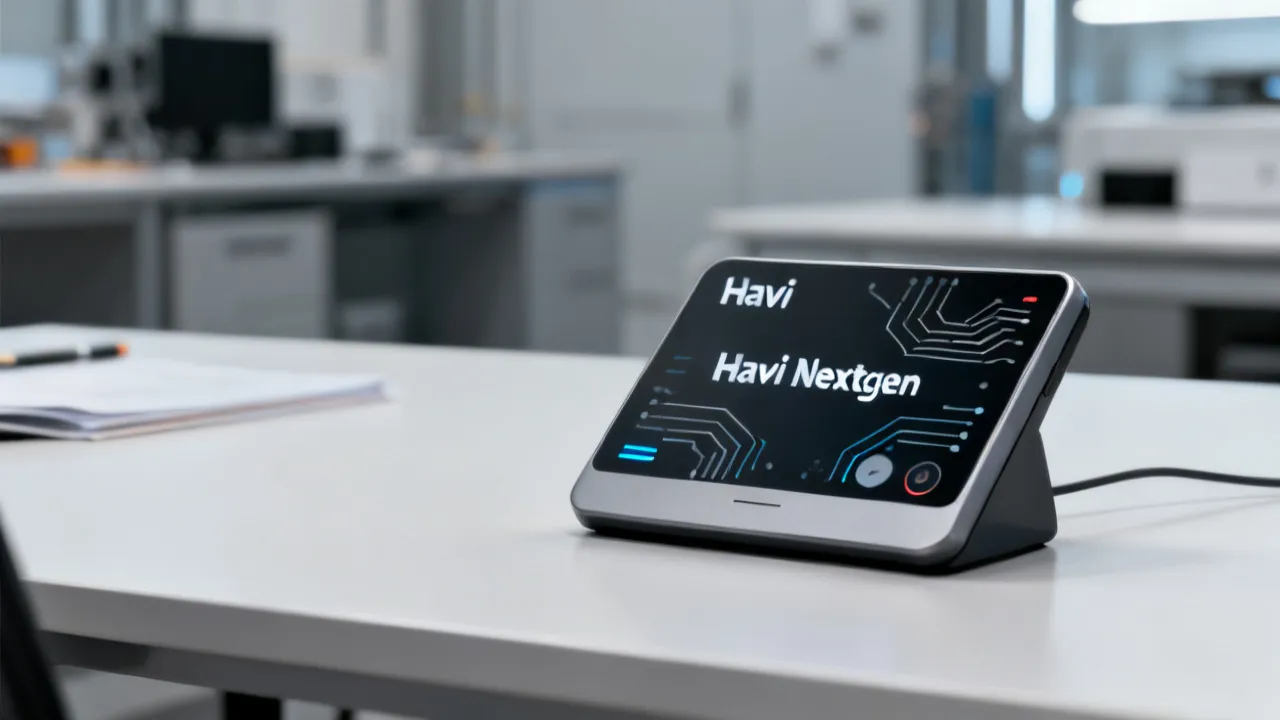
When teams investigate Havi Nextgen, they are usually looking for a practical “next-generation” foundation that can integrate with existing operations without introducing avoidable risk. In many industrial environments, the biggest problem isn’t the lack of technology—it’s the mismatch between what procurement buys and what engineering must integrate. A mismatch like that can create hidden costs: prolonged commissioning, rework when interfaces don’t behave as assumed, downtime during cutover, or ongoing operational friction when the platform isn’t actually manageable by the people who run it day-to-day.
That is why procurement and system design teams often treat Havi Nextgen not simply as a product purchase, but as a decision about architecture, operating model, and long-term maintainability. “Next-generation” platforms are expected to improve interoperability, monitoring, management, and scalability compared with earlier approaches. Yet the realized value depends on how well the ecosystem supports integration with real OT/IT components, how clearly the vendor documents the expected behaviors, and how confidently your organization can validate acceptance criteria in a test environment.
This guide is designed to help you evaluate Havi Nextgen through procurement and system design lenses at the same time. The goal is to establish conditions/requirements early, compare supply options ethically, and set a procurement plan that aligns with engineering realities—before budget is committed, before timelines become fixed, and before the project becomes dependent on undocumented assumptions.
Before procurement reaches out to a supplier, it’s worth clarifying a small set of questions that directly affect whether implementation will succeed. Many quotes become incomparable because vendors assume different scopes, different levels of integration complexity, or different responsibilities for acceptance testing. If you want reliable pricing and predictable delivery, you need to define the parameters that shape both cost and risk.
Here are decision points that teams can resolve internally—ideally with input from architecture owners, security stakeholders, and operations leaders:
These items determine whether the “headline” price matches the real cost drivers across deployment, validation, training, and ongoing support. When these questions are deferred until after vendor engagement, procurement tends to buy a number rather than a delivery outcome—creating the classic situation where the system technically ships, but the integration doesn’t become operationally useful within the expected time.
In industry discussions, the phrase “next-generation” usually signals improvements in modular architecture, better interoperability, and enhanced monitoring/management capabilities compared with earlier generations. For Havi Nextgen, buyers should expect that value is realized not only through raw hardware or software capability, but through the ecosystem’s practical ability to support:
Important: Specific technical features can vary by model, region, and package. Treat your vendor’s documentation as the source of truth. Also validate claims through architecture review and test plans—because “supported” in marketing can differ from “works reliably in your environment” when network constraints, timing differences, or data model variations are present.
A practical way to approach the “next-generation” promise is to define what success looks like operationally. For example, next-generation platforms should reduce the operational burden in clear ways: faster issue triage due to better telemetry, less manual configuration because of standardized templates, improved resilience due to better error handling, and more reliable cutovers due to repeatable deployment patterns.
Procurement teams can help engineering by translating those outcomes into requirements that vendors can address. Rather than asking only “Do you support X protocol?”, you ask: “How do you handle X protocol’s error cases? What logs are produced? How do we verify correct behavior during acceptance testing?” These questions convert vague assurances into evidence that can be measured and signed off.
You may encounter different price figures across suppliers. The ethical and professional approach is not to assume one vendor is overpriced or another is underpriced; instead, compare quotes using a structured quotation template that separates base costs from implementation and support.
Request a structured quotation that separates:
This approach helps procurement avoid “apples-to-oranges” comparisons. If two suppliers present substantially different prices, the likely reasons are scope differences, assumptions about existing infrastructure, or different levels of support commitment—not just market fluctuations. A quote with lower base unit cost may still be more expensive if it excludes integration labor or acceptance testing. Conversely, a quote with a higher unit cost may reduce overall risk if it includes mature commissioning methods and documented acceptance evidence.
Additionally, consider the ethical dimension: if you request itemization and one vendor refuses or provides vague bundles without clarifying responsibility, that is not just a pricing inconvenience—it can be a sign that accountability is unclear. Procurement should prefer vendors who can produce line-item clarity and who can stand behind delivery evidence and service terms.
Even when the product name is consistent—Havi Nextgen—supplier capability can differ widely. A sophisticated evaluation covers both commercial and technical dimensions. The goal is to identify who is accountable for success, whether documentation is mature, and how quickly and effectively issues are handled during the most critical phases: integration, commissioning, acceptance, and the early lifecycle window after go-live.
Supplier due diligence questions include:
Also consider asking about their engagement model: Are engineers dedicated to your project? Who becomes the day-1 responder after go-live? How do they manage knowledge transfer from commissioning to steady-state support? These questions prevent the scenario where a vendor is responsive during installation but becomes difficult to reach when issues persist.
If the supplier cannot provide structured documentation or references, treat it as a risk signal and request a mitigation plan. A mitigation plan could include a pilot, a staged rollout, a third-party verification step, or stronger acceptance test criteria with measurable evidence. You are not necessarily disqualifying the supplier automatically—you’re ensuring the supplier understands that their inability to provide evidence changes the project risk posture and contract terms.
From an industry lens, successful next-generation deployments share a few traits. They are not “one-time installs,” but managed transitions. That transition includes technical readiness and organizational readiness.
Common traits of well-executed Havi Nextgen deployments include:
Applying this logic to Havi Nextgen helps procurement and integrators align expectations and reduce downstream costs. Procurement’s role is to ensure requirements and acceptance criteria reflect these traits, and to ensure contract obligations align with delivery evidence. Engineering’s role is to ensure those requirements are validated in test and that any gaps are resolved before go-live.
A useful additional point from industry practice is the separation of concerns between “data visualization” and “data reliability.” Some platforms can display data quickly, but the question is whether the system reliably ingests, normalizes, timestamps, stores, and transmits data in ways that downstream systems can trust. Good implementations test for data integrity and data lineage in addition to UI functionality.
In procurement documentation, localization matters—teams often want a supplier that understands local practices, logistics timing, common site conditions, and standard operational workflows. When a location is referenced, this guide uses the term “nearby” rather than a specific city or country name. In practice, you should still confirm what “nearby” means for your engagement plan.
In particular, confirm:
For multi-site organizations, also confirm whether the supplier offers centralized support plus local field coverage. Centralized support is helpful for consistency; local field coverage is often necessary for rapid resolution on physical infrastructure issues. The procurement contract should specify responsibilities for both layers.
Localization also affects training logistics. Operators and maintainers may require language adaptations, different training schedules to match shift patterns, and training materials that align with local job roles. If training is delivered in a generic format without adapting to local operations, your go-live period might feel “successful” on paper but still produce productivity delays.
Because you may encounter varied supplier packages for Havi Nextgen, use the following comparison framework to guide vendor discussions and internal approvals. This table is intentionally built around evidence and responsibilities rather than slogans. The point is to compare outcomes and commitments.
| Category | What to compare | Why it matters | Typical evidence to request |
|---|---|---|---|
| Product scope | Exact SKU/model, supported features, license terms (if applicable) | Prevents mismatched capabilities | Datasheets, scope documents, license descriptions |
| Integration readiness | Interface list, supported protocols, integration method | Affects project schedule and risk | Interface specifications, integration diagrams |
| Price structure | Unit cost vs. bundled services, support tier, training inclusions | Determines true total cost of ownership | Itemized quotation, SOW, SLA addendum |
| Supplier credibility | Authorized channel status and implementation references | Improves predictability and accountability | Reference projects, partner letters, escalation process |
| Support model | Response times, hours of coverage, spare parts approach | Impacts downtime risk | SLA document, RMA process, maintenance terms |
| Acceptance criteria | Measurable test plan and sign-off steps | Reduces “it works on our side” ambiguity | FAT/SAT templates, test scripts, acceptance checklist |
Use the sequence below to structure a professional evaluation cycle. This is designed for procurement teams working alongside technical owners. The key is that each step produces artifacts—requirements documentation, interface mapping, test criteria—that become the basis for contracting and onboarding. When each phase produces concrete deliverables, project risk decreases because decisions are grounded in evidence.
Translate operational goals into requirements. For example: improved monitoring, faster troubleshooting, reduced maintenance burden, standardized integration across sites, improved data quality, or better compliance reporting. Business outcomes should be expressed in a way that engineering can convert into measurable technical criteria.
At this step, procurement can help by ensuring business outcomes are tied to measurable benefits. For instance, “reduce downtime” becomes “reduce mean time to recovery by X%” or “achieve defined alert-to-action time for severity 1 events.” If the organization cannot measure those outcomes, acceptance criteria should still enforce objective functionality and operability requirements, which indirectly support the business goal.
Identify what Havi Nextgen must connect to. Document data sources, control boundaries, and who owns each interface. Boundaries matter because they determine how errors are handled, what security controls must be enforced, and what change control is needed for upstream/downstream systems.
System boundaries also clarify where responsibility lies. If Havi Nextgen is expected to integrate with an internal historian, does it require read-only access? Does it require schema mapping? Who maintains tag naming conventions? If these questions aren’t answered, the project can stall during integration testing because the interfaces are “available” but not trustworthy or not stable under real production data.
Prepare a requirement document that includes the items that vendors must answer with evidence rather than general statements. A well-constructed requirement pack helps you compare quotes fairly and reduces risk of scope creep.
Your requirement pack can include:
As you prepare the requirement pack, adopt an “acceptance-first” mindset. For each requirement, define what evidence proves it is met. If the requirement is “the system provides dashboards,” what evidence qualifies? Screenshot-based proof isn’t always enough; you may require data accuracy verification, alarm threshold behavior tests, and log retention checks.
Ask suppliers to quote using itemized lines aligned with your scope. Evaluate price alongside support and integration labor rather than in isolation. When procurement evaluates only unit cost, it risks selecting a supplier that is cheaper because it excludes critical work.
During this step, request that vendors align their proposals to your requirement pack and explicitly state assumptions. Assumptions are not inherently bad; they become problematic when they contradict your operational needs. Require vendors to list assumptions such as “we assume network segmentation is already implemented” or “we assume tag naming follows X standard.” Then evaluate whether those assumptions are acceptable and enforce them as prerequisites or scope items.
Also ask for a high-level project plan that indicates milestones: delivery, installation, configuration, integration, FAT, SAT, training, go-live support, and post-go-live stabilization. This timeline becomes a contract artifact when finalized.
Have integration engineers verify assumptions: data mapping, error-handling behavior, monitoring/alert workflows, and operational governance. Architecture review should focus on correctness and operability, not just feature availability.
Practical checks include:
Architecture review often reveals that integration isn’t solely about connectivity; it’s also about meaning, reliability, and governance.
Where feasible, perform a proof-of-concept or staged rollout. Confirm acceptance criteria and produce an objective report. A pilot reduces risk by exposing real-world constraints: network latency, tag discovery behavior, data quality edge cases, and operational workflows under realistic conditions.
To make the pilot meaningful, define “pilot success” clearly. Pilot success can include meeting specific acceptance tests, achieving operational readiness milestones (e.g., staff can respond to alarms), and demonstrating stable performance over a defined time window.
In regulated or safety-conscious environments, the pilot should also demonstrate that security controls and logging behaviors meet policy requirements. Many projects fail later when security requirements are discovered after early testing. By validating during the pilot, you avoid redesign that occurs after deployment.
Ensure your contract includes:
It is helpful to attach acceptance test templates to the contract or to reference them explicitly in the SOW. This reduces the likelihood that disputes arise from ambiguous definitions. If your organization plans a phased rollout, the contract should define which phase meets which criteria and whether acceptance is partial or full.
Training should cover real operational tasks: interpreting health dashboards, performing routine checks, and executing troubleshooting steps. A system can be technically correct and still fail operationally if the people running it don’t understand how to respond to alarms and how to interpret system health indicators.
During onboarding, ensure training includes:
This step directly supports maintainability and reduces time-to-recovery after go-live incidents.
Whether you are evaluating one Havi Nextgen package or multiple supplier options, these conditions help prevent expensive rework and ambiguity. Many projects experience cost overruns not because the technology is inadequate, but because requirements were insufficiently defined, acceptance was vague, or governance wasn’t established early.
Additional “don’t skip” considerations that often save time later include:
Havi Nextgen is commonly used as a reference to a next-generation product or platform ecosystem used for modern operations and integration. Because feature sets can vary by package and region, confirm the exact SKU/model and the documented scope with your supplier. If multiple “editions” exist, make sure the quote references the specific edition and the included modules.
Compare itemized quotes that separate base costs, installation, integration labor, testing/acceptance support, training, and the support tier. The lowest headline number can be misleading if scope is incomplete. Also verify that each supplier’s quoted scope aligns with your requirement pack; otherwise, comparisons are not meaningful.
Not always. Many organizations use internal teams for core architecture and governance, while relying on integrators for specialized configuration, interface validation, and commissioning. The key is to define responsibilities in the SOW and acceptance plan so that the internal team knows what it owns and the integrator knows what it owns. Responsibility clarity reduces finger-pointing during integration failures.
Request interface specifications, configuration guidance, supported protocols, acceptance test templates, and the support documentation (SLA, warranty, and RMA/process details). A supplier with mature delivery practices can provide these clearly. If documentation is incomplete, require a plan for delivery of the missing items before acceptance testing begins.
Use a pilot or test environment, validate real data flows, and define measurable acceptance criteria early. Require evidence for interface behavior and error handling, not only marketing-level descriptions. Additionally, schedule integration tests that cover edge cases relevant to your process (e.g., tag changes, missing values, connection interruptions, and data burst events).
Yes. Require a security plan addressing access control, audit logging, patching approach, and network segmentation assumptions. Ensure the supplier clarifies what they recommend versus what you must implement. Also verify whether the platform supports secure-by-design features such as role-based access control, secure credential handling, and certificate management. Even if you’re not ready for all controls at go-live, you should define a roadmap and acceptance criteria.
Include acceptance criteria, documentation delivery milestones, warranty/support coverage terms, change control for updates/configuration, and an escalation path for incidents. Add definitions for severity levels and response targets, and include clear boundaries between what is in scope versus out of scope. Also include a clause for knowledge transfer and training completion expectations so operational teams aren’t left without guidance.
Timelines vary depending on integration complexity, site constraints, and acceptance testing scope. The most reliable approach is to build a schedule from your requirement pack and require suppliers to align proposals to those stages. Onboarding includes both technical configuration and human readiness; make sure training and runbook delivery are treated as explicit milestones rather than optional activities.
This article avoids unverified or exaggerated performance metrics. When discussing industry performance trends—such as cybersecurity spend, OT modernization outcomes, or digital transformation impacts—teams should rely on reputable sources such as:
For any specific statistic you want to cite, validate it against the very recent official or industry-report publication cycle applicable to your region and domain. Additionally, be cautious with performance claims that are not tested under similar operational conditions. A performance metric from one environment may not translate to your environment due to differences in network topology, data frequency, integration patterns, and security constraints.
Procurement teams can handle this responsibly by requiring vendors to provide evidence for performance claims during pilots, rather than relying on marketing numbers. For example, if a supplier claims “low latency,” request a test scenario that mimics your data event rates and network conditions. If the supplier can’t provide test evidence, treat the claim as promotional rather than contractual.
Choosing Havi Nextgen is less about chasing a single specification or a single price number and more about building a dependable integration outcome. By structuring evaluation around integration readiness, supplier accountability, acceptance criteria, lifecycle support, and security governance, procurement and engineering teams can make decisions that hold up after commissioning—when real-world conditions reveal the true quality of a deployment.
When you treat procurement as a mechanism for ensuring evidence, you shift the project from “buying technology” to “delivering operational capability.” That shift changes how requirements are written, how quotes are compared, how pilots are executed, and how contracts define success. The result is typically fewer surprises, faster onboarding, and lower long-term maintenance friction.
If you want, share your use case (industry, integration points, whether this is a pilot or full rollout, and your critical acceptance criteria). With that information, it becomes possible to help you turn your requirements into a vendor question checklist tailored to your “nearby” operational context—ensuring the supplier’s proposal is measurable, accountable, and aligned with the realities of your environment.
Striking the Perfect Balance: Navigating Premiums and Out-of-Pocket Expenses in Senior Insurance Plans

Explore the Tranquil Bliss of Idyllic Rural Retreats

How to Make Lasting Memories at Disneyland Attractions

Affordable Phones and Plans for Seniors

Affordable Full Mouth Dental Implants Near You

Unlock the Top Kept Secrets to Finding Your Ideal Dentist for Flawless Dental Implant Results!

Discovering Springdale Estates

Unveiling RS Sul Telecom Services

The Guide to Car Trading

Unveiling RS Sul Telecom Services
RS Sul Telecom emerges as a prominent entity in the telecommunications industry, providing reliable services across various regions. This article delves into the offerings of RS Sul Telecom, the benefits it presents to both individual and business clients, and its impact on the modern telecom landscape.

Understanding Rlock Advpl in Business
Rlock Advpl represents a pivotal advancement in business software solutions, offering enhanced security and efficiency for enterprise resource planning systems. This article delves into the intricacies of Rlock Advpl, its application in modern businesses, and the benefits it offers in streamlining operations and safeguarding data. As an expert tool, Rlock Advpl is essential for businesses looking to optimize their IT infrastructure.

Unveiling Atranet Innovation
Atranet represents a cutting-edge concept in networking technology. Harnessing its capabilities can transform digital communication by providing seamless connectivity. Designed to optimize data transfer, security, and efficiency, Atranet is shaping the future of how we connect and share information. This article delves into its structure, applications, and potential impacts on industry practices and consumer experiences.

Understanding Polysulfide Adhesive Applications
This comprehensive guide explores the applications and benefits of polysulfide adhesive, highlighting its unique properties and widespread use in construction, aerospace, and automotive industries. Known for its flexibility and resistance to various environmental factors, polysulfide adhesive is a key component in sealing and bonding applications, providing durability and reliability in demanding conditions.
Comparing Vtex with Salesforce Commerce
This article provides an in-depth comparison between Vtex and Salesforce Commerce, two leading digital commerce platforms. Each offers unique features suited to different business needs. Vtex is renowned for its collaborative commerce approach, while Salesforce Commerce shines with its comprehensive customer relationship management capabilities. Explore their differences, strengths, and insights from industry experts.

Understanding the Latest Chrome Version
This article delves into the intricacies and features of the latest Chrome version. Chrome, developed by Google, is one of the very popular web browsers globally, known for its speed, simplicity, and security features. Each update aims to enhance user experience through improved functionality and performance. Understanding these updates is crucial for both everyday users and developers.
