This guide explains how to use Digio Livelo for loyalty and rewards in a practical, objective way. “Digio Livelo” combines a credit-card-style financial experience with a points ecosystem managed through Livelo. You’ll find an expert breakdown of how participation typically works, what to compare, and the conditions that can affect eligibility, redemptions, and fees.
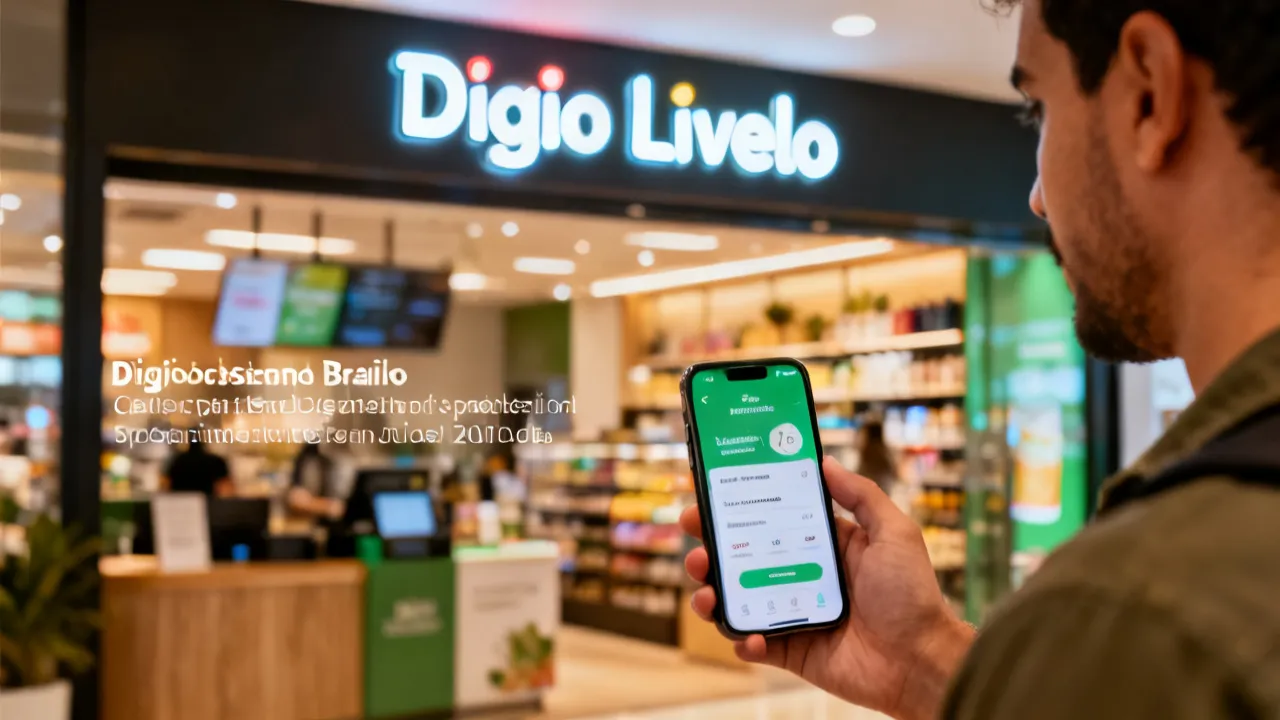
If you’re considering Digio Livelo for loyalty and rewards, start by understanding the mechanics: how points are accrued, how redemptions are handled, and which conditions can change your results. This matters because the top “returns” are not only about earning—often, they hinge on qualifying spend categories, promotional windows, and the rules tied to redemption options.
In objective terms, Digio Livelo typically refers to a relationship between a financial product experience and the broader Livelo loyalty program. Depending on the specific product and terms available at signup, earning rates and redemption pathways can differ. For responsible use, you should review your product’s current tariff/fees and the loyalty program’s current regulations before relying on any particular earning or exchange outcome.
Also, it’s useful to remember that loyalty programs rarely operate like a single fixed formula. They’re usually built from layered rules: eligibility, accrual, posting timing, exclusions, promotions, and redemption constraints. If you don’t verify these layers, you can easily end up feeling like you “should have earned more” when the issue is actually a rule you didn’t notice. The goal of this guide is to help you avoid that situation by giving you an operational, practical checklist you can apply immediately.
At a conceptual level, Digio Livelo aligns daily consumer spending with a points-based rewards structure. Livelo is widely recognized as a loyalty environment where points can be exchanged for benefits. The “Digio” side usually relates to the financial product interface—commonly a card or account experience—through which purchases may generate points based on the rules in effect at the time of the transaction.
Because loyalty programs are operationally complex, readers often benefit from a simple mental model:
Keeping these layers separate helps you compare offers more accurately than focusing only on headline earning rates. For example, a product may advertise a high earning rate for certain categories, but if your real spending pattern is mostly outside those categories, the effective return may be much lower than expected. Similarly, even if you earn points at a good rate, your value can still drop if redemptions are expensive in points or if certain redemption benefits aren’t consistently available when you want them.
Another practical distinction: some people assume “points earned” equals “points available.” In many loyalty systems, the points earned from a purchase may not be immediately available for redemption. They can be pending, subject to reversal, or gated by verification processes. So it’s good to treat points as having two statuses: earned and redeemable. That difference can matter a lot during time-sensitive promotions.
For Digio Livelo, “good value” is often a function of transaction fit and timing. Even without assuming any specific promotional math, you can evaluate performance using consistent criteria:
Expert insight: In loyalty economics, the “effective return” typically depends on net spend after exclusions, and on redemption costs (including any additional fees required for specific rewards). That’s why a disciplined approach—reviewing the fine print and tracking posted points—can outperform chasing short-term offers.
To make this actionable, consider the following deeper questions you should ask (and answer for your own spending behavior):
It’s also worth recognizing a common misunderstanding: people sometimes compare “points per purchase” rather than “points per net spend.” Two purchases with the same amount can produce different points if one is eligible and the other is excluded. Or, two merchants can look similar to you, but the transaction coding may be different. For example, a store might share a brand name with multiple types of businesses (retail vs. services), and the points system might treat them differently based on how the merchant is coded by the payment network or partner reporting.
Finally, timing matters. If you redeem close to a transaction date, you might try to use points that are still pending. That can lead to failed redemption attempts or a situation where the points appear after you’ve already moved on. The simplest mitigation is to test with small purchases and observe the posting cycle.
Many users focus on earning, but redemption determines whether points translate into real, comparable value. With Digio Livelo, redemption options generally fall into categories (for example, travel-related benefits, partner offerings, or other exchanges), each with its own rule set.
To make redemption decisions objectively, compare:
Practical note: Before you commit, check whether the redemption you want is currently available and whether the required points align with your actual posted balances.
To go further, you should also assess “flexibility risk.” Some rewards are easier to redeem because they have frequent availability (or fixed schedules). Others are only offered during specific windows or have partner-specific restrictions. If your goal is to redeem around a known event—like a holiday trip, a birthday, or back-to-school purchases—you need to confirm that the redemption option is consistent enough to meet your timeline.
It’s also important to evaluate redemption efficiency by thinking in terms of:
Even when two rewards “cost” the same points, the real value can differ if one requires high co-pays and the other doesn’t. And even when co-pays are included, the timing of payment can affect perceived value. If you can only redeem by paying cash plus points at a time you weren’t budgeting for, the net benefit may feel smaller.
Any evaluation of Digio Livelo should include the full cost picture. Even if a rewards program appears attractive, annual fees, monthly fees, interest charges, or transaction-related costs can outweigh the benefit—especially if balances are carried over.
Important condition: Loyalty value is only “profitable” in practice when you avoid debt-driven costs. If your use results in interest charges, the effective rate can quickly become unfavorable compared with lower-cost payment options.
Because the exact price and terms vary by product and current promotion cycles, you should confirm your situation in the official contract documents associated with your Digio-linked offering and the latest Livelo program rules.
To make this more than a general caution, you can use a “net value” mindset. Instead of asking, “How many points do I earn?”, ask: “What is my net cost for the benefits I receive?”
For example, consider these cost categories:
If you’re aiming to maximize rewards, you generally need a payment discipline that prevents interest accumulation. A loyalty program can be “good,” but a fee structure can make it “bad” for your specific financial behavior. That difference is not theoretical—it often appears in user experiences when people redeem points but still pay meaningful charges.
Another consideration is the difference between earning value and using value. If the points are hard to redeem or require extra cash payments, your perceived return may be lower than the theoretical calculation.
In loyalty arrangements that involve Digio Livelo, “supplier” effectively spans multiple roles:
Expert insight: Operational outcomes (like when points appear) depend on transaction settlement and data reporting cycles. Even when two users make similar purchases, points posting can vary by merchant processing speed, refund timing, and how the payment network codes the transaction.
This matters because delays are not always “errors.” They can be normal parts of how payment authorization, settlement, and loyalty reporting happen in real life. In many cases, points don’t post immediately because the system waits for final settlement or a confirmed transaction state.
To reduce uncertainty, you can adopt a simple operational practice:
Why is this useful? Because redemption can be time-sensitive. If you know that points typically become redeemable after, say, several business days (or after the statement closes), you can plan your redemption accordingly. Without that knowledge, you might attempt redemption too early and then get stuck.
It’s also helpful to understand that loyalty data may be reported differently if you do recurring payments, use installments, or make purchases in new merchant environments (such as newly onboarded merchants). If you change your behavior—like switching to a new online shop or paying for a new service—the points system’s behavior might differ. That doesn’t necessarily mean the program changed; it can mean the transaction coding or reporting changed.
If your daily routine includes local purchases—such as stopping by a neighborhood supermarket or using a nearby pharmacy—remember that the “merchant category” determines whether those transactions qualify for any enhanced earning rules. In practical terms, whether you shop “nearby” can affect your results more than you might expect, because point accrual rules often key off how merchants are classified.
For example, buying from a merchant categorized differently (even if it’s a familiar local store) can change whether a purchase qualifies for certain bonuses. If you want consistent rewards, keep an eye on which establishments reliably post points exactly as you expect.
There’s another subtle issue with “nearby shopping”: sometimes you might use multiple branches of a chain. Even if the store looks identical, the merchant identification can differ by branch, region, or franchise structure. That branch-level difference can impact category multipliers. Over time, this can create a pattern where certain locations consistently earn more points than others.
To manage this practically, consider maintaining a short internal list:
You don’t need to memorize all merchant rules. You just need enough evidence to stop guessing. The loyalty system usually rewards consistent behavior with predictable outcomes.
The table below is a neutral comparison of common decision factors. It is meant to help you assess fit, not to guarantee outcomes.
| Decision factor | What to check with Digio Livelo / Livelo | Why it matters |
|---|---|---|
| Linkage status | Confirm your Digio experience is correctly associated with your Livelo account. | If not linked properly, eligible transactions may not accrue points. |
| Earning rules | Review the current points-per-transaction logic and category qualifiers. | Headline rates may not apply to all purchases. |
| Post timing | Check how soon points typically appear after transactions settle. | Delays can affect redemption planning and budgeting. |
| Exclusions | Look for lists of transactions that do not earn or earn differently (as defined by the program). | Exclusions can reduce net value. |
| Redemption options | Compare reward types you actually want (and confirm point requirements). | Your redemption preferences determine whether points are truly useful. |
| Additional costs | Verify co-pays, taxes, or administrative fees for redeemed benefits (if applicable). | Extra costs can change the effective value of points. |
| Program conditions | Review validity/expiry, limits, and any promotional eligibility conditions. | Rules can affect whether points remain usable when you’re ready. |
To make the table more useful during your own evaluation, pair it with a simple checklist you can follow when reading terms and conditions:
It’s not about being overly cautious. It’s about protecting yourself from the most common loyalty mistakes: misunderstanding exclusions, assuming faster posting, and assuming redemption is always available exactly when you want it.
Conditions and requirements to keep in mind: loyalty earning and redemption are usually subject to current program regulations, account standing, and eligibility rules that can change. Promotions (if offered) commonly require meeting specific criteria and may have separate expiration or redemption constraints.
To improve your chances of a positive experience, add these operational habits to the steps above:
These habits can transform loyalty from a “sometimes works” experience into a predictable system you can plan around. That predictability is where loyalty programs become genuinely useful.
One of the biggest differences between users who feel satisfied with Digio Livelo and users who feel disappointed is whether they use an evidence-based approach. Loyalty programs often feel simple on the surface: you spend, you earn points, you redeem. But the real performance is shaped by rules and operational timing.
Here’s how discipline typically looks in practice:
This approach reduces surprises. It also helps you develop a realistic mental model of how your lifestyle interacts with the program. For instance, if your “nearby” spending tends to fall into one merchant category that earns lower points, you might decide to concentrate purchases in categories that reliably earn more—without spending more overall. Loyalty isn’t only about spending; it’s about steering spend strategically within your budget.
Additionally, discipline helps you handle refunds and disputes. Returns can reduce points, but the timing of the reduction might not align with your expectations. By monitoring your points during your test period, you learn how the system behaves. Then, when a return happens later, you know how to interpret the change.
Even when a loyalty program is well-designed, users can run into predictable pitfalls. These are some of the most common ones you can protect yourself against when evaluating Digio Livelo:
A transaction might be eligible but not immediately credited with points due to settlement delays. If you assume points should appear instantly and attempt redemption early, you can face friction.
Some transactions are excluded or earn at a different rate. This is especially common with payments that resemble cash-like operations, certain fees, or transactions coded under unusual merchant identifiers.
Promotions often include conditional logic. If you meet only part of the conditions, you might not get the expected earning or you might only earn at the standard rate.
Even if you have enough points, redemption might involve co-pays or be limited by availability. A “good points balance” doesn’t automatically translate into a “good reward outcome.”
This is the biggest net value killer. If the cost of borrowing outweighs the reward value, the program becomes financially negative. Loyalty should not be a replacement for debt discipline.
Returns, cancellations, and refunds can reduce points. If you don’t track the impact, you might redeem points that later get reversed or end up with insufficient points for redemption.
If you actively avoid these pitfalls, your probability of a positive experience rises significantly. And even when things don’t go perfectly, evidence-based monitoring helps you resolve issues quickly by showing what happened and when.
Digio Livelo generally describes a combination of a financial product experience associated with a loyalty ecosystem tied to Livelo. The specific earning and redemption mechanics depend on the exact product and the current program rules.
Because terms can vary by offer, you should always confirm the details in your specific onboarding materials and the latest program documentation inside the official systems.
Not necessarily. Many loyalty programs apply exclusions or category rules. You should review the official terms for your linked product to determine which transaction types earn points and under what conditions.
It’s common for merchant classification to influence whether a purchase qualifies for standard or enhanced earning. So the question isn’t only “is the merchant in your area?” but “is that merchant coded in a category that the program recognizes as eligible?”
Posting time depends on transaction settlement and reporting. Some points may appear after confirmation rather than immediately. If you’re planning a redemption, monitor posting timelines during an initial trial period.
During the test period, track whether points appear right after authorization, after settlement, or after a statement cycle. Your pattern will guide your redemption timing.
Livelo rewards typically include partner offerings and benefit categories, but availability and point requirements can vary. Always verify the specific redemption option and its current requirements inside the program.
Also confirm whether the redemption requires additional co-pays, taxes, or administrative charges. A travel redemption can sometimes look “cheap” in points but be expensive in cash co-payments or may have limited dates.
Check the financial product’s fees and interest conditions. Loyalty can be valuable, but cost structures—especially interest from carried balances—can reduce or eliminate net benefit.
If you want to evaluate cost impact, estimate a realistic monthly scenario for your spending and ensure that you can pay off balances without financing charges. That is usually the baseline requirement for loyalty to remain net-positive.
Promotional rates are generally conditional and time-limited. Eligibility depends on meeting program conditions and using the product as specified in the promotion terms.
Pay special attention to the definition of eligible transactions during promotions. Sometimes promotions apply only to specific merchants, categories, channels, or spend thresholds.
Returns can lead to point adjustments, because points may be reversed if the original transaction is refunded. Track your account for any changes after refunds.
The key point is timing: points might be credited first and then reversed later after the refund settles. If you’re close to redemption, this timing difference can matter—so monitor your points if returns are possible.
Digio Livelo can be a practical loyalty approach when you understand the rules behind earning and redemption. The very reliable strategy is not to rely on assumptions, but to confirm linkage, verify qualifying transaction categories, and evaluate net value after any applicable fees or charges. For users shopping “nearby,” paying attention to merchant classification and transaction posting behavior can be the difference between collecting points and collecting disappointment.
If you want to proceed, use the step-by-step test approach, keep records of posted points, and compare redemption options before committing your loyalty balance to a reward you truly want.
Striking the Perfect Balance: Navigating Premiums and Out-of-Pocket Expenses in Senior Insurance Plans

Explore the Tranquil Bliss of Idyllic Rural Retreats

How to Make Lasting Memories at Disneyland Attractions

Affordable Phones and Plans for Seniors

Affordable Full Mouth Dental Implants Near You

Unlock the Top Kept Secrets to Finding Your Ideal Dentist for Flawless Dental Implant Results!

Discovering Springdale Estates

Unveiling RS Sul Telecom Services

The Guide to Car Trading

Striking the Perfect Balance: Navigating Premiums and Out-of-Pocket Expenses in Senior Insurance Plans
Finding an optimal mix of insurance premiums and direct medical costs is crucial for effective healthcare budgeting. This discussion will delve into tactics to achieve a balance that aligns with your finances.
Unlock the Top Kept Secrets to Finding Your Ideal Dentist for Flawless Dental Implant Results!
Selecting an adept dentist is critical for ensuring the efficacy and your satisfaction during a dental implant procedure. This in-depth guide is designed to assist you in finding a dental expert who meets your personal requirements, guaranteeing that your path to dental implant success is seamless and fruitful.

Protect Your Perfect Smile: Master the Art of Defending Your Teeth Against Acid Attacks
Though they may tantalize the palate and invigorate the senses, foods and drinks with high acid content are a double-edged sword with regard to oral wellness. Continual exposure to these substances progressively strips away the protective enamel from our teeth, which can lead to increased sensitivity, changes in coloration, and a variety of other dental complications. This composition offers insight into relishing these zesty favorites while safeguarding your teeth from damage.

Discovering Heartis Eagle Mountain
Heartis Eagle Mountain is a prominent senior living community that offers a range of services and amenities aimed at enhancing the quality of life for its residents. Situated in a peaceful setting, it combines exceptional care with engaging activities, providing a holistic environment that caters to seniors' physical, emotional, and social needs.

Unveiling the Top Dental Implant Options for Seniors: Transform Your Smile with the Ultimate Guide to Restored Radiance
The significance of oral health cannot be understated for the elderly population as they are commonly afflicted with tooth loss due to a multitude of factors, including decay and gum disease. Dental implants have risen to prominence as a prime method of teeth replacement, acclaimed for their long-lasting nature, functional prowess, and striking similarity to our own teeth. This discussion delves deeply into the realm of dental implants to demonstrate why they are considered the optimal choice for aged individuals aiming to enhance their smiles and overall life quality.

Boost Your Defenses: 20 Proven Strategies for a Stronger Immune System
Having a robust immune system is essential to protect our bodies from harmful microorganisms and preserve our general health. Although some elements that affect our immunity are out of our hands, many lifestyle decisions can help us enhance our immune defenses naturally. This piece delves into 20 practical methods to empower your immune system, increasing your capacity to ward off diseases and sicknesses.