This guide explains how to evaluate Pmoc Abrava for compliant, quality-focused sourcing and use. It provides objective background on what the term implies in professional procurement contexts, how buyers typically assess suppliers, documentation, and handling requirements, and how to compare options using practical decision criteria aligned with regulated industrial top practices.
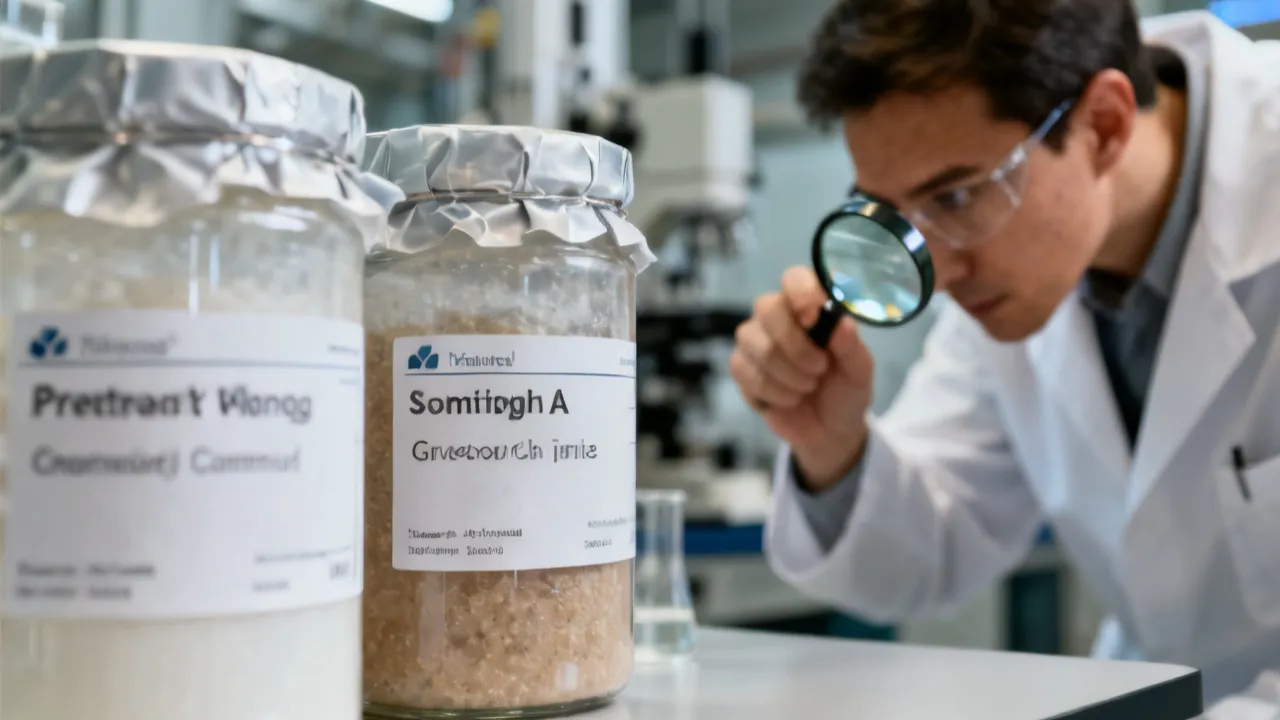
When procurement teams consider Pmoc Abrava, the core question is not simply “What’s available?”, but “Can the supplier demonstrate consistent quality, traceability, and proper handling documentation across batches?” This article offers an industry-oriented framework for evaluating Pmoc Abrava through supplier assurance, specification alignment, risk controls, and verification steps—so your decision is grounded in evidence rather than marketing claims.
Because Pmoc Abrava can be referenced in different industrial contexts depending on the buyer’s supply chain and nomenclature practices, you should treat the term as a procurement identifier that must be confirmed against the supplier’s technical documentation. In practice, buyers succeed when they require: (1) a clear product specification, (2) batch traceability, (3) relevant compliance statements, and (4) data that supports the intended application.
As a procurement exercise, sourcing Pmoc Abrava should be treated like any other critical chemical input: define what “fit for use” means, verify that claim with documented evidence, and manage ongoing risk once you scale volumes. The remainder of this guide expands on how to do those steps in a structured, repeatable manner—covering what to request, how to qualify, what incoming checks to perform, and which decision checkpoints reduce the probability of quality failures.
In professional purchasing, terms like Pmoc Abrava often act as internal naming conventions for a material, intermediate, or reagent category used in manufacturing workflows. However, the same text can appear differently across vendors due to translation, catalog evolution, shorthand labeling, or differences between marketing names and technical product codes. Therefore, objective due diligence starts by confirming the exact chemical identity, grade, purity range, and intended use directly with the supplier.
From an industry expert perspective, the highest value early step is ensuring that the purchasing description matches the technical specification sheet (and, when applicable, the certificate of analysis). This reduces downstream failures such as rejected lots, unexpected impurity profiles, poor reproducibility in process testing, and inconsistent performance in downstream reactions, formulations, or analytical workflows.
In many organizations, the buyer’s internal documentation may refer to “Pmoc Abrava” as a familiar label, while the supplier uses a different system—e.g., a catalog name, internal SKU, or an alternate nomenclature tied to a chemical structure. That mismatch is where procurement risk often hides. You can manage that risk by requiring the supplier to show an identity mapping: “When you write ‘Pmoc Abrava’ in your PO, what exact product name/grade does it correspond to in our manufacturing system?”
Additionally, procurement should consider whether Pmoc Abrava is being ordered as:
Even when all these categories share the same label, the required documentation depth and the acceptance testing strategy may differ. A robust procurement approach clarifies this up front and documents the intended use as part of the qualification file.
In regulated or quality-sensitive industrial environments, buyers typically rank evaluation criteria in the following order:
Only after these points are validated does price become meaningful. If unit cost decreases but yields quality variability or rejects, the real cost can be substantially higher. Procurement should quantify those hidden costs—such as labor, downtime, additional purification, and scrap—within the total cost of ownership (TCO) model.
To make this concrete, consider that many chemical process failures are not binary “pass/fail” events. Instead, they may manifest as subtle performance shifts: slightly altered reaction completion times, changes in impurity distribution, increased need for rework, or reduced yield that may only become apparent after downstream steps. Those effects are often more expensive than the difference between suppliers’ unit prices.
Therefore, selection criteria should be treated as a “risk-based hierarchy.” If the material is critical, and if your process is sensitive to impurity or moisture, you should weight traceability and analytical evidence more heavily than you would for a low-impact material.
Even when Pmoc Abrava appears “standard,” quality risk depends on how the material is manufactured, packaged, and tested. Industry teams reduce uncertainty through a supplier qualification cycle.
Start by requesting the very important documents:
Then, align those documents with your own requirements: acceptance criteria, incoming inspection plan, and any process qualification protocols. If your internal system uses a formal “Approved Supplier List (ASL)” and a “New Supplier Qualification” procedure, Pmoc Abrava should be evaluated within that same governance model, rather than handled informally.
To improve the robustness of the qualification, procurement and quality should also request supporting evidence beyond the basic forms. Examples include:
While specific regulatory requirements vary, the logic is consistent: the buyer should be able to trace a delivered container back to a manufactured batch, confirm what was tested, and verify that the supplier controls manufacturing changes that could shift quality.
Many procurement teams initially focus on unit cost, but for items referenced as Pmoc Abrava, the better economic view is cost-per-use. That approach considers:
Because you asked to integrate “price information” and supplier details, note that these vary by vendor, grade, and purchase volume. If you provide the exact vendor name, quoted unit price, and delivery location, I can help you translate it into a clean cost-per-use model and a qualification checklist tailored to your scenario.
In practice, cost-per-use calculations often require one or more of the following inputs:
Even without exact numbers, procurement can adopt a qualitative approach: prioritize suppliers who can demonstrate stable batch quality and adequate documentation, even if their unit prices are modestly higher. The economic difference emerges when you avoid production disruptions and ensure consistent performance.
If your internal note includes a specific city or country alongside Pmoc Abrava, the sourcing logic changes with distance. Shipping time affects stability for materials sensitive to temperature or humidity, and local warehousing changes how quickly you can put stock into controlled storage.
When localization is needed, buyers often treat shipments within “nearby” regions as having lower logistical uncertainty, but the decision must still be supported by documentation and packaging suitability—not only by geography.
Procurement should confirm the following location-linked considerations:
When “nearby” shipping is possible, it can reduce risk, but procurement must still maintain the same documentary rigor: COA must match the batch, SDS must be current, and storage instructions must be feasible in your receiving environment.
Even with COAs, robust organizations confirm key parameters on receipt—especially for the first few lots. Incoming inspection for Pmoc Abrava should reflect your process sensitivity.
Typical controls include:
Be careful not to over-test in ways that delay production unnecessarily. The goal is to verify enough to protect your process while remaining operationally efficient. For first-time suppliers, you can start with a higher-intensity qualification inspection and then reduce routine testing once you have enough performance history.
A practical incoming inspection plan usually has two layers:
To define the CQAs, procurement and quality can collaborate with process engineering. For example, if your process is moisture sensitive, then water content or moisture-related impurities may be among the first attributes to verify. If your downstream step is sensitive to specific impurities (e.g., related substances or residual solvents), you may test those parameters even if your overall purity is high.
In addition, inspect packaging and labeling for:
These “physical checks” may seem minor, but they often reveal whether the supplier’s handling controls are functioning and whether contamination risk exists during transport.
Objective compliance for Pmoc Abrava procurement usually means your supplier can clearly answer:
For additional assurance, many companies use vendor quality management approaches aligned with recognized quality system practices. Industry guidance can also be supported by internationally accepted frameworks such as ISO 9001 principles for quality management systems, and regulatory SDS expectations under the Globally Harmonized System (GHS). For specific regulatory scope, consult your local authorities or your compliance team.
Because buyers sometimes confuse “paper availability” with “document trustworthiness,” it helps to define what “good documentation” means in operational terms. For instance:
For organizations operating under more stringent quality regimes, suppliers may be asked to provide audit summaries, quality agreements, and change control commitments. Even if you are not under the strictest regulatory requirements, building these expectations into a supplier qualification file helps reduce future uncertainty.
The table below compares common supplier profiles for Pmoc Abrava qualification. Use it to structure your internal procurement discussion and define “go/no-go” conditions.
| Evaluation area | Option A: Document-heavy established manufacturer | Option B: Distributor with strong upstream traceability | Option C: New entrant / limited documentation |
|---|---|---|---|
| Product identity confirmation | Clear TDS and grade specification; consistent naming | Upstream documents available; naming may require confirmation | Unclear identity or inconsistent terminology across batches |
| Batch traceability | Strong batch records; COA matches lot numbers reliably | Traceability depends on upstream partner documentation | Limited ability to confirm batch history |
| Quality evidence | COAs with defined acceptance parameters; test methods described | COAs provided; trend data may be limited | COAs may be generic or missing key parameters |
| Compliance and safety documentation | SDS updated; packaging/storage guidance consistent | SDS available; ensure revision date aligns with your requirements | Missing or outdated SDS/packaging instructions |
| Qualification feasibility | Supports sampling and process compatibility studies | Supports sample programs but may add lead-time friction | May struggle to support rapid qualification timelines |
| Commercials and lead time | Predictable lead times; cost-per-use often stable | May vary with upstream production; total cost depends on margins | Lower quotes can be offset by delays and variability |
| Typical “go” conditions | Spec match + consistent COA + successful first qualification lot | Successful incoming inspection + confirmed upstream traceability | Only if identity/spec are clarified and test evidence meets requirements |
When using this table, treat it as a structured discussion tool—not a rigid rule set. For example, a distributor (Option B) may still be a strong choice if they provide full upstream traceability and support rapid documentation turnaround. Conversely, a manufacturer (Option A) may still introduce risk if their change control practices do not meet your expectations.
Below is a practical, step-by-step guide you can adapt for Pmoc Abrava purchasing. It is designed to be evidence-driven and compatible with common quality management workflows.
To make this workflow even more actionable, you can create a qualification dossier template with sections that cover:
This kind of structure reduces the probability that knowledge gets lost when personnel changes or when the supplier introduces variations over time.
Additionally, consider adding two more “do not skip” requirements that frequently surface during audits:
Many procurement teams focus on getting documentation up front. The highest-value difference comes when you also define responsibilities for what happens after something goes wrong.
In many production environments—chemical processing, materials manufacturing, research-scale synthesis, or downstream formulation—the cost of “alvery acceptable” material is high. Variability can appear as subtle performance shifts, altered reaction profiles, reduced yield, or increased defect rates. From an expert procurement standpoint, this is why the supplier qualification process for Pmoc Abrava should emphasize evidence, traceability, and reproducibility rather than price alone.
Additionally, industry top practice increasingly expects tighter documentation discipline: clear SDS updates, traceable batch identifiers, and documented acceptance criteria. These practices align with broader quality system thinking found in widely used quality management frameworks.
Procurement rigor matters because chemical supply chains often involve multiple transformation points—raw material sourcing, chemical synthesis, purification, packaging, transportation, and storage. Each stage can introduce risk. For Pmoc Abrava specifically, the risk might include:
None of these risks are eliminated by a supplier simply providing a COA. They are mitigated by robust qualification and continuing verification—combined with a change control mechanism that alerts you before a supplier’s process adjustment affects your outcomes.
In addition, documentation is not purely “compliance paperwork.” It is an operational tool. When something goes wrong, the ability to trace the lot, understand what was tested, and compare incoming results with historical trends can drastically shorten investigation time and reduce production downtime.
Pmoc Abrava is commonly used as a procurement identifier for a material category or product naming convention. Because naming may differ between suppliers, you should confirm the exact identity, grade, and specifications through the supplier’s TDS and COA.
In some procurement contexts, “Pmoc Abrava” may represent a reagent used in a specific workflow. In others, it may denote an intermediate with specific purity requirements. The key is that the term should not be treated as an unverified chemical definition. Instead, use it as a starting label that must be mapped to the supplier’s technical documentation and validated through incoming checks.
Request and review the TDS and COA tied to the specific batch number, then confirm identity and key parameters using your incoming inspection plan. For first-time vendors, qualify with trial quantities and document performance results.
To strengthen verification beyond paperwork, create a two-level test strategy:
This approach helps avoid a common procurement failure mode: materials that meet specification numerically but still cause process instability due to impurity types, moisture sensitivity, or incompatibility with downstream conditions.
Usually no. The lowest unit price can lead to higher total cost if it affects yield, increases rework, or causes rejects due to impurity or variability. Use a cost-per-use approach based on process impact and qualification outcomes.
To apply cost-per-use in a practical way, procurement can do a “range estimate” even before qualification is complete. For example:
This does not require precise financial modeling at the qualification stage. It requires a consistent method for thinking about hidden costs.
At minimum: COA for the specific batch, SDS with the latest revision date, and a TDS specifying the grade and key parameters. If applicable to your environment, request compliance declarations and packaging/storage guidance.
Beyond minimum documentation, consider requesting:
These documents reduce the probability of mismatches between supplier assumptions and your internal storage or processing policies.
Many quality-driven organizations perform at least partial incoming checks—especially for initial lots or new suppliers. COAs support verification, but they don’t replace your internal acceptance criteria and process-specific risk controls.
There are multiple reasons to test on receipt:
Once a supplier is fully qualified and you have adequate performance history, routine testing can be reduced but not eliminated if the material remains critical to your output quality.
For materials sensitive to conditions such as temperature, humidity, or light, transit duration and packaging integrity can influence quality. Align shipping and storage recommendations with your receiving environment, particularly for orders that arrive “nearby” but still require controlled handling.
Procurement should verify shipping controls through both paperwork and operational practice:
Additionally, shipping delays can affect shelf-life usage decisions. Even if the material remains chemically stable, expired material can be a process-quality and compliance issue. Procurement should coordinate with quality to define acceptable expiration thresholds for use.
Follow your nonconformance procedure: quarantine the lot, notify the supplier with batch identifiers, request supporting evidence (including retained samples or method details), and document corrective actions. Avoid immediate process release until clarity is achieved.
A good nonconformance response includes:
Procurement should also update internal supplier risk ratings based on the outcome. A failure once may be a manageable event; repeated discrepancies suggest deeper process control issues.
Yes—quality management principles associated with recognized frameworks (e.g., ISO 9001-style approaches) and hazard communication expectations under GHS-aligned SDS practices can support structured supplier evaluation. For specific regulatory scope, consult applicable local rules and your compliance function.
In practical terms, using recognized frameworks helps you ask the right questions consistently. For example, ISO 9001-style thinking emphasizes:
For SDS expectations, GHS-aligned practices emphasize:
While you should always verify specifics with your internal compliance team, this alignment supports a procurement framework that is defensible and consistent across vendors.
To keep evaluation grounded in recognized practices, this guide reflects general, non-controversial approaches aligned with widely used quality and hazard communication concepts. For regulatory SDS expectations, consult the UN GHS (Globally Harmonized System of Classification and Labelling of Chemicals). For quality system thinking, refer to ISO 9001 principles as a common baseline for supplier quality management. For regulatory scope and compliance obligations in your jurisdiction, consult your local authorities and internal compliance teams.
It can also be helpful for procurement teams to align internal documents—such as incoming inspection procedures, supplier qualification forms, and nonconformance workflows—with these recognized concepts. The goal is to ensure your evaluation is not dependent on individual judgment and can be audited for consistency.
Choosing Pmoc Abrava responsibly means turning procurement into a repeatable verification process. Confirm product identity and grade, demand batch traceability and current safety documentation, run a qualification workflow with defined acceptance criteria, and treat price as the final—rather than first—decision input. If you share any exact quoted pricing and supplier identifiers (including packaging format and delivery location), I can help you convert the above framework into a tighter procurement scorecard and a qualification test plan.
To finalize the approach, consider building a formal “Pmoc Abrava qualification packet” that your organization can reuse for future sourcing events. That packet can include your specification mapping, request list, incoming inspection plan, nonconformance response process, and ongoing supplier monitoring schedule. When done well, it reduces procurement cycle time in subsequent purchases while maintaining quality assurance discipline.
Striking the Perfect Balance: Navigating Premiums and Out-of-Pocket Expenses in Senior Insurance Plans

Explore the Tranquil Bliss of Idyllic Rural Retreats

How to Make Lasting Memories at Disneyland Attractions

Affordable Phones and Plans for Seniors

Affordable Full Mouth Dental Implants Near You

Unlock the Top Kept Secrets to Finding Your Ideal Dentist for Flawless Dental Implant Results!

Discovering Springdale Estates

Unveiling RS Sul Telecom Services

The Guide to Car Trading

Pmoc Abrava: Industry-Driven Selection and Sourcing Guide
This guide explains how to evaluate Pmoc Abrava for compliant, quality-focused sourcing and use. It provides objective background on what the term implies in professional procurement contexts, how buyers typically assess suppliers, documentation, and handling requirements, and how to compare options using practical decision criteria aligned with regulated industrial top practices.
Pmoc Abrava: Procurement, Handling, and Compliance Insights
This guide explains how to evaluate Pmoc Abrava responsibly for procurement and safe handling, with an objective look at typical sourcing considerations. Background context covers what the term generally implies in industry discussions, why documentation matters, and how to structure supplier evaluation, quality checks, and storage conditions to reduce operational risk.

Understanding Gandra 1986 in Modern Context
This guide explains what “Gandra 1986” represents and how its influence can be interpreted in contemporary practice. Background context is provided objectively around the term’s historical usage and how researchers and practitioners tend to evaluate older references without overstating outcomes. The article also outlines selection criteria, supplier checks, and practical conditions for safe, informed decision-making.

Gandra 1986: Context, Use Cases, and Expert Insights
This guide explains the context and practical considerations around “Gandra 1986,” focusing on how the term is used in research, documentation, and sourcing discussions. Objectively, it reviews what such a keyword typically signifies, why year-coded references appear in scholarly and archival materials, and how to evaluate suppliers, documentation quality, and requirements when tracking related references.

Auctus Campinas: Market Insight and Buyer Guide
This guide explains how Auctus Campinas fits into the local property and development landscape, helping buyers and investors evaluate opportunities with clear, objective criteria. Background includes what the name signals in practice, how regional market dynamics typically influence pricing and supply, and what due diligence steps are commonly expected in nearby transactions—without relying on unverifiable claims.

D20 Alongada: Buyer’s Guide, Pricing, and Selection
This guide explains how to evaluate D20 Alongada options by focusing on practical selection criteria, typical pricing logic, and supplier considerations. “D20” refers to a 20-sided die used across tabletop systems, while “Alongada” suggests an elongated or stylized presentation. Objectively, the term can map to themed accessories or gameplay components used for precision rolls and aesthetic consistency.
